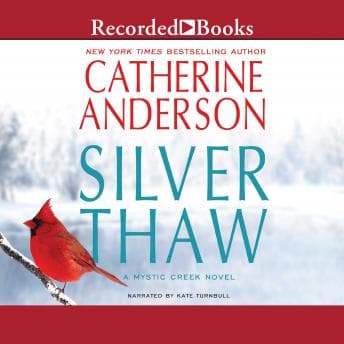

What do you do with a love story that asks you to believe in paper wishes carried by the wind?
I'll be honest - I almost didn't press play. The premise of Amanda Banning writing her secret yearnings on slips of paper and tossing them into the Oregon wind, only for a local rancher to find them scattered across his land, sounds like it belongs on a Hallmark card. But Denise and I were walking the lakefront last Sunday, early enough that the dog walkers hadn't taken over yet, and I needed something that wasn't another stack of sophomore essays about symbolism in The Great Gatsby. So I gave Catherine Anderson a shot.
And here's what surprised me: the wish-paper thing actually works. Not because it's clever or original, but because Anderson uses it as a slow reveal of Amanda's interior life. We don't get the contents of those notes all at once. They surface through the story like confessions, and Kate Turnbull reads them with this quiet, almost reluctant tenderness - the voice of someone who's embarrassed to want things. That restraint matters. A lesser narrator would've leaned into the sentimentality. Turnbull holds back just enough.
The Pace of a Woman Learning to Stand
Let's talk about what Anderson is really saying here, because it's more than a romance. Amanda has left an abusive husband. She's broke, she's scared, and she's trying to raise a six-year-old daughter in a town where she knows nobody. The first several hours of this audiobook are less about falling in love and more about the granular, unglamorous work of rebuilding a life from nothing - finding housing, worrying about money, learning to accept help without flinching.
This is where listeners will split. Some people - and I get it - will find the pacing glacial. One listener said at least a hundred pages could've been cut, and I won't pretend they're wrong. Anderson lingers on domestic details. There are scenes about grocery shopping and space heaters that stretch longer than they need to. By hour seven, I was grading papers and occasionally wondering if the plot had gone somewhere while I was marking comma splices.
But here's the thing my twenty years of teaching Austen has taught me: sometimes the slow parts ARE the point. Amanda's recovery from domestic abuse shouldn't feel brisk. The prose deserves to be savored precisely because Anderson refuses to rush the healing. That said - and I say this with love for the craft - a good editor could've trimmed two hours and made the emotional beats hit harder.
Jeb Sterling and the Problem of the Too-Good Man
Jeb is the kind of romance hero who builds things with his hands, speaks gently to children, and somehow always says the right thing. My students would call him a golden retriever boyfriend. (They have vocabulary for this stuff that I pretend not to understand.) He's warm, he's patient, and he's - I'll just say it - a little too perfect.
Anderson gives him exactly one flaw: he once renounced love. That's it. That's the wound. Compared to Amanda's very real, very painful backstory of abuse and poverty, Jeb's emotional baggage feels like carry-on next to her checked luggage. The imbalance bothered me. When I teach my kids about character arcs, I tell them both leads need something at stake. Jeb stakes very little.
Turnbull does what she can. Her voice for Jeb is steady and grounded - not overly masculine, not performative. She reads him like a man who's calm because he's never really been tested, which might actually be the most honest interpretation of the character. Her Amanda is the real showcase: fragile without being weak, guarded without being cold. The narrator understands that pause is punctuation, and she uses silence beautifully in the scenes where Amanda is deciding whether to trust someone.
Who Gets the Extra Credit
If you loved Safe Haven by Nicholas Sparks - and I know, I know, I'm an English teacher recommending Sparks, my grad school advisor just felt a disturbance in the force - this is its spiritual successor. Anderson writes with more emotional honesty and less melodrama, though she's not immune to convenience. Jeb's ability to solve every problem Amanda faces starts feeling less like generosity and more like authorial wish fulfillment. The plot's believability wobbles in the back half.
But for fans of character-driven contemporary romance who want something warm and unhurried? This delivers. The Mystic Creek setting is cozy without being cloying. The production is clean. And Turnbull's narration is the kind of steady, human performance that makes twelve hours feel like good company rather than an endurance test.
Skip it if slow burns make you reach for the 2x speed button. Skip it if you need your heroes complicated. But if you want something gentle playing in your earbuds while the world outside is loud - worth pausing the faculty meeting for. Just maybe not all twelve hours of it.
The Grade I'd Actually Give
Solid B-minus work. Heart's in the right place, execution's uneven, and it needed a tighter revision. But Amanda Banning's paper wishes stayed with me longer than I expected - the image of a woman too afraid to say what she wants out loud, so she writes it down and trusts the wind. That's not just romance. That's faith. And Anderson earns that moment, even if she takes her sweet time getting there. That particular kind of quiet, earned faith is something I kept bumping up against in Shack too - a book I had even lower expectations for and came away from more moved than I wanted to admit.