
Everyone told me this was a horror book for teenagers. My students - the ones who actually read anything voluntarily - swore it was genuinely scary. I figured I'd give it a shot during a late Saturday grading marathon, red pen in one hand, coffee going cold, the lakefront wind rattling my apartment windows. And here's the thing: they weren't entirely wrong, but they weren't entirely right either.
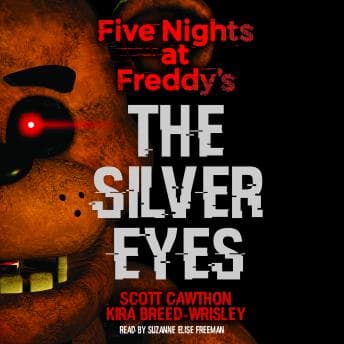
Let's talk about what Scott Cawthon and Kira Breed-Wrisley are really saying here, because underneath the killer animatronics and the abandoned pizza restaurant, this is a grief story. Charlie coming back to her hometown ten years after her father's restaurant became a crime scene - that's not just a horror setup. That's a woman trying to reconcile childhood memory with adult understanding. The way the book lingers on the group's nostalgia for Freddy Fazbear's before everything went wrong, the sensory details of a place that used to mean birthday cake and arcade games and now means something unspeakable - that tension between innocence and horror is where the novel actually works.
When the Calm Is the Creepiest Part
Suzanne Elise Freeman's narration is going to divide people, and I get both sides. Her delivery is soft, almost gentle, which creates this eerie disconnect when the animatronics start moving with murderous intent. There's a scene where Bonnie hits Carlton that should land like a punch to the gut, and Freeman reads it with the same measured calm she uses for everything else. Some listeners wanted more raw emotion there. I understand that complaint.
But here's where I'll push back on the consensus: Freeman's restraint works for the atmosphere of the book itself. The dread in this story isn't jump-scare dread. It's the slow realization that the things you loved as a child have been corrupted. Freeman's voice carries that bittersweet quality - she sounds like someone telling you a bedtime story that's going to a very dark place, and she knows it, and she's sorry about it. The narrator understands that pause is punctuation.
The problem - and it's a real one - is the male characters. Every guy in this book sounds like he's on the same dose of cold medicine. Carlton, John, Dave, they all blur together in this flat, detached register. For a book where the human relationships are supposed to ground the horror, that's a significant weakness. I found myself rewinding to figure out who was talking more than once, which is never a great sign at 11 PM when you're already fighting to stay awake over a stack of sophomore essays.
Video Game Logic on the Page
Here's what my students wouldn't want to hear: the source material shows. The Five Nights at Freddy's games are brilliant at environmental storytelling - you piece together lore from security camera feeds and phone messages. But a novel demands different structural muscles. The pacing sags in the middle sections where characters are essentially exploring rooms and finding clues, which works when you're clicking through a game but feels repetitive when you're listening to someone describe it for the third time. At ten hours and twenty-three minutes, there's probably an hour of wandering that could've been tightened.
That said, when Cawthon and Breed-Wrisley lean into the mythology - the murders, the father's guilt, the question of what exactly is inside those animatronic suits - the book finds its footing. The reveals in the final third genuinely unsettled me. Not because they were shocking (I teach Shirley Jackson to sixteen-year-olds, my bar for literary horror is high), but because the emotional logic tracks. This reminds me of what Hemingway said about the iceberg theory - what's beneath the surface matters more than what's on top. Last Days of Night operates on similar principles—Graham Moore builds his historical thriller by letting the real horror simmer underneath patent law and corporate warfare. The best parts of Silver Eyes work that way.
No Sound Effects, and That's Actually Fine
Some reviewers wanted ambient sounds, creaking animatronics, maybe a music box playing in the background. I get the impulse - this is a franchise built on audio cues. But the bare narration forces your imagination to do the work, and honestly? My imagination at midnight with Chicago wind howling outside did plenty. The production is clean, no audio issues, just Freeman and the text. Sometimes less is more.
Who Gets an Assignment and Who Gets a Pass
If you loved the FNAF games and want the lore expanded with actual character development, this is worth your time. If you're a horror reader looking for something that builds atmospheric dread rather than relying on gore, you'll find things to appreciate. But if flat male character voices drive you crazy, or if you need your horror at a relentless pace, you might struggle with the middle stretch. My students would probably listen at 1.5x. I kept it at 1.0 because the prose deserves to be savored - even when it's describing murderous robot bears.
This isn't great literature. I'm not assigning it alongside Poe. But it's a surprisingly sincere story about childhood trauma wearing the skin of a video game adaptation, and Freeman's quiet narration - flaws and all - gives it a ghostly quality that a more aggressive performance might have buried. Worth pausing the faculty meeting for? Maybe not Middlemarch-level. But I didn't grade a single paper while the last two hours played. That counts for something.