
What happens when someone who was told to be small their entire life finally decides to take up space?
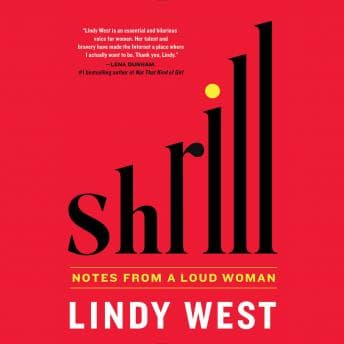
I've been thinking about this question for days now, ever since I finished listening to Lindy West read her own memoir during my morning jogs through Cambridge. And look, as someone who studies how narratives shape identity formation, I should probably be more clinical about this. But honestly? This book messed me up in the best way.
The protagonist exhibits classic patterns of what we call identity renegotiation in psychology - that painful, messy process of dismantling the self-concept others have constructed for you and building something new from the rubble. West doesn't just describe this process. She performs it. In real time. With jokes about diarrhea.
When the Researcher Becomes the Subject
Here's the thing about memoirs that I don't think most people appreciate: they're essentially case studies written by the patient. And West is a remarkably self-aware patient. She traces her psychological development from a painfully shy kid who learned that her body was a problem to be solved, through years of internalized shame, to her eventual - and I'm using this word deliberately - radicalization into self-acceptance.
What makes this character compelling is that West doesn't pretend the transformation was clean or complete. She's honest about the backsliding. The moments of doubt. The way she still sometimes catches herself apologizing for existing. Story of Joan of Arc explores a similar tension between self-doubt and radical self-assertion, though in a very different historical context. My therapist would have thoughts about this character, and most of them would be approving.
The research actually shows that humor is one of the most effective psychological defense mechanisms - it allows us to process painful material without being overwhelmed by it. West weaponizes this. She'll be describing something genuinely traumatic - harassment campaigns, abortion, her father's death - and then pivot to something so absurdly funny that you're laughing before you realize you're also crying. It's disorienting in the best way.
The Voice That Couldn't Be Anyone Else
So about the narration. West reads her own book, and this is one of those cases where it absolutely had to be her. The timing is everything. She knows exactly where the jokes land because she wrote them. She knows when to let a sentence breathe and when to barrel through because she's building to something.
It's like having a conversation with a friend who's being brutally honest - except that friend is also really, really funny and occasionally makes you want to throw your phone into the Charles River because she's describing something you've felt but never had words for. (Not that I've ever done that. My phone is fine.)
There are moments where her voice catches slightly, particularly when she's talking about her dad. And those moments hit different than they would on the page. You can hear the grief that's still there, years later. That's not something a hired narrator could replicate.
I will say - and I'm being honest here - some sections feel a bit rushed. Like she's reading quickly to get through the painful parts. Which, psychologically, makes complete sense. But occasionally I found myself rewinding because I'd missed something. At six hours, it's not a long listen, but the emotional density is high.
Who Should Listen (And Who Should Skip)
Let me be direct: if you're uncomfortable with strong language, explicit discussions of bodies, abortion, or internet harassment, this isn't for you. West doesn't soften anything. She's not interested in making her experiences palatable for people who might be scandalized.
But if you've ever felt like you were taking up too much space - physically, intellectually, emotionally - this is a fascinating case study in what happens when someone decides to stop shrinking. If you're interested in how people reconstruct identity after years of external messaging that their identity is wrong, this is genuinely useful material.
I found myself asking: why does West's story feel so universal when her specific experiences are so particular? And I think it's because she's tapped into something fundamental about how we all navigate the gap between who we're told to be and who we actually are.
My mother would absolutely hate this book. Which, honestly, is part of why I loved it.
The audiobook works best during activities where you can actually process what you're hearing - I wouldn't recommend it for focused work. Morning runs were perfect. Cooking dinner worked too. Just be prepared to occasionally stop stirring because you need to laugh or because something hit a nerve you didn't know you had.
West isn't trying to be your therapist. But she might accidentally do some of that work anyway.