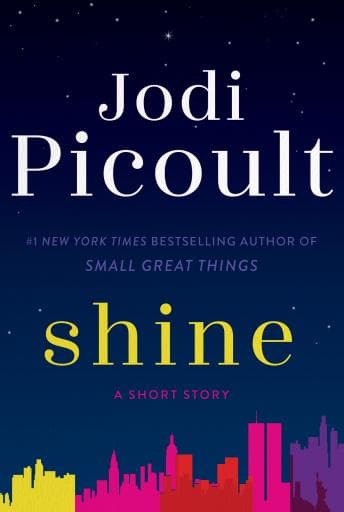

Sixty-six minutes. That's all it takes for this story to grab you by the chest and not let go.
I was touching up a logo redesign around 10 PM, half-listening at first because I figured a short story prequel would be light setup material - just an appetizer before the main course of Small Great Things. I was wrong. Diego was curled on my lap and I had to set my stylus down by the halfway mark because my hands were shaking a little and I didn't trust myself not to ruin the kerning.
A Third-Grader Shouldn't Have to Be This Smart About the World
Ruth Brooks is eight years old and she already knows the architecture of code-switching - she just doesn't have the vocabulary for it yet. What wrecked me about Picoult's writing here is how she captures that specific childhood moment when you realize someone sees your skin before they see you. Not as a big dramatic revelation, but as a slow, quiet knowing. Ruth watches Christina - her mother's employer's daughter - laugh with her at home but pretend they're not really friends at Dalton. And Picoult doesn't hammer you over the head with it. She lets you sit in Ruth's confusion, in that awful space where a kid is trying to figure out if she imagined the slight or if it really happened.
As a first-gen kid who went to schools where I was always the brown girl with the "interesting" last name, this hit different. That moment when Ruth realizes that being the smartest girl in the grade doesn't protect her from being the only Black girl in the grade? I know that math. My abuela knew that math. She'd have been yelling at Christina through the speaker like this was one of her telenovelas, ready to square up with a third grader.
Audra McDonald Turned an Hour Into a Gut Punch
Okay. Audra McDonald. Broadway legend. Tony winner. And apparently, she can narrate an audiobook with such precise emotional calibration that you forget you're listening to a forty-something woman and genuinely hear an eight-year-old Black girl trying to hold herself together in a classroom full of white kids who got matching backpacks for Christmas.
Her voice does this thing - and I need to describe it specifically because it's what made me cry (yes, even in sixty-six minutes, the spreadsheet gets updated) - where Ruth's internal observations are delivered with this careful, measured tone that sounds like a child performing composure. Like she's rehearsing being okay. And then in the moments where Ruth is with her mother, McDonald's delivery softens into something warmer, looser, more kid-like. The contrast is devastating because you realize Ruth is already learning to armor up, and she's EIGHT.
The narrator's voice is velvet and honey, genuinely, but it's the restraint that got me. She doesn't oversell the painful moments. When Ruth describes noticing how differently Christina treats her at school versus at home, McDonald reads it almost matter-of-factly, like Ruth is documenting evidence she doesn't yet know how to present. That subtlety is everything.
The Weight of a Short Story
Here's the thing about short-form audiobooks - they live or die on density. You don't have twenty hours to build attachment. You get one shot. And Shine earns its emotional weight honestly. It doesn't try to cover the entire landscape of racial injustice in America. It zooms into one girl, one school year, one friendship that isn't really a friendship, and lets you extrapolate the rest.
Is it a full meal? No. It's an hour. It's the amuse-bouche that makes you need to read Small Great Things immediately (which I'm now queuing up, thanks Jodi). But within its constraints, it's remarkably complete. Ruth's story has a beginning, a middle, and an ending that doesn't resolve so much as it crystallizes - you understand exactly who this girl will become, and it breaks your heart and fills it at the same time.
My one note: because it IS a prequel short story, there's a slight feeling of setup. You can sense Picoult laying groundwork. Some of Ruth's observations feel a touch too articulate for an eight-year-old, even a brilliant one. But honestly? That barely dented the experience.
Who Needs This in Their Ears
If you care about voice - both literally and thematically - this is your listen. If you've ever been the only [anything] in a room full of people who didn't look like you, Ruth's story will feel like a mirror held up at an uncomfortable angle. Parents, teachers, anyone raising kids in spaces where "diversity" is a buzzword but not a practice - this hour will do more than a dozen think pieces.
Skip it if you need plot-heavy, twist-driven stories to stay engaged. This is quiet. It's sixty-six minutes of sitting with a child's dawning heartbreak, compressed into a single sitting. If quiet intensity is your speed, 50 Shades of Gay works a similar short-form magic with intimate, character-first storytelling. It's a feeling.
My Heart Needed This at 66 Minutes, Not a Second More
One cry. One book. One hour. Spreadsheet updated. Diego looked concerned. Frida did not care. I'm going to bed thinking about eight-year-old Ruth Brooks and every kid who ever learned too young that the world sees them before it knows them.