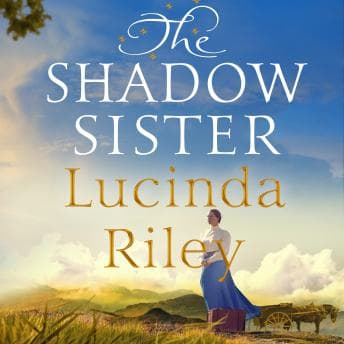

What does it mean to step out of someone else's shadow when you've made that shadow your entire identity?
I was grading sophomore essays on The Great Gatsby at 11 PM – the ones where they all insist Gatsby was "just a hopeless romantic" and miss the point entirely – when I realized I'd been listening to Star D'Aplièse wrestle with essentially the same question for the past three hours. Lucinda Riley understood something my students haven't figured out yet: the stories we tell ourselves about who we are can become prisons.
The Dual Timeline That Actually Works
Look, I'm skeptical of dual timelines. Too many contemporary novels use them as a crutch – jump to the past when the present gets boring, ping-pong back and forth until the reader's dizzy. Riley does something smarter here. Flora MacNichol's Edwardian storyline isn't just backstory decoration. It's a mirror.
Flora's determination to never marry, her stubborn independence in the Lake District, her proximity to Beatrix Potter – this isn't just historical window dressing. Riley weaves in real figures and genuine Edwardian social pressures in a way that made me pause the audiobook more than once to look things up. (Yes, I'm that person. Denise has stopped being surprised when I interrupt our lakefront walks to verify historical facts.)
The present-day story with Star finding an antiquarian bookshop in London? It's quieter. More internal. Some listeners found these sections slower, and I understand that complaint. Star barely speaks – she's written as almost pathologically shy, having hidden behind her sister CeCe for her entire life. It's a deliberate choice, and whether it works for you depends entirely on your patience for interiority.
Fiona Button's Performance: The Complicated Truth
Here's where I have to be honest, because what's the point of a review that isn't? Fiona Button's narration is genuinely beautiful in places. Her emotional delivery during Flora's storyline brought me to something close to tears during a particularly devastating scene involving duty versus desire. She understands that pause is punctuation – something I'm always telling my students about Shakespeare, and it applies to audiobook narration just as much.
But.
The voice she gives Star is... problematic. It's this breathy, hesitant thing that I think is meant to convey Star's shyness but instead becomes grating over twenty hours. And CeCe's voice? Even worse. There's a sharpness to it that made me wince every time she appeared. I found myself grateful – genuinely grateful – that Star speaks so little, which is a strange thing to say about a protagonist.
This is the narrator paradox I keep encountering: Button is clearly talented. Her Flora is lovely. But character differentiation through voice can backfire spectacularly, and here it does. If you loved her work in This Is Not a Pity Memoir, know that this is a different beast entirely.
Why Flora's Story Steals the Show
I'll say what some reviewers are dancing around: Flora's story is more compelling than Star's. The Edwardian sections have urgency, stakes, social machinery grinding against individual desire. Star's modern journey – while thematically rich – sometimes feels like waiting for the next historical chapter.
This reminds me of what I tell students about Dickens: sometimes the secondary plot is actually the primary one, and the author just didn't realize it. The Lincoln Highway plays with that same structural tension, though Towles handles his multiple perspectives with more equilibrium. I don't think Riley fell into that trap exactly – Star's growth is genuine and earned – but the balance tips noticeably toward 1910.
At nearly twenty hours, this is a commitment. I listened across two weeks of walks, grading sessions, and one memorable faculty meeting where Principal Martinez was explaining budget allocations while I was fully absorbed in Flora's Lake District. (Worth it. The budget presentation was not.)
Who Should Step Into This Shadow (And Who Should Walk Away)
This is for readers who love generational sagas, who don't mind slow burns, who appreciate historical fiction woven with real figures. If you loved The Distant Hours by Kate Morton or anything by Jennifer Robson, this is your territory. Though if you're looking for something lighter between the heavy historical pieces, Beach Read offers that same emotional depth without the twenty-hour commitment.
Skip it if you need constant action, if twenty hours feels daunting, or if narrator voice choices are a dealbreaker for you. The CeCe and Star voices are genuinely difficult to endure, and I won't pretend otherwise.
Class Dismissed
Riley died in 2021, and knowing this was part of her final major work gives it a different weight. She wrote across thirty-seven languages, built this seven-book mythology from scratch, and understood something essential: the stories we inherit shape the stories we become.
Is The Shadow Sister perfect? No. The pacing falters, the narrator choices frustrate, and the present-day sections occasionally drag. But there's something here – something about identity and independence and the courage it takes to speak when you've spent your life silent – that stayed with me long after the final chapter.
My students would probably hate this. Too slow, too internal, too focused on feelings over plot.
I loved it anyway. Worth pausing the faculty meeting for.