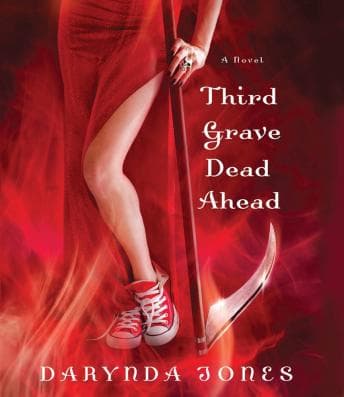
Charley Davidson is not horror. Let me get that out of the way before my podcast listeners come for me.
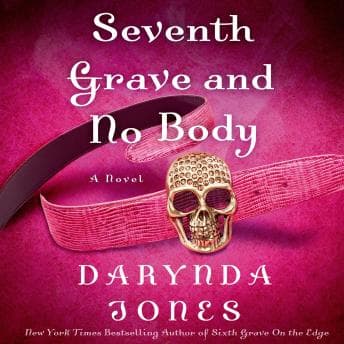
But here's the thing — this series lives in that weird paranormal sweet spot where hellhounds are escaping onto our plane, the protagonist is literally the grim reaper, and there's genuine darkness lurking under all the snappy one-liners. Seventh book in, and Darynda Jones still knows how to thread real menace through what is essentially a supernatural romantic comedy. I respect that. Not every author can balance twelve escaped beasts from hell with a goldfish subplot and make both of them matter.
I was shelving returns at the library on a slow Thursday afternoon, earbuds in, when Charley's narration about the hellhounds stalking her hit a particular beat that made me stop mid-Dewey Decimal and just... stand there holding a copy of Where the Wild Things Are. Appropriate, honestly.
The Voice That Carries Seven Books
Lorelei King is doing something I rarely see sustained across a long-running series: she's not coasting. Seven books deep, and her Charley Davidson still crackles with that specific manic energy — the breathless sarcasm, the way she shifts from wisecracking to genuinely shaken in the span of a sentence. King's comedic timing is the engine here. She lands Charley's jokes with the kind of precision that tells me she gets the character, not just the words on the page. There's a difference between reading humor and performing it, and King is performing.
What impressed me more, though, is how she handles the tonal whiplash. This book bounces between Charley's signature irreverence, the genuinely unsettling thread about her father's disappearance and secret investigation, and the heated Reyes scenes — and King navigates all of it without the seams showing. Her voice for Reyes carries this low, dangerous warmth that makes the romantic tension land without feeling like it belongs in a different book. Compare that to some urban fantasy narrators I've suffered through who treat every male love interest like they're reading a shampoo commercial, and you'll understand why King has a fanbase that follows her specifically. Lorelei King's restraint reminded me of what keeps drawing me back to Stephen King's Night Shift — the best performers in any format know exactly when to pull back.
The narrator commits. That's rare.
Hellhounds, Daddy Issues, and a Goldfish Named What
So the plot. Twelve hellhounds want Charley dead (relatable energy for a Monday). Her dad's vanished and left behind breadcrumbs of an investigation that's rewriting her understanding of him. There's a string of suicides that smells wrong. Her ex-best friend is haunting her. Reyes is attracting unwanted attention from someone famous. And Charley — who is prophesied to do something enormous and terrible — decides her first step toward responsible adulthood is getting a pet goldfish.
The goldfish thing shouldn't work. It's absurd. But Jones uses it as a running thread that actually says something about Charley's fear of her own power, her terror that she destroys everything she touches. That's the kind of writing I appreciate in genre fiction — the joke is also the thesis.
Where the book wobbles for me is in the sheer density of subplots. Seven books into a series, there's a lot of mythology to service, a lot of relationships to check in on. Some threads feel like they're being moved forward an inch just to justify their presence. The ex-BFF haunting, for instance, doesn't carry as much weight as the father's disappearance, but it gets comparable real estate. At ten and a half hours, there are stretches in the middle where I felt the pacing soften — not enough to lose me, but enough that I noticed.
And look, I'll be honest: this isn't my usual lane. I'm someone who thinks horror should leave bruises. The Charley Davidson series leaves something more like — a pleasant sunburn? With occasional claw marks? The horror elements are real but they're not the point. The point is Charley's voice, her relationships, the comedy. If you're coming to this expecting sustained dread, you're in the wrong cemetery. But if you want supernatural stakes delivered with genuine wit and a narrator who elevates every page, this delivers.
Who Gets an Invitation to This Particular Circle of Hell
If you've been riding with Charley since book one, you already own this. You don't need me. But if you're an urban fantasy listener who's been eyeing this series — yes, start at the beginning, don't jump in at book seven, that way lies confusion — King's narration is the reason to go audio over print. She IS Charley at this point.
If you scare easily, you're actually fine here. This is horror-adjacent, not horror. If you need your paranormal fiction to take itself seriously at all times, skip this. Charley would annoy you. She'd probably be okay with that.
My podcast listeners are going to raise eyebrows at me reviewing this one, but good genre fiction is good genre fiction. Shirley Jackson walked so authors like Jones could... do a very different thing in very different shoes. But they're walking the same haunted streets, just on opposite sidewalks.
Shelving this one under: fun, fast, and sharper than it pretends to be.