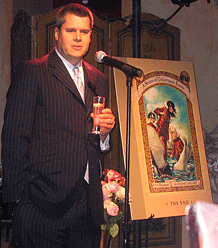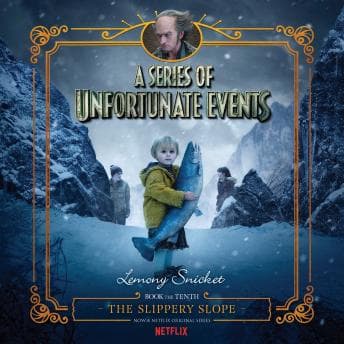

"If you are allergic to a thing, it is best not to put that thing in your mouth, particularly if the thing is cats."
I was mid-stride on my morning jog through Cambridge when that line hit, and I actually stopped running to laugh. Just stood there on the sidewalk like a weirdo, catching my breath and grinning at my phone. This is what Lemony Snicket does to people.
Look, I came to this series late. Way late. I'm a grown woman with a PhD who studies why humans make terrible decisions, and here I am, ten books deep into a children's series about orphans being chased by a man in bad disguises. My therapist would have thoughts about Count Olaf, but honestly? He's a fascinating case study in narcissistic personality disorder with theatrical tendencies. The man literally cannot stop performing, even when it actively undermines his schemes. That same theatrical self-sabotage shows up in Return of the King, where Denethor's pride becomes his undoing—another case of personality flaws driving plot straight off a cliff.
Why a Psychology Researcher Is Obsessed With Children's Lit
Here's the thing about The Slippery Slope that kept nagging at me: why does Snicket spend so much time on vocabulary lessons in a book about children in mortal danger? And then it clicked. The Baudelaire orphans survive not through physical strength or luck—they survive because they understand words. They decode. They interpret. They read between lines.
Language becomes power here. Violet, Klaus, and Sunny are constantly translating the world around them, and in this installment, we see that skill tested against actual coded messages and secret organizations. Research shows that children who develop strong verbal reasoning skills are better equipped to navigate complex social situations. Snicket knows this. He's been teaching it all along, disguised as absurdist humor.
These kids have been through ten books of relentless loss, and by now they're starting to question whether the adults who claim to be "good" are really any better than the villains. That moral ambiguity? Sophisticated stuff for a kids' book. They're learning what every psychology student eventually learns: people are complicated, and categories like "good" and "evil" are messier than fairy tales suggest.
Merritt's Melancholy, Curry's Scenery-Chewing
Okay, so. Stephin Merritt and Tim Curry. What a combination.
Merritt brings this melancholy wit that's perfect for Snicket's narration—there's a weariness to his delivery that matches the "I'm sorry to tell you this" energy of the prose. He sounds like someone who's seen too much and is genuinely apologetic about making you witness it too. It works.
Tim Curry, though. Tim Curry doing villain voices is basically cheating. The man was born to voice theatrical menace. When he hits those Count Olaf moments, you can hear the scenery being chewed. And I mean that as a compliment.
The pacing does drag in spots—there are sections in the middle where the mountain-climbing bits felt repetitive, and I found myself zoning out a little during my third lap around the Charles River. But when the plot picks up? When we get to the revelations about V.F.D. and that surprising survivor? I nearly tripped over a duck because I wasn't paying attention to where I was running.
(Yes, there are ducks on my running path. Yes, they're aggressive. No, this is not relevant to the review.)
The Baudelaires Are Growing Up—And It's Not Cute
Not in a coming-of-age way. In a "we've seen too much and we're starting to make morally questionable choices ourselves" way. Sunny, the baby who communicates in babble that her siblings translate, is literally learning to cook in this book. She's developing skills. She's becoming a person separate from her siblings.
And Violet and Klaus? They're starting to realize that the world isn't divided into Baudelaires and Olaf. There are shades. There are people who did bad things for reasons they thought were good. Snicket understands how children process the realization that their parents were complicated people with secrets.
My mother still doesn't understand why I analyze fictional characters like case studies. "Priya, it's a children's book," she'd say. But the human mind has patterns, and Snicket gets those patterns. The way grief makes you cling to rituals. The way trauma bonds siblings together. The way hope can be more painful than despair because at least despair is predictable.
Who Should Queue This Up (And Who Should Skip)
Families doing road trips? Adults who want something smart but not heavy during their commute? This is pretty much ideal. The six-hour runtime flies by (mostly), and there's enough going on that you won't feel like you're wasting time. Skip it if you need resolution or uplift—that's not what this series is selling.
What it *is* selling is the radical idea that children can handle difficult truths, that vocabulary is a survival skill, and that sometimes the people trying to save you are just as flawed as the people trying to destroy you.
Case Closed (For Now)
Probably won't relisten immediately—I've got three more books in this series to get through, and my dissertation committee would probably appreciate if I spent less time on children's literature and more time on, you know, actual research.
But psychologically? This tracks.