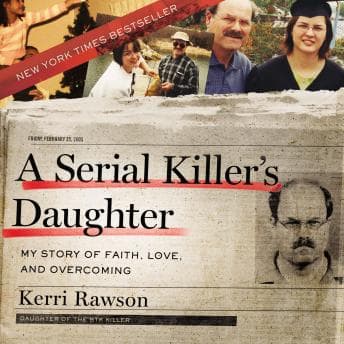

This isn't a true crime book. I need to say that upfront because if you're coming to this expecting the gory details of BTK's crimes, you're going to be frustrated. And honestly? That's not a criticism. It's the whole point.
Kerri Rawson's memoir is about what happens *after*. After the FBI agent at your door. After the news breaks. After your entire childhood gets recontextualized as a lie told by a monster who also taught you to ride a bike. That's the horror here, and it's the kind that doesn't need crime scene photos to make you deeply, profoundly uncomfortable.
The Slow Unraveling
Rawson structures this book around her own psychological collapse and reconstruction, which means it's less of a narrative and more of a... spiral? She circles back to the same moments—the arrest, the phone calls with her father in prison, the shattering of her marriage, the faith that both failed her and saved her. Some listeners found this repetitive. I get it. But I think it's actually doing something intentional. Trauma doesn't move in a straight line. It loops. It doubles back. You think you've processed something and then you're crying in a parking lot six months later because a song came on the radio.
The faith element is heavy. Like, *really* heavy. If you're not into that, this might not be your book. Rawson is deeply Christian, and her journey back from the abyss is explicitly framed through prayer, scripture, and what she describes as direct communication with God. There's even a section where the narrator voices God's replies to Kerri's prayers, which—look, I grew up in a religious household where horror was forbidden, so I understand the impulse. But I can also see why some listeners found it jarring.
Devon O'Day's Complicated Performance
Here's where it gets interesting. Devon O'Day has this incredibly warm, almost maternal voice. Rawson herself said in an interview that she "fell in love" with O'Day's narration because she "took very good care of my story." And I believe that. You can hear the care. The consideration. The gentleness with which O'Day handles some genuinely devastating material.
But.
Some listeners compared it to a children's bedtime story, and I understand that criticism too. There's a tonal mismatch at times—you're hearing about the psychological aftermath of discovering your father murdered ten people, and the voice delivering this information is so soothing it almost lulls you. It's like getting terrible news from a really kind nurse. The kindness is real, but it creates this weird cognitive dissonance. That same tonal tension shows up in State of Terror: A Novel, where the narration has to balance political dread with thriller pacing.
I think whether this works for you depends on what you need from the listening experience. If you want the narration to match the darkness of the content—to lean into the horror—O'Day's approach might frustrate you. But if you're approaching this as a survivor's story, as a book about healing rather than harm, then her warmth makes sense. She's not narrating a crime documentary. She's narrating a recovery memoir.
(Shirley was unimpressed by the whole thing, for what it's worth. She slept through most of it. Cats have no appreciation for psychological complexity.)
Who Should Listen (And Who Should Skip)
This book understands that horror isn't about gore—it's about dread. And the dread here is existential. What do you do when the person who made you is also a person who destroyed others? How do you reconcile the father who loved you with the monster who existed alongside him? Rawson doesn't have clean answers, which is probably the most honest thing about this book.
If you're a true crime completist who needs to consume everything BTK-related, this fills in a perspective you won't get anywhere else. But go in knowing you're getting Kerri's story, not Dennis Rader's. He's almost peripheral here—a shadow that warps everything without being the focus. If you're someone who's experienced trauma and found your way through it via faith, this might hit really hard. Rawson is unflinching about her own breakdown—the PTSD, the marriage problems, the years of therapy. She doesn't pretend the Jesus stuff fixed everything overnight. That felt honest to me.
Skip this if you want traditional true crime procedural stuff, or if heavy religious content is a dealbreaker. It won't scare you in the genre sense. But if you've ever wondered what it would be like to have your entire identity pulled out from under you—to discover that your memories are lies—it might unsettle you in a way that lingers.
The Kind of Horror That Doesn't Need a Body Count
My podcast listeners are going to have mixed feelings about this one. It's not horror in the genre sense, but it's horrifying in the human sense. And sometimes that's worse.