
What happens when the American Dream gets a gated community and a homeowners association?
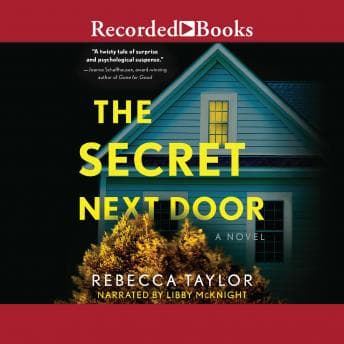
I was grading sophomore essays on The Great Gatsby at 11 PM - yes, another batch of papers arguing that the green light represents money (it does, but also... more) - when I realized I'd been listening to The Secret Next Door for three hours without touching my red pen. That's either a sign of Rebecca Taylor's pacing or an indictment of my teaching career. Possibly both.
This is suburban noir, and I mean that as genuine praise. Taylor, who's a licensed psychologist in her other life, has written what amounts to a contemporary riff on the classic "beautiful surfaces hiding rot" theme that Fitzgerald would recognize. The difference is that instead of Jazz Age mansions, we get Denver's most sought-after development. Instead of old money versus new money, we get Alyson Tinsdale desperately trying to impress the neighborhood matriarch Bonnie Sloan. The anxiety is the same. The masks are just different.
When the HOA Meeting Becomes a Crime Scene
The setup is deceptively simple: new family moves to perfect neighborhood, golf course development creates community conflict, then a thirteen-year-old boy turns up dead by the lake. What elevates this beyond typical domestic thriller territory is Taylor's psychological insight into how communities protect their own - until protecting each other means protecting secrets that should never have been kept.
Libby McKnight's narration caught me off guard. She does something clever with the family dynamics - there's this growling command voice she uses for certain mothers that immediately signals "this woman is barely holding it together." When anxious children speak, the pace quickens in a way that feels physiologically accurate. (Twenty years of watching teenagers has taught me exactly what panic sounds like.) Then she'll shift to a softer reassurance tone for maternal moments, and you feel the whiplash of parenting in real time.
The character differentiation isn't flashy - no wild accents or theatrical voices - but it's precise. You always know who's speaking, which matters in a book with this many neighborhood players.
The Fitzgerald Problem (And Why It Works Here)
Here's where I'll channel my inner English teacher for a moment. The "perfect facade hiding dysfunction" story is old. It's Gatsby. It's Revolutionary Road. Hell, it's even Romeo and Juliet if you squint—warring families, social performance, tragedy born from maintaining appearances. It's every suburban satire since the 1950s. So why does this one work?
Because Taylor isn't interested in satire. She's interested in the actual psychology of why people maintain these facades - the desperation behind Alyson's need to belong, the political ambitions that make Bonnie's family struggles feel like existential threats. The golf course development controversy becomes a pressure cooker that exposes every crack in every marriage, every lie parents tell themselves about their children.
I'll be honest: the mystery element is probably the weakest link. Some listeners have complained that it "leads nowhere," and I understand that criticism. If you're coming to this expecting a whodunit with a satisfying reveal, you might feel cheated. But I'd argue that's missing the point. The death is a catalyst, not a puzzle. It's what forces these people to stop pretending.
Who Should Tune In (And Who Should Skip)
This is for readers who loved Big Little Lies and understood that the mystery was never really the point. If you appreciate psychological realism over plot mechanics, if you find yourself fascinated by the small cruelties of social hierarchies, this will hit. My wife Denise, who teaches sociology at the community college, would probably assign this as supplementary reading.
Skip it if you need your thrillers to actually thrill in the traditional sense. If a book without a clear antagonist frustrates you, or if you find suburban drama tedious, this isn't your audiobook. No shame in that - we all have our genres.
At 10 hours and 24 minutes, it's a solid week of commutes or about four grading sessions. McKnight's pacing keeps it moving even when the plot takes its time. I listened at 1.0x because - and I'll die on this hill - the pauses between characters matter. Taylor wrote those silences. McKnight performs them.
Final Grade
I finished this at 1 AM, essays still ungraded, and I didn't regret it. That's not nothing. Taylor has written a book about the lies we tell to belong, and how those lies eventually demand payment. It's not Fitzgerald - nothing is - but it's smart, psychologically sharp fiction that respects its readers' intelligence.
My students would probably hate this. Too much adult anxiety, not enough action. I loved it. Make of that what you will.