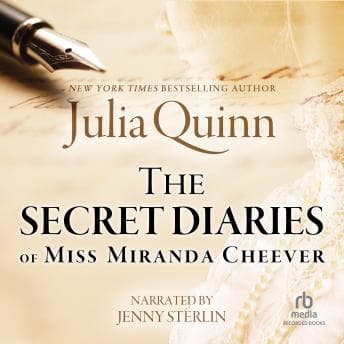

Look, here's the thing about Julia Quinn - she writes the kind of Regency romance that makes you forgive a lot of sins. And this audiobook? It's going to test that forgiveness.
I came to this one expecting the wit and warmth Quinn's known for. The Bridgerton books had spoiled me, frankly. The Viscount Who Loved Me set my expectations impossibly high for what Quinn could do with a brooding aristocrat. And the story itself - Miranda Cheever, a plain girl who falls for a brooding viscount at age ten and carries that torch into adulthood - it's got all the bones of a classic slow-burn romance. The diary framing device is charming. Quinn's humor lands where it should. There's a reason this won the 2008 RITA Award for Best Regency Historical Romance.
But then there's the narration.
The Elephant in the Drawing Room
I don't say this lightly, because I believe narration is performance art. Jenny Sterlin maintains consistent pacing throughout the ten-plus hours, which is something. But consistent pacing without emotional range is just... reading words aloud. And that's what we get here.
The problem isn't technical. The audio quality is clean. Sterlin enunciates clearly. But Quinn's dialogue sparkles on the page - it's meant to be delivered with timing, with that slight pause before the witty rejoinder, with the shift in register when Turner goes from sardonic to vulnerable. What we get instead is flat. Monotone, if I'm being honest. And I am.
I kept waiting for Sterlin to find the rhythm of Quinn's prose. She never quite does. There's a scene where Miranda finally confronts Turner about his emotional walls - it should land with weight, with years of longing behind it. Instead it just... happens. Same tone as a conversation about breakfast.
Why I Kept Listening Anyway
Here's what's interesting, though. I finished the whole thing. Denise asked me why I looked vaguely annoyed during our lakefront walks last week, and I couldn't quite explain it. Because the story underneath is genuinely good.
Quinn does something clever with Miranda - she's not beautiful by Regency standards, and the book doesn't pretend she suddenly becomes so. She's smart, she's patient, she's got this quiet dignity that makes her more interesting than a dozen diamond-of-the-season heroines. Quinn pulled off something similar with Sophie in An Offer from a Gentleman - another heroine whose worth isn't tied to conventional beauty. Turner's damage feels earned rather than manufactured. Their eventual coming together has the inevitability of good romance without feeling predictable.
(My students would mock me for caring this much about a Regency romance. They can keep their opinions to themselves.)
The humor works even through the flat delivery. There's a scene involving a bee that made me actually laugh out loud during a faculty meeting. Principal Martinez definitely noticed. I regret nothing.
What Quinn Built That Sterlin Missed
Quinn's prose deserves to be savored. She writes with a light touch that's harder than it looks - the jokes land naturally, the emotional beats don't feel forced, the historical details sit in the background where they belong. This is why we still read the classics of the genre, and Quinn's earned her place in that conversation.
But here's what the narration misses: the pause is punctuation. Quinn builds her comedic timing into the sentences themselves. A good narrator would recognize those beats and honor them. Sterlin reads through them like they're not there.
I found myself mentally re-performing lines as I listened. Which is not ideal. That's work I shouldn't have to do.
Class Dismissed
This is a frustrating audiobook to review because I'm essentially recommending against the format for a book I genuinely enjoyed. The story is sweet, amusing, and rewards patience. Miranda and Turner's romance unfolds with the kind of slow-burn tension that Quinn handles better than almost anyone writing today.
But the narration actively works against the material. Multiple listeners have said they pushed through despite it, and I understand that impulse. The story is worth it. The question is whether you want to fight the delivery for ten hours to get there.
Who should listen: Quinn completists who can tolerate flat narration for a genuinely charming story. Try 1.25x speed to push through the flatter sections - it helps a bit with the pacing issues. Who should skip: Anyone who needs strong vocal performance to stay engaged. Honestly? This might be one where the print version serves you better. The words deserve a better performance than they got here.
(Don't tell my podcast listeners I said that. The Annotated Life is supposed to be pro-audiobook. All 47 of them would be devastated.)