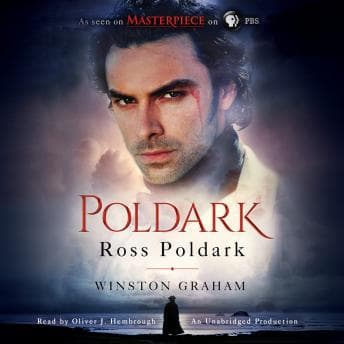

"I am Ross Poldark. And I am a man who has nothing left to lose."
That line hit somewhere around hour three, and I actually had to pull over in the hospital parking lot because I wasn't ready to walk into my shift yet. Carlos texted asking if I was okay. I blamed traffic.
Look, I picked this up because I needed something to replace the silence on my drives home from night shift. Something long enough to last a few weeks, engaging enough to keep me awake at 7 AM when my body is screaming for sleep, but not so intense that I'd miss my exit. Historical fiction usually fits that bill. What I didn't expect was to get emotionally wrecked by an 18th-century Cornish mining drama.
The Medical Details Are... Well, There Are No Medical Details. And That's Fine.
As someone who's actually worked a code, I'm usually the person yelling at fictional doctors for doing CPR wrong. But here's the thing - Graham doesn't try to be medically accurate because this isn't that kind of book. The injuries and illnesses are period-appropriate and vague in the way they would've been in 1783. Nobody's diagnosing anything with certainty. People just... get sick. And sometimes they die. And sometimes they don't.
Honestly? It felt more real than half the medical thrillers I've listened to. Because that's how it was. That's how it still is sometimes in the middle of the night when we're running out of options and the attending is on the phone with another specialist and we're all just hoping.
The class differences in this book - the way the poor characters are treated, the way they die from things that money could prevent - that part I felt in my bones. I see it every shift. Different century, same story.
Oliver Hembrough Understood the Assignment
I need to talk about this narrator because he's doing something special. Hembrough voices probably two dozen distinct characters across this 14-hour saga, and I never once got confused about who was speaking. The Cornish miners sound different from the gentry. The women sound different from each other - not just "higher pitched" but actually different cadences, different rhythms to their speech.
Demelza. Oh, Demelza. The way he voices her - rough and uneducated at first, then slowly shifting as she grows - it's subtle work. I didn't even notice it happening until suddenly she sounded different and I realized hours had passed.
The socioeconomic stuff comes through in the voices too. You can hear who's educated and who isn't. Who has power and who doesn't. It's the kind of detail that makes you trust the narrator completely.
Night Shift Approved (With Caveats)
This is a slow burn. I mean SLOW. If you're looking for action-packed adventure, this isn't it. Ross Poldark spends a lot of time thinking about copper mines and crop yields and whether his servants are stealing from him. There are long stretches where not much happens except people talking and feeling things.
But here's the thing - at 3 AM when the unit is quiet (knock on wood, always knock on wood) and I'm catching up on charting, that slow pace is perfect. It's meditative without being boring. The drama builds so gradually that when something big finally happens, it hits harder.
The love story - and yes, there are actually two love stories happening here - unfolds over years. Real years. Not that compressed romance novel timeline where people fall in love in a week. Ross and Elizabeth. Ross and Demelza. The triangle is messy and complicated and nobody's really the villain. That same kind of morally complex relationship drama—where everyone's just trying to survive their circumstances—reminded me of My Brilliant Friend. Elizabeth isn't a bad person for choosing security. Ross isn't a hero for pining. Demelza isn't a saint for putting up with it.
My mom would love this. She still watches those PBS period dramas on Sunday nights. I'm going to tell her about it, but I'm not telling her about the parts that made me cry in the car. (Carlos asked why I was crying. I blamed allergies. Again.)
The Cornwall of It All
I've never been to Cornwall. Never been to England at all. But I can see those cliffs now. I can hear the wind off the sea. Graham's writing - and Hembrough's delivery - paints this landscape so vividly that I forgot I was driving through Phoenix at dawn. The mines, the fishing villages, the crumbling estates. It's all there.
There's something about the way Graham writes about work - real, physical, dangerous work - that struck a chord with me. The miners in this book aren't background characters. They're people with families and fears and dreams. They die in cave-ins. They get sick from the dust. And Ross Poldark, for all his gentleman status, actually cares about them.
Who Should Listen (And Who Should Skip)
If you need fast-paced action or hate slow-burn romance, skip this one. But if you're looking for something to decompress with after a long shift - something with real emotional weight that unfolds at a human pace - this is it. Perfect for that exhausted-but-not-ready-to-sleep feeling.
There are eleven more books in this series. Eleven. I'm already downloading the next one.