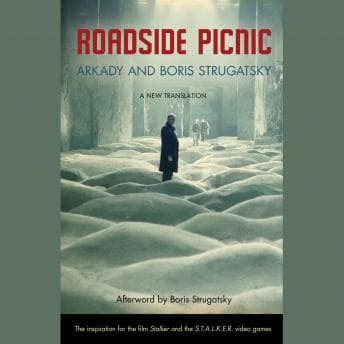

Look, I need to lodge a complaint with the Strugatsky brothers. You don't get to write a book this short — seven hours! — and then have it take up permanent residence in my brain for the rest of the week. That's not a fair trade. I finished this in basically four commute segments and I've been thinking about it every single day since, which means the ROI on this audiobook is absurdly high for the runtime.
Here's my TL;DR before I get into it: Roadside Picnic is the book that invented the concept behind the S.T.A.L.K.E.R. games and Tarkovsky's Stalker film, and it holds up better than either of them because the Strugatskys understood something most sci-fi writers still don't — the most terrifying aliens are the ones who don't even notice you exist.
The Premise Is Basically a Stack Trace Nobody Can Read
So here's the setup that wrecked me as an engineer: aliens visited Earth. Left. Didn't make contact. Didn't leave a message. They just... passed through, like tourists at a rest stop, and left behind garbage. Literal alien garbage. And humanity is crawling through these irradiated "Zones" trying to reverse-engineer artifacts they can't understand — "full empties," "bug traps," "witches' jelly" — with zero documentation. No API. No README. Just objects that sometimes grant wishes and sometimes kill you in ways physics can't explain.
If you've ever stared at a legacy codebase at 3AM trying to figure out what some function does with no comments and no tests, congratulations, you understand the emotional core of this novel. Red Schuhart is basically a senior engineer who keeps getting pulled back into production because he's the only one who knows where the landmines are.
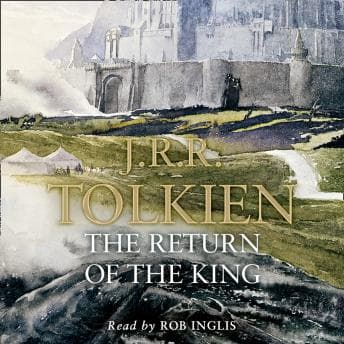
The worldbuilding here isn't sprawling — it's dense. The Strugatskys give you just enough to understand the Zone's rules and then immediately break them. It's the polar opposite of something like Fellowship of the Ring, where the rules are lovingly mapped out for you — here, the mystery is the point. Objects behave inconsistently. People who enter the Zone come back wrong. Red's daughter Monkey starts growing golden fur for reasons nobody can explain. It's unsettling in a way that big-budget sci-fi rarely achieves because the mystery isn't something to be solved. It's something to survive.
Robert Forster's New York Mechanic Energy
Okay, so Robert Forster — not Ray Porter, sadly (a girl can dream) — narrates this, and I need to be honest: the first twenty minutes, I thought it was a mismatch. He's got this laconic, slightly gruff delivery. Very blue-collar New York. Very "guy explaining transmission problems at your auto shop." For a Russian sci-fi novel translated from Soviet-era literature, it felt... weird.
But then it clicked. Red Schuhart isn't a philosopher or a scientist. He's a working-class guy who loots alien ruins for beer money. And Forster plays him exactly right — exhausted, cynical, a little drunk, fundamentally decent under layers of bravado. When Red's sitting in a bar rationalizing his next trip into the Zone, Forster's voice carries this specific weight of a man who knows he's making a bad decision and is going to make it anyway. That resigned delivery hit different at 6:15 AM on a Tuesday, surrounded by other people quietly making their own questionable life choices on the Caltrain.
The weakness: Forster doesn't do much vocal differentiation between secondary characters. Buzzard Burbridge, Kirill, the various scientists — they kind of blur together. For a seven-hour book with a relatively small cast, it's manageable, but if you zone out (pun intended), you might lose track of who's talking in dialogue-heavy sections.
The Last Chapter Broke Something in Me
I won't spoil it, but Red's final trip into the Zone — the one the whole book builds toward — is one of the bleakest, most honest endings I've encountered in sci-fi. He's stumbling through impossible terrain, and his internal monologue starts crumbling into this desperate, half-coherent prayer that made my chest tight on a packed morning train. Forster's delivery in those final minutes goes from gruff detachment to something genuinely raw. I sat in my seat at Mountain View for an extra minute just staring at my phone.
The Strugatskys wrote this in 1972. Soviet censors butchered it. And it still feels more relevant than 90% of the alien contact novels published this decade.
Who This Is For (and Who Should Bail)
Perfect for: anyone who loves hard sci-fi premises executed as literary fiction. If you liked Annihilation by VanderMeer or Blindsight by Watts — that same vibe of "the universe is indifferent and that's scarier than hostility." Also perfect for short commutes. Seven hours is nothing.
Skip if: you need action-driven plotting or clear resolutions. This is a character study wrapped in a sci-fi concept. The Zone is the hook; Red's deteriorating life is the actual story. And if Forster's flat delivery doesn't click for you in the first hour, it probably won't click at all.
Commute Verdict: Small Payload, Maximum Impact
Seven hours. Four commutes. Weeks of existential dread about whether humanity is just ants crawling through a cosmic picnic site. The ROI on this audiobook is ridiculous. I'd bump the narrator to a 3.5 — Forster is genuinely great with Red but limited everywhere else — and the book itself is an easy 4.5. Worth a credit, especially if you're between series and need something that'll punch above its runtime.