So last Tuesday I'm staring at my laptop at 11PM, half-debugging a flaky service mesh, half-scrolling through my credit card statement from a weekend trip that got... ambitious. And I think: when's the last time I actually understood how debt works beyond "pay it off, dummy"? Cue me queuing up this audiobook for the Wednesday morning commute.
TL;DR: Worth your commute if you're financially illiterate-adjacent (no shame, most of us are), but this could've been a blog post. Or maybe three blog posts. Stretched to 7 hours.
Good Debt vs. Bad Debt Is Basically Git Branching for Your Finances
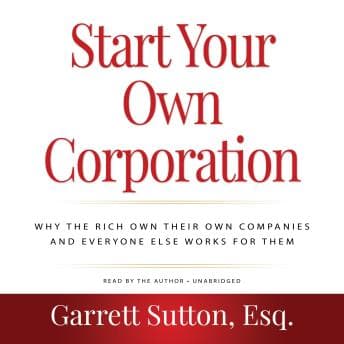
The core thesis here - that debt isn't inherently evil, that there's a strategic difference between debt that builds wealth and debt that destroys it - is genuinely useful. Garrett Sutton breaks down concepts like leveraging debt for real estate or business investment versus drowning in consumer credit card balances. He walks through how credit scores actually work (FICO scoring models, the weight of utilization ratios vs. payment history), how to dispute inaccuracies on your credit report, and how to deal with debt collectors without losing your mind.
The real-life stories are the strongest parts. There's a couple who restructured their debt by understanding which obligations were "good" (mortgage on a rental property generating income) versus which were bleeding them dry (high-interest store cards for stuff they didn't need). Sutton uses these case studies to illustrate strategy rather than just lecturing, and it works. The section on credit repair scams is particularly sharp - he calls out specific red flags like companies demanding upfront fees before doing anything, which is apparently illegal under federal law. Didn't know that. Useful.
But here's where my 1.75x speed comes in. There's a LOT of padding. Concepts that could be explained in 10 minutes get the 30-minute treatment with repetitive examples and motivational pep talks. The Rich Dad ecosystem has always had this problem - the frameworks are solid, but they're packaged in 3x more words than necessary. I ran into the same inflation problem with 21 Irrefutable Laws of Leadership - genuinely useful frameworks buried under enough repetition that 1.5x felt mandatory by chapter three. I bumped this to 1.75x by hour 2 and honestly should've gone faster for some of the filler sections.
The Living Room Narration - Cozy but Not Exactly Electric
Sutton narrates portions himself alongside Steve Stratton, and there's a surprise cameo from Kim Kiyosaki speaking in her own voice (which honestly caught me off guard on a drowsy Thursday morning train). The vibe is genuinely conversational - it really does feel like someone explaining credit scores to you over coffee, which is both a strength and a limitation.
Strength: accessibility. You don't need an MBA to follow this. Sutton's legal background gives him credibility when he's walking through dispute letter strategies or explaining the Fair Debt Collection Practices Act, and he doesn't talk down to you.
Limitation: energy. This is not a performance. There's no vocal dynamism that keeps you locked in when the packed 6:17 Caltrain is lulling you to sleep. I lost the thread a couple of times during the credit repair chapters - not because the content was bad, but because the delivery is so steady and even that my brain started treating it as white noise. Compare that to, say, a Ray Porter narration where even dry material gets this sardonic edge that keeps your attention. (Ray Porter narrates this. Just kidding. He doesn't. And you can tell.)
Stratton handles the more narrative-driven sections and he's perfectly competent - clear, professional, easy to follow. But nobody's buying this for the vocal performance.
Who Gets ROI Here (And Who Doesn't)
Perfect for: Anyone who's never really sat down with their debt strategy. If terms like "charge-off" and "debt validation letter" are fuzzy to you, this is a solid primer. Also decent for the commute IF you bump the speed - at 1x this will feel glacial.
Skip for: Anyone who's already read a few personal finance books or has a handle on credit fundamentals. If you've been through Ramsey, or even just spent a weekend on r/personalfinance, most of this will be review. And if you're looking for advanced wealth-building strategies, this ain't it - it's firmly in the "get your house in order first" category.
The Rich Dad branding will either attract you or repel you, and honestly the book mostly stands on its own practical merits regardless of how you feel about Kiyosaki's universe.
The Commit Message
The ROI on this audiobook is moderate - solid foundational knowledge, genuinely useful tactical advice on credit disputes and debt collector interactions, but padded to roughly twice the length it needs to be. I finished it in 4 commutes at 1.75x and retained maybe 3 commutes' worth of actual content. Not bad, not essential. If you're in debt and confused about where to start, this will give you a framework. If you're already past that stage, your time is better spent elsewhere.