
"Time doesn't heal you. You do."
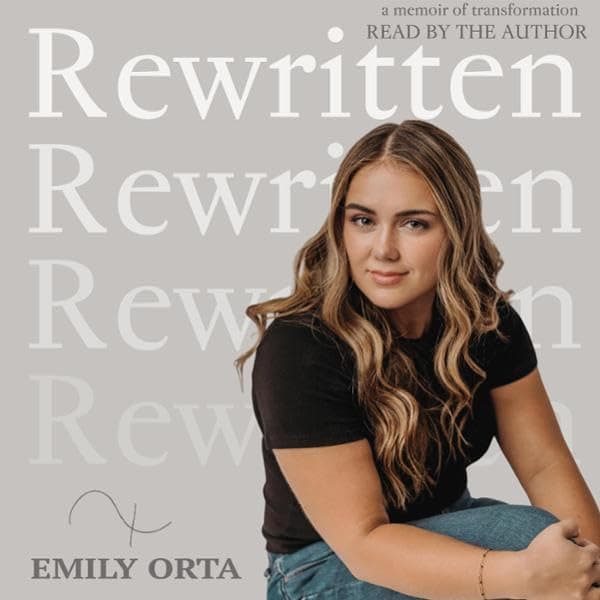
That line hit me somewhere around the forty-minute mark, and I had to stop stirring my dal because — okay, I'm going to be honest — my eyes were doing that thing where they get blurry and you pretend it's the onions. It was not the onions. I was standing in my kitchen at 9 PM on a Wednesday, spatula in hand, listening to Emily Orta read her own words about unlearning survival identities, and I thought: this woman has read attachment theory. She may not cite Bowlby, but she's lived it.
The Patterns Behind the Patterns
Here's what I found myself asking: why does this particular book work when so many self-help titles about heartbreak feel like warmed-over Instagram captions? The research actually shows that narrative identity — the story you tell yourself about who you are — is one of the most powerful predictors of psychological well-being. And Orta seems to understand this intuitively. She's not just saying "let go of toxic relationships." She's asking you to examine the architecture of why you built your identity around being chosen by the wrong person in the first place.
The book moves between poetry and prose memoir, which is a structural choice that could easily feel disjointed. But at under four hours, the brevity works in its favor. Each poem functions almost like a clinical vignette — a snapshot of a moment where a belief crystallized or shattered. The prose sections provide the connective tissue, the "here's what I understand now that I didn't then." It's a fascinating case study in someone doing their own cognitive restructuring in real time, on the page, without the clinical vocabulary but with all the emotional precision.
What makes this compelling is that Orta doesn't skip the ugly parts. She talks about the guilt of choosing yourself, about how leaving someone who hurt you can feel like betrayal because your nervous system learned that love equals accommodation. Psychologically, that tracks. That's the fawn response dressed up as devotion, and she names it without needing the DSM.
When the Author Is the Narrator (And It Actually Matters)
Emily Orta narrates her own book, and this is one of those rare cases where author-narration isn't just acceptable — it's the point. Listeners describe sobbing and smiling simultaneously, feeling like she's inside their head. I get it. There's a rawness to hearing someone read their own poetry about heartbreak that a professional narrator simply cannot replicate. The pauses feel earned rather than performed. When her voice catches on certain lines, you're not hearing an acting choice. You're hearing memory.
That said — and this is where I put on my researcher hat — the emotional delivery is consistently intense. There's not a lot of dynamic range between the heavier passages and the moments that are supposed to feel like emerging clarity. By the third hour, I noticed my own emotional fatigue setting in, which is something a more experienced narrator might have modulated. It's a minor thing, but if you're someone who processes grief in waves rather than continuous submersion, you might need to listen in chunks rather than straight through.
What My Therapist Would Say About This Book
My therapist would probably say this book does good work for a specific stage of healing — the stage where you've already left but you haven't yet stopped wondering if you were wrong to. Orta is excellent at validating the decision to choose yourself when every conditioning impulse screams that you should go back. She's less strong on the "what now" piece. The book gestures toward rebuilding but lives primarily in the space of recognition and release.
And that's okay. Not every book needs to be a complete therapeutic protocol. Sometimes what you need is someone who's been where you are saying, very clearly, very specifically: the version of you that tolerated that wasn't the real you. That was survival software. You can uninstall it. Pete Holmes does something adjacent to this in Comedy Sex God — using memoir and raw honesty to dismantle the self he'd built around other people's approval, and I found myself doing the same blurry-eyes thing in that one too.
The poetry sections vary in quality — some land with genuine linguistic force, others read more like journal entries that could use another pass. But the honesty never wavers, and in a book like this, honesty is the currency that matters.
Who Gets the Most From This
If you're in the acute aftermath of a breakup or a betrayal and you need someone to sit with you in the wreckage — not to fix it, but to witness it — this book does that thing well. If you're looking for structured exercises, research-backed frameworks, or actionable steps, you'll find this emotionally rich but practically thin. That's not a failure of the book. It's a boundary of what the book is trying to be.
At 3 hours and 50 minutes, it's the length of a long bath and a good cry. Sometimes that's exactly the prescription.
The Diagnosis
The protagonist here — because Orta is both author and protagonist of her own healing narrative — exhibits classic anxious attachment patterns that she's actively reworking through storytelling. The fact that she can articulate her own patterns with this much clarity suggests she's done real internal work, not just performed it for an audience. I respect that. My dal, for the record, turned out fine. Better than fine. Sometimes you cook and cry and come out the other side with something nourishing. That's basically Orta's thesis.