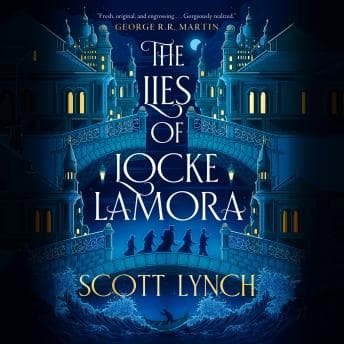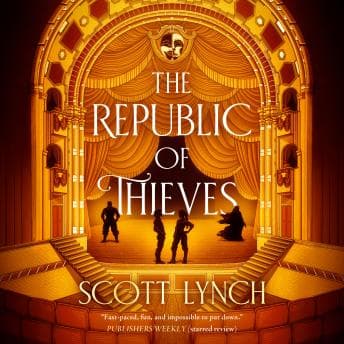

Let me cut to the chase: this is the book where Scott Lynch finally shows us Sabetha, and whether that payoff works for you will determine everything.
I finished this one during a late-night drive back from a client site in Houston. Four hours of Texas highway, Ranger snoring in the back seat, and Locke Lamora trying to outsmart the love of his life. The setup's solid—Locke's dying from poison, the Bondsmages offer a cure in exchange for rigging an election, and the catch is he'll be going head-to-head against Sabetha. The woman we've heard about for two books but never met. High stakes, personal conflict, political intrigue. Shadow of the Giant worked a similar angle—long-awaited reunion, political maneuvering, personal stakes all colliding. Should be a slam dunk.
The Ghost We Finally Meet
Here's the thing about building up a character for two novels before revealing them—you better deliver. Sabetha is... complicated. She's brilliant, she's capable, and she's got more walls than a forward operating base. The flashback structure alternates between present-day election scheming and their young thief days, including a genuinely entertaining sequence where the Gentleman Bastards have to put on a play. Yes, a theater production. It works better than it should.
But Sabetha herself? She runs hot and cold in ways that sometimes feel less like complexity and more like the author couldn't quite pin her down. One moment she's matching Locke move for move in their con war, the next she's shutting him out for reasons that feel more frustrating than tragic. The emotional push-pull reminded me of the relationship dynamics in Howard's End, though Forster at least gave his characters clearer motivations for their walls. I've worked with people who have trust issues—combat does that to you—but her behavior occasionally crosses from "damaged" into "the plot needs conflict here."
Michael Page Earns His Combat Pay
Michael Page continues to be the MVP of this series. Twenty-six hours is a serious commitment, and he carries it without breaking a sweat. His Locke has that perfect blend of cocky and desperate. His Jean is warm and loyal without being soft. And when he shifts between the various Bondsmagi—each one radiating that particular flavor of magical arrogance—you can practically feel the power differential in the room.
What impressed me most was his handling of young Locke versus present-day Locke. Same voice, but the youthful version has this raw eagerness that the older Locke has clearly burned through. That's not easy to pull off across hours of alternating timelines. Page makes it look effortless.
Where the Mission Gets Complicated
The dual timeline structure is both the book's greatest strength and its tactical weakness. The theater flashbacks are genuinely fun—watching these young thieves navigate an actual con within a play, dealing with diva actors and backstage sabotage. It's Lynch at his most playful. But the present-day election plot feels thinner by comparison. There's scheming, there's counter-scheming, but the stakes never quite match the life-or-death tension of the first two books.
And here's what kept nagging at me: for a book called "Republic of Thieves," there's surprisingly little actual thievery. It's more of a political chess match, which is fine, but don't come in expecting the elaborate heist energy of Lies of Locke Lamora. This is a relationship book wearing a fantasy caper costume.
The romance itself—and yes, this is fundamentally a romance—will work for you if you buy into Locke's obsession with Sabetha. I found myself invested about seventy percent of the time. The other thirty percent, I wanted to shake both of them and tell them to use their words like adults. But that's probably the point. Love makes tactical geniuses into idiots.
Mission Debrief
If you've followed Locke and Jean through two books, you're not stopping now. And you shouldn't—there's enough here to justify the mission, even if it's not the strongest entry in the series. The Bondsmage worldbuilding expands significantly, the ending sets up some genuinely intriguing threads, and Page's narration remains top-tier.
But manage your expectations. This is a transitional book, heavy on character development and lighter on the caper elements that made the series famous. Perfect for a long drive or a focused listen where you can track the timeline jumps. Skip it if you're looking for heist-first storytelling or if relationship drama makes you impatient—this one leans hard into the Locke-Sabetha dynamic. Not ideal for background listening either; you'll lose the thread.
Ranger approved this one, though he perked up more during the action sequences than the romantic tension. Smart dog.