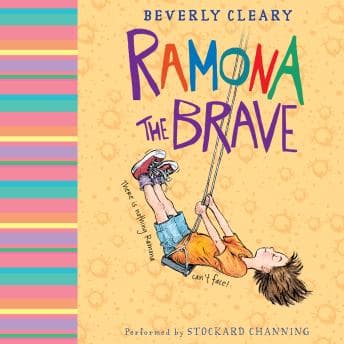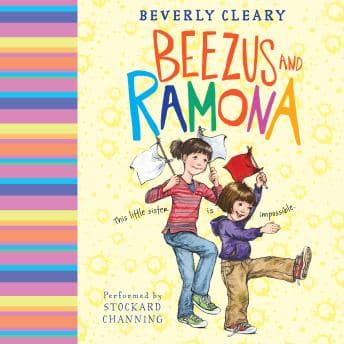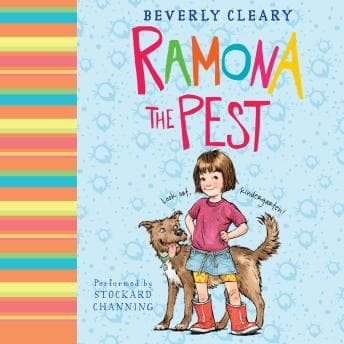

"I am not a pest. I am a kindergartener."
Somewhere around the forty-minute mark, Stockard Channing delivers this line with such wounded dignity that I actually laughed out loud. In the middle of grading papers. At 11 PM. My wife Denise looked over and asked if I was finally losing it. Maybe I am. But honestly? Listening to a children's book about kindergarten drama shouldn't hit this hard when you're a 52-year-old man who's spent two decades teaching teenagers.
And yet. Here we are.
Why Cleary Still Matters (Even Now)
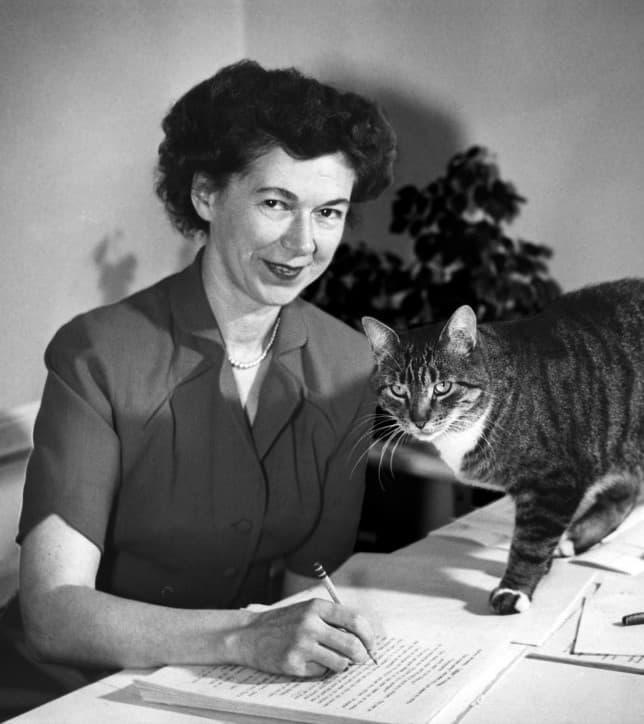
Look, I assign Beverly Cleary to exactly zero of my high school students. But I recommend her to every parent who asks me what their kids should be reading. There's a reason this book has been around since 1968 and still works. Cleary understood something fundamental about childhood that most writers miss—kids aren't trying to be difficult. They're trying to make sense of a world that operates on rules nobody bothered to explain to them.
Ramona pulls Susan's "boingy" curls not because she's a pest, but because they're genuinely irresistible and she doesn't yet understand that impulse control is a thing. She sits in her seat waiting for the teacher to tell her to "sit here for the present" because she genuinely believes a gift is coming. The humor isn't laughing at Ramona. It's recognizing the logic in her mistakes.
This is what Hemingway meant when he talked about writing true sentences. Cleary writes true children. Not sanitized, not precocious, not miniature adults. Real kids who feel things intensely and don't have the vocabulary to explain why.
Stockard Channing Gets It
Here's the thing about narrating children's books—it's way harder than it looks. You can go too cutesy and it becomes unbearable. You can play it too straight and lose all the warmth. Channing threads this needle beautifully.
Her Ramona voice has this quality of absolute sincerity. When Ramona is outraged, Channing is outraged. When Ramona is confused about why adults are so confusing, you hear that genuine bewilderment. But she never condescends. Never winks at the adult listener like "isn't this precious." She plays it straight, and that's exactly right.
The other characters work too. Her Miss Binney is patient but human—you can hear the teacher trying very hard not to laugh or sigh. Her Beezus has that perfect older-sister exasperation. (I have a sister. I recognized that tone immediately.)
At just over two and a half hours, the pacing is brisk. Some reviewers have mentioned it drags in spots, but I didn't feel that. Maybe because I was grading and walking the lakefront and pretending to listen to faculty budget meetings. (Principal Martinez, I was definitely not listening to this during your presentation. Definitely not.)
Not Just Nostalgia—Though There's That Too
I'll be honest. Part of why this worked for me is pure memory. I read these books as a kid in the 70s. My mom read them to me. There's a Proustian thing happening when I hear Ramona's adventures now.
But that's not the whole story. I've tried revisiting other childhood favorites and some of them—yikes. They don't hold up. The writing is thin, the characters are types, the lessons are heavy-handed.
Cleary's prose actually deserves to be savored. She's doing real work with language, even in a book for six-year-olds. The sentences are simple but not simplistic. The observations are specific. When Ramona describes the satisfying feeling of new school shoes, you remember that feeling. When she's mortified about the "dawnzer" incident (mishearing "dawn's early light" in the pledge), you cringe with recognition.
This is why we still read the classics. Not because they're old. Because they're true.
Who This Is For (And Who Should Skip It)
Obviously, kids. This is perfect for car rides, bedtime, anywhere you need to occupy a kindergartener through second-grader. The chapters are short enough to work in chunks.
But also? Adults who want to remember what childhood actually felt like. Teachers who need reminding that the "difficult" kid in their class might just be a Ramona—someone whose logic makes perfect sense from the inside. Parents who are exhausted by their own little pests and need to laugh about it.
My students would hate this. Too young for them, too simple, no dark themes or complex antiheroes. They'd probably gravitate toward something like Battle of the Labyrinth: Percy Jackson and the Olympians, Book 4 instead—heroes with actual flaws, real stakes, the kind of complexity teenagers crave. Skip this if you need that edge. But me? I love it. Sometimes you need a book that believes in people's fundamental goodness, even when they're pulling hair and refusing to apologize.
If you loved Charlotte's Web or Stuart Little, this is in that lineage—mid-century children's lit that respects its audience. If you're looking for something to share across generations, this works. I'm genuinely considering recommending it to some of my struggling readers. Sometimes going back to where reading was joyful helps.
The 2010 movie with Selena Gomez exists, and it's fine, but it's not this. Channing's voice in your head is the better experience.
Mr. Williams's Final Grade
Worth pausing the faculty meeting for. Definitely.