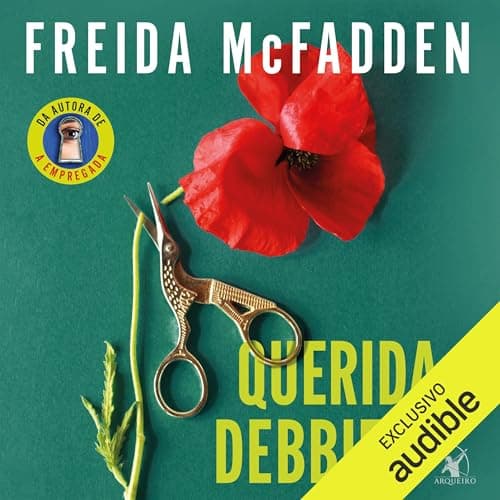

What happens when the woman who tells everyone else to leave their toxic marriage finally looks at her own?
I was sitting in my car in the hospital parking garage at 6:47 AM, engine off, windows fogging up because Phoenix mornings in winter actually get cold and nobody believes me when I say that. My shift had been brutal - two traumas back to back, a code that went sideways, and the kind of night where you question every career choice you've ever made. I needed something sharp and mean to listen to on my drive home. Querida Debbie had been sitting in my queue for two weeks. Perfect timing.
When the Advice Columnist Snaps
So here's the setup: Debbie Mullen writes an advice column where women pour out their worst domestic nightmares, and she responds with calm, measured guidance. Meanwhile her own husband is lying about where he goes, her teenage daughters are acting like they're hiding bodies, and she just lost her job. The premise alone had me nodding at a red light because - yeah. I've watched nurses counsel patients on stress management while running on four hours of sleep and pure spite. There's something deeply satisfying about watching a character who's been holding it together for everyone else finally decide she's done.
What got me was the advice column drafts. Debbie writes these polished, diplomatic responses for publication, but the book gives you her actual first drafts - the unfiltered, furious versions where she tells women to key their husband's car or worse. I laughed so hard on the I-10 that the guy in the next lane gave me a look. As someone who writes very professional incident reports at 4 AM while thinking very unprofessional thoughts, those drafts hit different.
Freida McFadden is a physician, and you can tell. Not because there are detailed medical scenes - this isn't that kind of thriller - but because she understands the specific exhaustion of a woman who spends her professional life caring for others while her own life is quietly imploding. The medical details are accurate. Finally. Or at least the emotional architecture of burnout is, which matters more here.
Three Narrators, One Messy Family
This is the Portuguese-language edition, and the three-narrator setup - Vanessa Goulart, Vivian Poyart, and Dalton Barone - works better than I expected. Having distinct voices for different POVs means you always know whose head you're in, which matters because McFadden is playing games with perspective the entire time. Goulart carries the Debbie sections with this barely-contained tension that reminded me of how I sound when I'm explaining to a new resident, very calmly, that no, we do NOT chart it that way. That quiet fury.
Barone handles the male perspective and gives it just enough charm to make you suspicious, which is exactly right for this kind of story. The production quality is clean - no awkward transitions between narrators, no weird audio level jumps. At 9 hours, it's a tight listen. I finished it in two post-shift drives and one session while making arroz caldo at midnight because I couldn't sleep and my brain wouldn't let go of the plot.
Now - some people apparently had issues with a narrator named Scott Brick in the English version. This is the Portuguese audiobook, so that's irrelevant here. But I'll say the Portuguese cast brings warmth and bite in equal measure. Poyart's work on the teenage daughter sections captures that particular brand of adolescent secrecy that made me want to text my own kids and ask what they're hiding.
The Twist That Knocked My Spatula Out of My Hand
I won't spoil it. But the final reveal is genuinely wild. Listeners keep calling it a "wrecking ball" and that's not wrong. McFadden has been leaving breadcrumbs the whole book and I caught maybe half of them, which annoyed me because I pride myself on diagnosing plot twists early. Honest Lie pulled the same trick on me — I was so convinced I had it figured out that I missed the thing that was right in front of me the whole time. (As someone who's actually worked a code, I can usually spot when a story is about to flatline or shock you. This one shocked me.)
That said - and this is where some listeners and I part ways - the characters outside of Debbie are a little thin. I noticed this same trade-off in Trouble with Twelfth Grave, where the engine is the central character's voice and momentum, and the supporting cast mostly exists to keep that engine running. The husband, the daughters, the people who write to the column - they serve the plot more than they breathe on their own. For a 9-hour listen, that's manageable. But if you need deeply layered secondary characters, you'll feel the gaps.
The pacing is fast, almost too fast in places. McFadden doesn't linger. She's efficient the way ER docs are efficient - get in, assess, act, move. I respect that. Some listeners wanted more room to sit with the emotional beats. I didn't mind. After a 12-hour shift, I want a book that respects my time.
Carlos asked why I was crying in the car. I blamed allergies. It wasn't the ending that got me - it was that scene where Debbie rereads her own published advice and realizes she's been too scared to follow it herself. That quiet devastation. My mom would love this (she still thinks I should've been a doctor).
Who Gets This and Who Doesn't
If you understand Portuguese and love McFadden's brand of domestic thriller with teeth - this cast elevates the material. If you need complex, multi-dimensional supporting characters or slow-burn psychological tension, you might find this too streamlined. Skip it if you're looking for a deep ensemble piece. But for a dark, funny, vengeful ride about a woman who finally takes her own advice? Night shift approved.
I'm adding it to the group chat I have with my sisters. My youngest sister is an advice columnist for a local paper in Cebu. She's going to have feelings about this one.