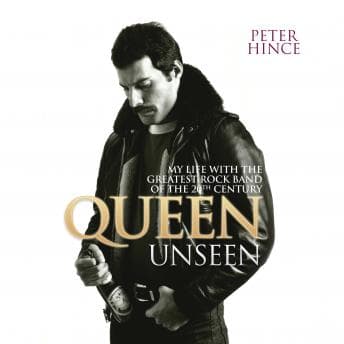
Peter Hince was the guy who made sure Freddie Mercury's mic stand was cut to the right length and his piano was in tune before 80,000 people lost their minds. That's a perspective worth hearing.
I picked this one up on a whim during a late-night equipment inventory at the office - spreadsheets and asset tracking, the kind of mind-numbing work that begs for something in your ears. Wasn't expecting much from another rock memoir. Figured it'd be the usual "and then we partied with so-and-so" drivel. I was half right, but the other half surprised me.
The View From Behind the Amps
What sets this apart from most band memoirs is the angle. Hince wasn't a bandmate or a groupie or a journalist. He was the head of Queen's road crew for over a decade, and that means he saw everything from the wings - literally. The logistics of touring, the gear breakdowns, the backstage chaos that nobody writes about because it's not glamorous enough. But it IS interesting, at least to anyone who appreciates how complex operations actually work. And I do.
Hince was there when Freddie composed "Crazy Little Thing Called Love" - apparently it came together fast, almost casually, which tracks with what we know about creative genius sometimes just showing up unannounced. He talks about managing Freddie's stage setup, dealing with his tantrums (which Hince describes with genuine affection rather than bitterness), and navigating the interpersonal dynamics of four very different personalities in a band that was simultaneously one of the biggest acts on Earth and constantly threatening to implode.
The touring logistics stuff - the venues, the travel, the sheer scale of moving a Queen production across continents - that's where my ears perked up. It's operational planning. Different context than anything I've done, obviously, but the principles of coordinating people, equipment, and timing under pressure? I've seen that scenario play out in real life, just with higher stakes and worse catering.
Where the Roadie Memoir Hits a Pothole
Here's where it lost me a bit. Hince's writing style - which multiple people describe as "effortless" - sometimes tips over into meandering. There's a lack of self-reflection that becomes noticeable around the halfway mark. He's great at telling you WHAT happened, less interested in exploring what any of it MEANT. The sex, drugs, and rock 'n' roll sections feel like they're included because they're expected rather than because Hince has anything particularly fresh to say about them. After a while it's just... things that happened. To a guy who was standing nearby.
Now, the narration. Rupert Holliday Evans handles the bulk of the reading, and he's solid - engaging delivery, keeps the pace moving through nine hours without dragging. But there's a problem I need to flag directly: some listeners have called out his voice work for black characters as leaning into negative stereotyping. I can't verify the exact extent of this, but it's been raised enough times that it's worth mentioning. Bad character voices are annoying. Voices that cross into stereotype territory are a different problem entirely. Your mileage will vary, but go in aware.
At nine hours, the book doesn't overstay its welcome, though some chapters feel like they could've been tightened. I listened at my usual 1.25x and it flowed fine - Evans has a steady enough cadence that the speed bump doesn't lose anything.
Who Gets a Backstage Pass
If you're a Queen fan, this is a cut above most books about the band. The insider access is genuine and the anecdotes have the texture of real memory rather than rehearsed interview answers. Music history buffs and anyone interested in the mechanics of live performance touring will find solid material here.
If you're looking for deep psychological portraits of Freddie Mercury or Brian May, look elsewhere. Hince liked these guys, worked with them, partied with them - but he wasn't trying to understand them on any profound level. And that's honest, at least. Not everyone who was in the room owes you a philosophical treatise about it.
Skip this if you need tight narrative structure or a strong through-line. It's episodic by nature - a collection of memories organized loosely by theme and era. Nothing wrong with that, but set your expectations.
Debrief and Dismissal
Worth your time? Here's the debrief: it's a good listen, not a great one. The proximity to Queen gives it automatic value, and Hince earns his credibility by never overselling his own importance. He was the roadie. He knows he was the roadie. There's something refreshing about that humility in a genre drowning in self-importance. I ran into the opposite problem with Fall From Grace - plenty of self-examination, not enough of the ground-level texture that makes Hince worth your nine hours. But the lack of depth and the narration concerns keep it from being essential. Ranger slept through most of it, which is his way of saying "fine, not exceptional." Fair assessment.









