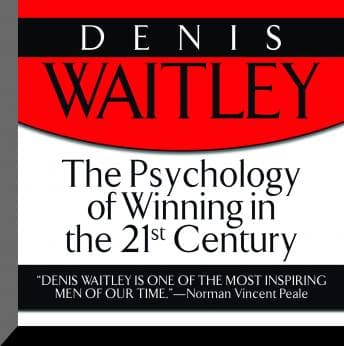

What makes someone a 'winner' anyway? And more importantly, can you actually learn it from an audiobook recorded at Caesar's Palace?
I was chopping onions for a dal that would take three hours and feed me for a week when Denis Waitley started talking about free agents in the modern economy. My eyes were already watering, so I can't tell you if it was the onions or the slightly uncomfortable realization that I've been operating on fear-based motivation for most of my academic career. Waitley would have thoughts about that.
The Research Actually Shows This Works (Mostly)
Here's what fascinates me about Waitley's approach: he's essentially doing applied psychology without the jargon. The core framework—motivation by desire versus fear, internal locus of control, the connection between self-image and achievement—these aren't just motivational platitudes. They're grounded in decades of behavioral research. Bandura's self-efficacy theory. Deci and Ryan's work on intrinsic motivation. He's packaging legitimate psychological principles in accessible language, and honestly? That's harder than it sounds. Good to Great does something similar—translating business research into frameworks people can actually use—though Collins leans more academic where Waitley leans motivational.
The live keynote portion recorded at Caesar's Palace has this energy that the studio sections lack. You can hear the audience responding, and Waitley feeds off it. His anecdotes land differently when you sense the room reacting. There's a rhythm to live speaking that studio recording can't replicate—the pauses feel intentional rather than edited, the humor more spontaneous.
But the studio portions? They move too fast. It's like Waitley forgot that listeners need processing time between concepts. In the live sections, the audience's presence naturally creates those beats. In studio, he's just... going. My therapist would have thoughts about the irony of a program about self-mastery that doesn't give you time to actually absorb anything.
The Authenticity Problem (And Why It Doesn't Quite Matter)
Look, I study why people believe what they believe. And self-help as a genre has a credibility problem. Too many charlatans, too many promises, too much 'manifest your destiny' nonsense that ignores structural barriers and systemic issues. So I went into this skeptical.
Waitley doesn't entirely escape the genre's limitations. The emphasis on individual agency sometimes feels like it's ignoring the very real constraints people face. Not everyone can just 'choose' their way to success. But—and this is important—he's not selling snake oil. He's talking about psychological frameworks that genuinely affect how people approach challenges. The distinction between internal and external locus of control? That's real. The impact of self-talk on performance? Documented.
What makes Waitley compelling (and yes, I'm analyzing him like a character—occupational hazard) is his consistency. He's been saying essentially the same things for decades because the underlying psychology hasn't changed. Human motivation works the way it works. The 21st century update feels less like a cash grab and more like applying established principles to new contexts.
Who Should Press Play—And Who Should Keep Scrolling
If you're already steeped in psychology literature, this will feel basic. You've read the primary sources. You don't need the accessible version.
But if you've never encountered these concepts before? If you're in sales, entrepreneurship, or any field where mindset genuinely affects outcomes? This is a solid three-and-a-half-hour primer. The live keynote energy makes it engaging enough to actually finish. The concepts are legitimate enough to actually apply.
Skip this if you need academic rigor or if motivational speaking makes you instinctively cringe. (I understand. I really do.) Also skip if you're dealing with actual mental health challenges—this is performance psychology, not therapy, and confusing the two helps no one.
Case Notes on a Self-Help Classic
I found myself asking: why does this particular program have such staying power? Waitley's original 'Psychology of Winning' is apparently the best-selling self-mastery audio of all time. That's not nothing.
The answer, I think, is that he's genuinely good at what he does. The man understands human nature—or at least, the parts of human nature that respond to encouragement and reframing. He's not promising transformation through wishful thinking. He's offering cognitive tools that psychological research supports.
Is it life-changing? Probably not. Is it a waste of time? Definitely not. It's a well-constructed introduction to performance psychology from someone who's been refining his message for forty years. The live portions are genuinely enjoyable. The studio portions needed an editor willing to slow things down.
I finished the dal. It was excellent. And I've been thinking about fear-based versus desire-based motivation ever since. Make of that what you will.