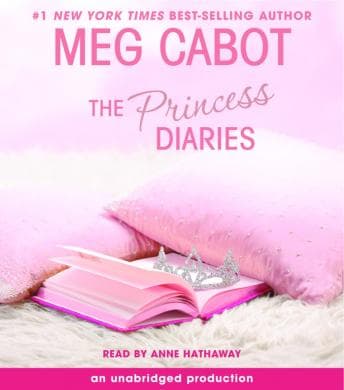

Look, I need to get something off my chest. I am a forty-seven-year-old man with a master's degree in English literature, and I just spent six hours listening to a fourteen-year-old girl's diary about finding out she's a princess. And I am not sorry. Not even a little.
Here's how this happened. Denise and I were cleaning out the spare room last Saturday - one of those marriage projects that starts with good intentions and ends with someone sleeping on the couch - and she put this on the Bluetooth speaker "for background noise." Reader, it was not background noise. By the time Mia Thermopolis was ranting about her algebra grade and her mother dating her algebra teacher (the sheer operatic horror of that sentence), I had stopped sorting boxes entirely. Denise found me twenty minutes later sitting on a pile of old curtains, just... listening.
The Diary Entry as Literary Form (My Students Would Roll Their Eyes)
Here's what I want to say as someone who teaches writing to teenagers every single day: Meg Cabot gets the teenage voice right in a way that's almost unsettling. Mia's diary entries don't read like an adult's idea of how a teenager thinks. They read like the actual notebooks I confiscate in third period - the run-on logic, the catastrophizing, the way every social interaction gets replayed and dissected like it's a Supreme Court case. Mia will pivot from genuine existential dread about her parents' choices to fury about her best friend Lilly's cable access TV show in the span of a single paragraph, and it never feels forced. That's harder to write than people think.
And the central conceit - ordinary girl discovers she's royalty - sure, it's wish fulfillment. But Cabot does something clever with it. Mia doesn't want to be a princess. She wants to be invisible, which is the most authentically fourteen thing I've ever encountered in fiction. This reminds me of what Hemingway said about writing - the dignity of movement of an iceberg is due to only one-eighth of it being above water. The comedy floats on top, but underneath there's a kid dealing with divorced parents, an absent father, and an identity crisis she didn't ask for.
Anne Hathaway Understood the Assignment Before the Assignment Existed
So here's the thing about this narration that stopped me cold. Anne Hathaway recorded this before she played Mia in the movie. Let that sink in. She's not doing an impression of her own performance - she's building Mia from scratch off the page, and the voice she finds is somehow both more neurotic and more genuine than her film version. Her Mia is breathless and indignant and a little too loud, the way real fourteen-year-olds are when they think no one important is listening.
But the real magic? Grandmère. Hathaway drops into this clipped, vaguely European register - not quite French, not quite anything identifiable, just imperious - that makes every interaction between Mia and her grandmother feel like a diplomatic incident. The pitch shifts are dramatic. She'll go from Mia's whispered horror at being told she has to attend princess lessons to Grandmère's withering pronouncements about posture, and you can hear the generational clash in the vocal register alone. The narrator understands that pause is punctuation - there's a beat after Grandmère delivers a particularly devastating critique of Mia's appearance that's just chef's kiss silence.
The AudioFile Earphones Award was earned. Full stop.
Who This Is For (And I Mean Really For)
If you have a middle schooler who "doesn't like reading," hand them this audiobook and walk away. Don't explain it. Don't assign a book report. Just let Hathaway's energy do the work. I've been teaching teenagers for twenty years and I know what hooks them - it's voice, not plot. This has voice for days. My other recent proof of this theory: Life as We Knew It - a completely different genre, survival fiction with actual stakes, but the same first-person teenage voice that makes you forget you're a grown adult with a mortgage and a podcast nobody listens to.
But honestly? It's also for adults who've forgotten what it felt like to be fourteen and furious about everything. The prose deserves to be savored not because it's Faulkner - it's decidedly, gloriously not Faulkner - but because Cabot's comedic timing on the page translates into something genuinely warm through Hathaway's delivery. One small production gripe: there's a little musical sting at the end that feels tacked on and cheap, like someone decided a five-hour audiobook needed a jingle. Skip the last fifteen seconds.
At 5 hours 54 minutes, this is practically a novella by audiobook standards. Perfect for a weekend project or - apparently - for abandoning your household responsibilities while sitting on a pile of curtains.
The Annotation in the Margin
I started this thinking I'd be slumming it. A palate cleanser between Middlemarch chapters. Instead I got a surprisingly sharp little book about identity and belonging, performed by someone who treats a teenager's diary with the same respect I wish more people gave young adult fiction. My students would love this. For once, I love it too.
Worth pausing the faculty meeting for. (Sorry again, Principal Martinez.)