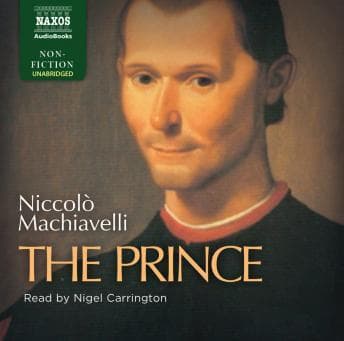

"Everyone sees what you appear to be, few experience what you really are."
That line hit me somewhere around the forty-minute mark, and I had to pause mid-chop — I was making chana masala, the kind that takes forever because you're toasting whole spices and pretending you have your life together on a Sunday evening. And Machiavelli just... casually drops the foundational insight of impression management theory. In 1532. Centuries before Erving Goffman wrote The Presentation of Self in Everyday Life. Centuries before any of us had LinkedIn profiles.
The Original Dark Psychologist
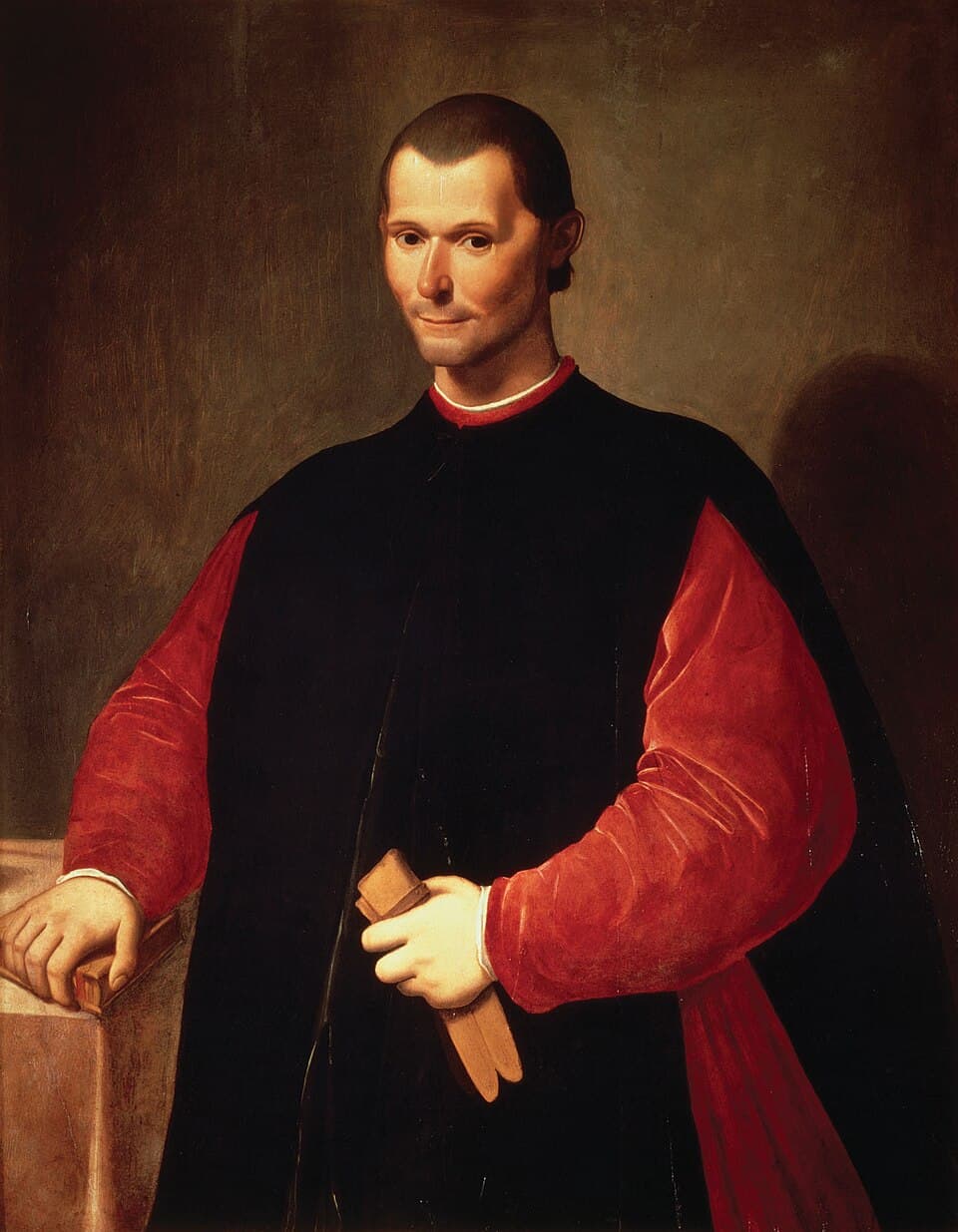
Here's what makes The Prince such a fascinating case study in human motivation: Machiavelli isn't theorizing from an armchair. He was a diplomat who watched the Borgias operate up close. He saw Cesare Borgia consolidate power through strategic cruelty, and instead of moralizing about it — which every other writer of his era would've done — he took notes. Clinical, detached, almost admiring notes.
The research actually shows that Machiavelli anticipated several concepts we now study formally in psychology: the dark triad personality traits, strategic self-presentation, the gap between stated values and actual behavior. When he writes about whether it's better to be feared or loved ("ideally both, but if you must choose, feared"), he's essentially describing what we now call coercive power versus referent power. The man was running a sixteenth-century case study on leadership psychology without the IRB paperwork.
What struck me on this listen — and I've read The Prince in print twice before — is how short it actually is. Three hours and thirteen minutes. That's it. This tiny book reshaped political philosophy, gave English a new adjective, and probably ruined a few democracies along the way. The density is almost absurd. Every chapter is basically a compressed argument with historical examples, and Machiavelli moves through them with the efficiency of someone who knows his audience (Lorenzo de' Medici) has a short attention span and a lot of enemies.
Nigel Carrington Reads Like a Lecturer You'd Actually Stay Awake For
So here's the thing about narrating a political treatise from the Renaissance: it can go very wrong. Too theatrical and it becomes parody. Too flat and you're asleep by chapter three. Carrington finds a middle register — clear, steady, authoritative without being stuffy. He treats the text with respect but doesn't genuflect to it. There's a subtle dryness in his delivery that actually suits Machiavelli's own tone, which most people forget is often quite wry. When Machiavelli describes a prince who was "so generous that he ruined himself," Carrington's read carries just enough ironic weight to let you catch the bite.
That said, I'll be honest about the limitations here: this is a straightforward single-narrator reading of a treatise. No dramatic flourishes, no sound design, no multi-voice treatment of the historical anecdotes. For a three-hour listen, that's fine. But Carrington doesn't do much to differentiate when Machiavelli is quoting or paraphrasing other figures versus offering his own analysis, which occasionally made me rewind to figure out whose argument I was tracking.
The Secret Republican Reading (My Therapist Would Have Thoughts)
The thing most people miss about The Prince — and I found myself asking: why does Machiavelli really write this? — is the possibility that the entire text is subversive. He dedicates it to the Medici, the family that imprisoned and tortured him. He writes it while in exile. And he lays out, in precise detail, exactly how tyrants maintain power. One reading says he's kissing up, trying to get his old job back. Another reading says he's exposing the playbook to the public so everyone can see the manipulation for what it is.
Psychologically, this doesn't track as a simple job application. The tone is too detached, too analytical. If you're genuinely trying to curry favor, you flatter. Machiavelli instructs. There's a difference. The protagonist — and yes, I'm treating him as a character in his own text — exhibits classic approach-avoidance conflict. He wants proximity to power but also wants to document its ugliness.
My therapist would have thoughts about this character. Specifically about someone who responds to trauma (torture, exile, career destruction) by writing a manual that could be read as either capitulation or revenge, depending on your interpretive framework. That's a defense mechanism wrapped in a political treatise.
Who Gets the Most From This
If you want a quick, dense listen that will make you see power dynamics everywhere — in your workplace, in the news, in your family group chat — this is it. At just over three hours, it's a lunch-break commitment spread across two days. Students of psychology, political science, or anyone who's ever wondered why their boss acts the way they do. Skip it if you need narrative momentum or emotional investment; this is a lecture, not a story, and it doesn't pretend otherwise. I had a similar experience with Short History of the United States — another text that prioritizes density of argument over narrative pull, and where your enjoyment depends entirely on whether you showed up to think rather than to feel.
The Diagnosis
Niccolo Machiavelli wrote the ur-text of applied psychology five hundred years before the field existed. This audiobook edition does the job — clean narration, manageable length, no frills. It won't blow your mind as a listening experience, but the ideas inside will rearrange furniture in your brain. I finished it, stirred my chana masala, and immediately thought about three people I know who should read chapter seventeen. You know the type.