
Denise and I were walking the lakefront last Sunday morning — one of those rare October days where Chicago pretends it's not about to betray you with winter — and somewhere around the Diversey Harbor stretch, Mr. Collins proposed to Elizabeth Bennet. I stopped walking. Denise kept going for about ten paces before she turned around and saw me standing there, grinning like an idiot at Lake Michigan. "What?" she said. "Collins," I said. She nodded like that explained everything. Twenty years of marriage to an English teacher will do that.
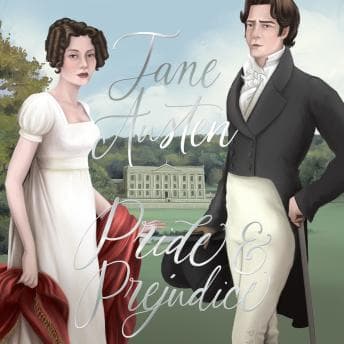
Here's the thing people get wrong about Pride and Prejudice: they think they already know it. The BBC adaptation. The 2005 movie. The memes. The wet-shirt scene that Austen never actually wrote. Everyone thinks they've consumed this story. But listening to Carolyn Seymour narrate it at 1.0x — the speed God and Jane Austen intended — I realized how much the adaptations sand down. The novel is sharper than people remember. Meaner, in places. Funnier, almost everywhere.
The Author Chose Those Pauses
Seymour's narration does something I particularly appreciate: she trusts Austen's rhythm. There's no melodrama, no breathless acceleration through the dialogue. When Elizabeth responds to Lady Catherine's interrogation at Rosings about whether all five Bennet sisters are out in society — "Yes, Ma'am, all five" — Seymour delivers it with this perfectly measured calm that lets you hear Elizabeth's quiet defiance without underlining it in red pen. (And yes, I'm aware of the irony of an English teacher praising someone for NOT underlining things in red pen.)
What struck me this time through — and I've read this novel probably eight times, taught excerpts from it for fifteen years — is how much Austen's free indirect discourse benefits from a solo voice. When Seymour narrates Elizabeth's internal reactions, there's a subtle temperature shift. Not a different voice exactly, but a different... intimacy. You're suddenly inside Lizzy's head, hearing her judgments form in real time, and then Seymour pulls back to Austen's narrating voice and you feel the distance again. That oscillation is the whole engine of the novel, and it's harder to track on the page than you'd think. Hearing it performed makes the technique visible. Audible. Whatever.
I will say this: if you're coming to Seymour after Rosamund Pike's version, or after the full-cast dramatizations, this is a quieter experience. More drawing room, less theater. Some listeners want their Austen with more vocal fireworks — distinct pitches for every character, dramatic shifts. Seymour doesn't do that. Her Mrs. Bennet is flustered and shrill in spirit but she achieves it through pace and emphasis rather than going full pantomime. It's a choice. I think it's the right one, because it keeps Austen's irony front and center rather than turning the comedy into caricature.
Mr. Collins Deserves His Own Podcast Episode
The Collins proposal scene. I need to talk about it. Chapter 19. This is why we still read the classics — because Austen wrote a scene in 1813 where a man is so catastrophically certain of his own appeal that he interprets rejection as flirtation, and it reads like it was written yesterday. Seymour plays Collins with this oblivious self-satisfaction that made me laugh out loud on a public path. His certainty that Elizabeth is refusing him as "usual with young ladies" and that he should therefore press harder — I teach rhetoric to sixteen-year-olds, and I'm stealing this scene for my persuasion unit. It's a masterclass in failed persuasion. My students would hate this. I love it.
And Darcy's letter. The long, excruciating letter where he explains himself after Elizabeth's refusal. Seymour reads it slowly — not dragging, but deliberately — and you feel every sentence land on Elizabeth the way Austen intended. Each revelation recalibrating everything she thought she knew. The prose deserves to be savored, and Seymour savors it. That slow unraveling of a character's assumptions — Jonathan Franzen does something structurally similar in Crossroads: A Novel, though with more midwestern guilt and fewer country dances.
Who Gets the Assignment
If you've only experienced Pride and Prejudice through adaptations, this audiobook is the corrective. You'll discover how much acidic social commentary the screen versions leave behind. If you're an Austen devotee who wants a restrained, intelligent reading that respects the text's architecture — Seymour is your narrator. If you want vocal pyrotechnics and a different accent for every character, look elsewhere. No judgment. Different assignments for different students.
At eleven and a half hours, it's exactly the right length for a week of lakefront walks. Or three faculty meetings. (Principal Martinez, I'm kidding. Mostly.)
Worth Pausing the Faculty Meeting For
This is Austen at her sharpest, performed by a narrator who understands that the comedy lives in the restraint. Not the flashiest Pride and Prejudice audiobook out there, but possibly the most faithful to what Austen was actually doing on the sentence level. I finished it and immediately wanted to record a podcast episode about free indirect discourse. All 47 of my listeners are going to be thrilled. Mom, stay awake for this one.