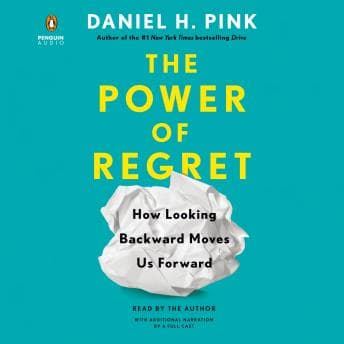

Five and a half hours. That's it. Daniel Pink wrote a business book that respects my time, and I genuinely don't know how to process this.
I finished this one during a red-eye from JFK to LAX—couldn't sleep, mind racing about a client engagement that went sideways last quarter. Perfect headspace for a book about regret, honestly. And Pink delivered something I didn't expect: permission to stop pretending I don't have any.
The "No Regrets" Lie Finally Gets Buried
Here's what Pink gets right that most self-help authors miss entirely. The whole "live with no regrets" philosophy? It's not wisdom. It's denial wearing a motivational poster costume. Pink's World Regret Survey—15,000 people across 105 countries—proves what anyone who's actually run a business already knows: regret is universal, and pretending otherwise makes you worse at your job, not better.
The four core regrets he identifies (foundation, boldness, moral, and connection) hit uncomfortably close to home. Foundation regrets are the "if only I'd done the work" variety. Boldness regrets are the risks not taken. My parents never talked about regret—Korean immigrant work ethic doesn't leave room for that conversation—but listening to this, I realized my dad's 14-hour days at the dry cleaners were his way of avoiding foundation regrets. He just didn't have a TED talk to explain it.
Ten Narrators, Zero Chaos
Ten narrators sounds like a production disaster waiting to happen. It's not. Pink reads his own analysis sections, and the rotating cast handles the regret stories from survey respondents. Nancy Wu's delivery on one woman's connection regret about a lost friendship—genuinely affecting. Neil Shah reading a boldness regret about an untaken job opportunity—you feel the weight of it. The production team made smart choices here.
Pink himself is... fine. Clear, competent, not trying to be your buddy. He sounds like what he is: a guy who's done his research and wants to share it efficiently. At 2.0x, his sections moved at exactly the right clip.
Where the Consulting Brain Kicked In
The practical framework at the end—"Undo it. At least it. At last it."—this is where Pink earns his keep. Undo what you can fix. Reframe what you can't as learning. Disclose it to reduce its power. I've seen variations of this in executive coaching, but Pink's version is cleaner and backed by actual data rather than vibes.
Here's my issue, though. The book front-loads the research and back-loads the application. If you're listening for actionable takeaways, the first two hours feel like setup. Skip to chapter 5 isn't quite right—you need the taxonomy of regrets to understand the solutions—but I wanted the practical stuff faster. (Jenny would say I'm being harsh. Jenny is right.)
Who This Is Actually For
Decision-makers who've been burned and can't stop replaying it. Founders who took the safe path and wonder about the road not taken. Anyone who's ever lain awake at 2 AM thinking about an email they should have sent differently.
Who should skip: If you're genuinely at peace with your choices, you don't need this. If you want a quick listicle of life hacks, this isn't that. Pink's building an argument, not dispensing fortune cookies.
The Dry Cleaner's Son's Take
Bottom line: Pink wrote a business book that's actually about being human, and he did it in under six hours. The research is solid, the framework is usable, and the multi-narrator approach adds texture without becoming gimmicky. Tao Te Ching takes a different approach to the same territory—processing regret and decision-making through paradox rather than data, but the underlying wisdom about accepting what is lands in a similar place. My 2.0x speed made it a three-hour flight companion, and I've already recommended it to two clients stuck in analysis paralysis.
The key takeaway is worth the listen. The other four hours? Mostly worth it too. That's rare enough to note.











![Red Rising (1 of 2) [Dramatized Adaptation]: Red Rising 1 audiobook cover](/_next/image?url=https%3A%2F%2Fcovers.audiobooks.com%2Fimages%2Fcovers%2Ffull%2F9781685088781.jpg&w=1920&q=75)