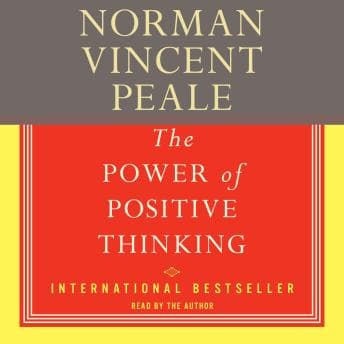

Look, I'm gonna be honest - I almost skipped this one because 52 minutes felt like cheating. That's not even a full commute. But then I remembered this is THE Norman Vincent Peale, narrating his own book, and suddenly I'm listening to a piece of self-help history on a Tuesday morning somewhere around Redwood City.
Here's my complaint though: why does every classic self-help book feel like it could've been written as a LinkedIn post series? I kid, mostly. But seriously, at under an hour, this is basically a long podcast episode. And you know what? That's actually fine.
The OG Positive Thinking Guy, In His Own Voice
So the wild thing about this audiobook is that Peale himself narrates it. We're talking about a guy who died in 1993, delivering his own message about faith and optimism directly into my AirPods while I'm sandwiched between a guy eating a breakfast burrito and someone's aggressive cologne. The authenticity factor is off the charts.
His voice is warm - like a grandfather who genuinely believes you can do anything if you just believe hard enough. It's soothing in that old-school radio preacher way. But here's the thing: the pacing is slow. Like, really slow. I bumped it to 1.5x almost immediately, which is my standard anyway, but even then it felt measured. Deliberate. If you're used to modern self-help narrators who sound like they've had three espressos, this might feel like wading through honey.
I couldn't find a ton of technical details about the recording itself, but the audio quality is clean - no weird artifacts or background noise. Just Peale's voice, clear as day, telling you that your thoughts shape your reality.
The Faith Factor (Fair Warning)
Okay, so this is where I need to give you the context upfront: this book is faith-based. Like, heavily. We're not talking vague "universe will provide" spirituality - we're talking Christian faith, prayer, and biblical principles woven throughout. If that's not your thing, you're gonna have a rough time.
For me personally? I'm pretty secular, so some of the examples felt dated and the religious framing didn't fully land. But I could still extract the core message: your mindset matters, worry is a choice you can break, and believing in yourself isn't just fluffy nonsense - it's a practice. The practical techniques Peale outlines are surprisingly applicable even if you strip away the faith layer. Practical Guide to Self-Hypnosis takes a similar approach to mental reprogramming, just with a different toolkit.
Stuff like breaking the worry habit, building determination, improving relationships - it's basically cognitive behavioral therapy before CBT was cool, just wrapped in 1950s Christian packaging. The same vintage vibe shows up in Networking for People, though that one's aimed at relationship-building in professional contexts rather than internal mindset work.
Some of the stories and examples do feel like they're from another era (because they are). But honestly, there's something refreshing about that? It's a reminder that people have been anxious and stressed and looking for answers for generations. We're not special in our suffering.
ROI Check: Is 52 Minutes Worth It?
Here's my honest assessment: the ROI on this audiobook depends entirely on what you're looking for.
If you want a quick historical primer on where the entire positive thinking movement came from - this is it. This is the source code. Understanding Peale helps you understand every self-help book that came after him. Tony Robbins? Traces back to this. The Secret? Yeah, this too. It's like reading the original API documentation.
If you want actionable, modern, science-backed strategies for improving your mindset? This probably isn't your best bet. The examples are dated, the approach is faith-heavy, and at 52 minutes, you're not getting the depth you'd find in something like Atomic Habits or The Happiness Advantage.
But if you're curious, if you've got a short commute, if you want to hear a piece of self-help history from the man himself - yeah, it's worth the listen. I finished it before I even hit Mountain View.
Who's This Actually For?
Perfect for: a short commute, a gym session, background while cooking. Also great if you're curious about the origins of modern self-help or want to hear Peale's voice firsthand. Skip if: you need science-backed strategies, can't connect with faith-based content, or need something punchy enough to keep you awake on a 6AM train.
Would I listen again? Probably not. But I'm glad I did once. Sometimes you gotta know where the ideas came from, you know?