
So I was up at 2 AM doing what I always do when my thesis code won't compile - rage-listening to audiobooks while stress-eating Cheez-Its in my apartment. Dr. Patel's latest email about my "deliverables timeline" was still glowing on my second monitor like an accusation. Perfect headspace for a post-apocalyptic survival sprint, honestly.
Zombie Road Trip With a Ticking Clock
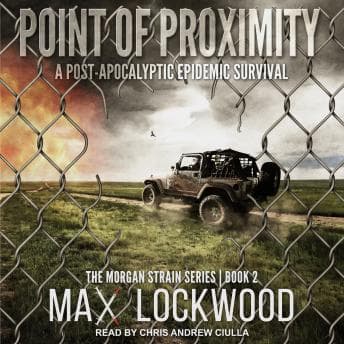
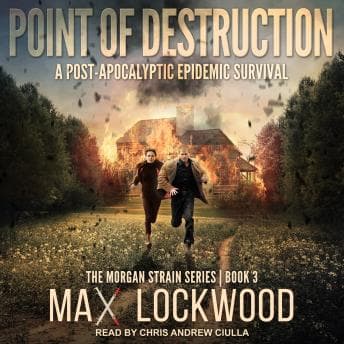
Point of Destruction is book two in Max Lockwood's infection apocalypse series, and it does that thing where it picks up right in the wreckage of the previous book and just keeps pressing the gas. Alec and Elaina's group gets into a car accident on their way to Oklahoma - because of course they do, the universe in these books has zero chill - and suddenly they're on foot, scrambling for shelter in a farmhouse with no running water, no electricity, and whatever medical supplies some prepper left behind. The twenty-four-hour countdown to evacuation gives the whole thing a structure that reminded me of those timed dungeon crawls my D&D group used to run back in the library. You know, when the DM drops a sand timer on the table and suddenly everyone's making terrible decisions? That energy.
The farmhouse betrayal subplot - someone they trusted commits arson, basically - is the kind of paranoia fuel that post-apocalyptic fiction lives on. It's not exactly a shocking twist if you've read enough of the genre, but Lockwood plays it straight and it works within the survival framework. Where the book lost me a little is the new army that shows up to gather survivors. The "are they good or evil?" military faction is so standard in this genre it's practically a trope checklist item. Think The Governor in Walking Dead, think every third faction in a Fallout game. Lockwood doesn't do enough to distinguish his version, and at under 8 hours, there's not a lot of room for the kind of slow-burn political tension that would make that storyline hit harder.
Compared to something like Jonathan Maberry's Rot & Ruin series or even Craig DiLouie's infection stuff, Point of Destruction is operating at a lighter weight class. The world-building is functional rather than deep - you get the infection, you get the collapse, you get people making hard choices, but you don't get the kind of granular societal breakdown that makes the best post-apocalyptic fiction feel prophetic. This is closer to a survival thriller with sci-fi seasoning than full-blown speculative world-building. Which is fine! Four Science Fiction Stories by G.L. Vandenburg sits in that same functional-sci-fi lane, and I had the same reaction to it - competent, moves fast, doesn't try to rebuild the universe from scratch. Not everything needs to be Sanderson-level world-building. Sometimes you want the literary equivalent of a fast dungeon crawl - get in, fight some zombies, solve the puzzle, get out.
Chris Andrew Ciulla and the Voice of Grandma Ona
Here's where things get interesting. Ciulla does this thing with the character Ona where he adopts a slight accent to suggest her Lithuanian roots and adds this tremulousness to his voice - she sounds old but sharp, like she's seen some things and is done being surprised by the apocalypse. It's a small choice but it's the kind of character work that separates good narrators from audiobook robots. His pacing is energetic enough to keep the survival sequences moving, and at 7 hours 50 minutes, he doesn't let things drag.
That said, the character differentiation beyond Ona is more "adequate" than "memorable." I never got confused about who was talking, but I also wasn't getting the Steven Pacey treatment where every single character has a voice that lives rent-free in your head for months. Ciulla's strength here is momentum - he reads like he's actually engaged with the material, and his enthusiasm carries scenes that might read flat on the page.
Who's Rolling Initiative on This One
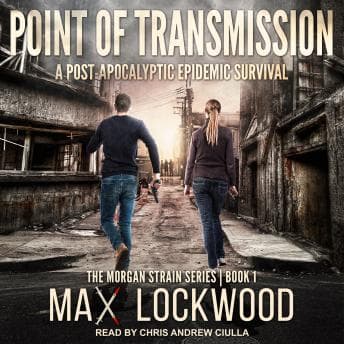
If you're already invested in the series from book one (Point of Transmission), this is a no-brainer pickup. The ticking clock structure gives it better forward momentum than a lot of mid-series entries. If you're new to the series, don't start here - you'll be lost on the character dynamics and the infection backstory.
For genre fans: if you want deep lore and hard science behind your apocalypse, this isn't your game. If you want a fast-paced survival scenario with some decent character moments and a narrator who keeps things moving, it scratches that itch. My D&D group would love this as background listening during a session, honestly.
Content-wise: violence, language, and sexual content are all present. It's not grimdark levels of bleak, but it's not YA either.
Tom's Thesis-Avoidance Verdict
I read this instead of writing my thesis. Was it worth the procrastination? Mostly. It's a solid mid-series entry in a competent post-apocalyptic series - nothing that's going to rewire your brain, but a fun listen that does its job. At under 8 hours, it doesn't overstay its welcome, and Ciulla's narration keeps the pace honest. I wouldn't burn a full-price credit on it, but on a sale or through a streaming library? Yeah, queue it up.