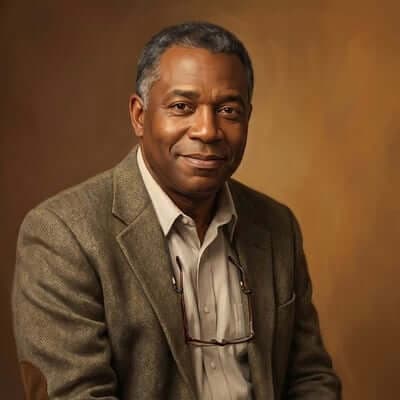
Look, I'm an English teacher. I've spent two decades teaching Hemingway and Faulkner and convincing sixteen-year-olds that symbolism matters. So when I tell you I spent ten hours listening to Phil Hellmuth Jr. explain poker strategy while pretending to grade sophomore essays on The Great Gatsby, you should understand the level of cognitive dissonance I'm operating at.
But here's the thing — Denise and I have been playing poker with the Hendersons every other Saturday for three years now, and I'm tired of losing. I'm an English teacher. I should be able to read people. I read Iago's motives. I read Heathcliff's damage. But apparently I cannot read Dave Henderson's bluff when he's holding a pair of sevens.
So I downloaded this.
The Poker Brat Teaches Class (Whether You Want Him To Or Not)
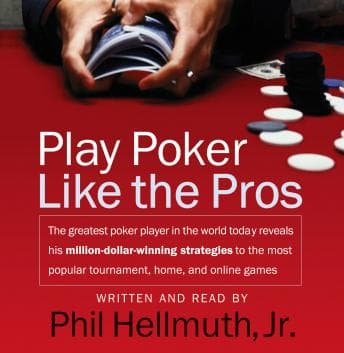
Phil Hellmuth narrating his own poker book is... an experience. And I say this as someone who deeply believes authors should read their own work when possible. The man has authority — ten World Series of Poker bracelets will do that — and his delivery is clear enough. He explains the mechanics of Texas Hold'em, Omaha, Seven-Card Stud, and Razz with the confidence of someone who has never once wondered if he's wrong about anything.
That confidence is both the book's engine and its exhaust fume.
Hellmuth's animal taxonomy for player types — the Jackal (chaotic, unpredictable), the Elephant (plays too many hands), the Mouse (too conservative), and the Lion (the ideal you're supposed to become) — is genuinely useful as a mental framework. It's the kind of thing that sticks with you. I've already started categorizing my students this way. Tyler in third period is absolutely a Jackal. Mrs. Patterson in the front office is a Mouse. Principal Martinez is an Elephant — commits to everything, folds on nothing, somehow never wins.
But when Hellmuth walks you through specific hands he's played — his losing hands as well as his winning ones, describing the thought process behind each decision — that's where the book earns its keep. Those scenarios feel real because they are real. He's not theorizing. He's replaying.
When the Author IS the Character (For Better and Worse)
Here's my problem, and it's the same problem several listeners have flagged: Phil Hellmuth narrating Phil Hellmuth's book about how great Phil Hellmuth plays poker can feel — and I'm being generous here — a bit much. One reviewer called it "superfluous, pompous, and overrated — much like Hellmuth." That's harsh. But it's not entirely unfair.
The man earned his nickname "The Poker Brat" honestly. His vocal delivery carries that energy. There's no second narrator to balance him out, no producer stepping in to say "Phil, maybe dial it back on the self-congratulation." It's ten hours of undiluted Hellmuth.
Now, if you're a beginner — and I was functionally a beginner despite three years of losing to the Hendersons — this works fine. His explanations of which hands to play, when to bluff, when to fold, are methodical and accessible. He assumes you know nothing, which is both helpful and occasionally patronizing.
But experienced players? The ones who already know their way around preflop hand selection? They're going to find this thin. Multiple listeners have called out his preflop advice specifically as outdated or questionable. I don't know enough to judge that myself, but I know enough about teaching to recognize when someone is presenting opinion as gospel. Hellmuth does that. A lot. It's the opposite of what Robert McKee does in Story: Style, Structure, Substance, and the Principles of Screenwriting — another expert lecturing from authority, but McKee actually invites you to argue back, which makes all the difference.
I listened at 1.0x because — well, you know me — but honestly, this might be one of the rare cases where 1.25x wouldn't hurt. The prose doesn't demand savoring. It demands processing. This is instruction, not literature.
Who Sits at This Table
If you've never played poker seriously, this is a solid starting point. The animal player types alone are worth the listen — they give you a vocabulary for reading the table. The chapters on online poker and tournament play round things out enough to feel comprehensive.
If you're already grinding online or playing in leagues, you're going to be frustrated. This is a 100-level course taught by a professor who keeps telling you about his Nobel Prize.
And if you're an English teacher trying to beat Dave Henderson on a Saturday night? It's serviceable. I haven't won yet, but last week I folded a hand I would've played, and Dave later admitted he'd had a flush. That felt like progress.
The Grade on Mr. Williams's Rubric
This isn't a book that changed how I think. It's a book that changed how I play — slightly, practically, without pretension about what it is. Hellmuth's ego is woven into every sentence, which makes it both authentic and exhausting. He's not performing literature. He's lecturing from experience. And sometimes the lecturer is brilliant, and sometimes you want to raise your hand and ask him to please stop talking about himself.
My students would actually like this one. Which tells you something.
Worth pausing the faculty meeting for? Only if the faculty meeting is about budget projections. So — yes, actually. Every time.