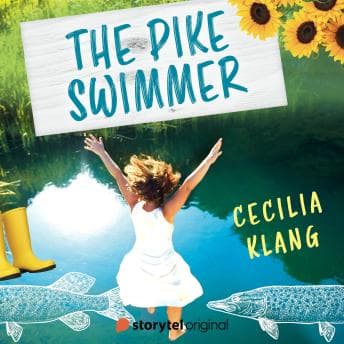

Look, I'll be honest. When I saw a book about a man who wants to attract tourists using pikes - the fish, not medieval weapons - I almost passed. My students would've had a field day with that premise. But here's the thing about audiobooks that keep surprising me after twenty years of teaching literature: sometimes the quietest stories hit the hardest.
Pike Swimmer caught me during a particularly brutal week of grading sophomore essays on The Great Gatsby. (Spoiler: Fitzgerald did not intend for the green light to represent "how Gatsby was really into the color green.") I needed something that wasn't going to demand too much, but wasn't going to insult my intelligence either. Cecilia Klang delivered exactly that.
The Slow Burn That Actually Burns
Charlotte Hammar's fall from high-profile advertising executive to small-town nobody isn't revolutionary storytelling. We've seen this arc before - the city person humbled by rural simplicity, learning what Really Matters. But Klang doesn't rush it. She lets Charlotte sit in her discomfort. She lets the awkwardness breathe. There's a patience to that approach that reminds me of Tao Te Ching—letting things unfold without forcing resolution.
This is why we still read - or listen to - stories about starting over. The mechanics of reinvention are messy and unglamorous, and Klang gets that. Charlotte doesn't have some cinematic breakdown followed by immediate enlightenment. She fumbles. She judges the locals and then catches herself judging. She misses her old life while simultaneously recognizing how hollow it was.
And Kent. Kent with his pike dreams. On paper, he sounds like a punchline. In practice, he's the kind of character I wish more authors would write - someone whose passion seems ridiculous until you realize it's about so much more than fish. It's about believing your small corner of the world matters. My students would hate this. I love it.
Sofia Engstrand Understands the Assignment
I couldn't find much about Sofia Engstrand's other work online, but based on this performance, she gets something crucial: warmth without saccharine. Her voice has this quality - clear, unhurried - that made me feel like I was being told a story rather than read a book. There's a difference.
The character voices are distinct without being cartoonish. Charlotte sounds clipped and controlled at first, then gradually loosens. Kent has this earnestness that could've tipped into parody but never does. Engstrand walks that line carefully, and it pays off.
I listened at my usual 1.0x - the author chose those words, the narrator chose that pacing - and it felt right. This isn't a book you speed through. The pauses matter. The quiet moments between dialogue carry weight. Engstrand understands that pause is punctuation.
Where the Narrative Loses Its Footing
The middle section drags slightly. I'll admit I zoned out during one faculty meeting more than usual (sorry, Principal Martinez, I definitely heard your thoughts on the new attendance policy). There's a stretch where Charlotte's internal processing gets repetitive, where we circle the same realizations a few too many times.
But then something clicks. Around the two-thirds mark, Klang stops telling us Charlotte is changing and starts showing us. The prose deserves to be savored in these later chapters - there's a scene involving a frozen lake that genuinely surprised me with its emotional precision.
If you loved A Man Called Ove or Eleanor Oliphant Is Completely Fine, this lives in that same neighborhood. Not in plot, but in spirit. That same commitment to finding extraordinary depth in ordinary people making small, difficult choices.
Who Should Queue This Up (And Who Shouldn't)
If you need constant plot momentum, skip this one - Charlotte's internal circling in the middle act will test your patience. But if you're drawn to quiet character studies about reinvention, if you appreciate narration that trusts silence, Pike Swimmer will reward your attention.
Class Dismissed
Is Pike Swimmer going to change your life? Probably not. Is it going to make you think about what you'd do if everything you'd built suddenly crumbled? Yeah. It might.
This reminds me of what Hemingway said about writing - you have to know what you're leaving out. Klang knows what she's leaving out. She trusts her readers to fill the gaps, to understand that Charlotte's journey isn't about the destination but the uncomfortable middle.
At twelve hours, it's a substantial listen. Perfect for a long road trip or a week of commuting. I finished mine over three evening walks along the lakefront with Denise, who kept asking why I was smiling at my phone. "It's about pike fishing," I'd say. "Sort of."
She didn't ask follow-up questions. Smart woman.