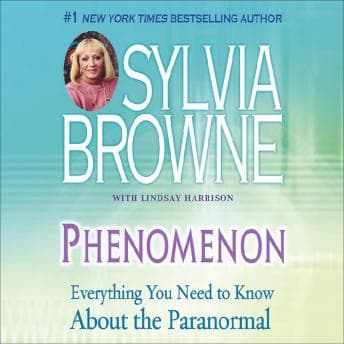

Look, I need to say this upfront: Sylvia Browne's Phenomenon tested every single one of my instincts as someone who has spent years studying how the human mind actually works. I was stirring a pot of dal makhani at 9 PM on a Tuesday, half-listening, when Browne casually dropped her explanation of Atlantis like it was settled science, and I almost burned my dinner. Not because it was shocking — because she said it with such conviction that I found myself asking: why does this level of certainty feel so seductive, even when the claims have zero empirical grounding?
And that's kind of the whole experience with this book.
The Confidence Gap Between Claims and Evidence
Here's what fascinates me about Phenomenon as a psychological document — and I'm being genuine here, not snarky. Browne structures this book as an A-to-Z encyclopedia of paranormal concepts: astral projection, cell memory, totems, zombies, the works. Each entry gets a tidy explanation delivered with the breezy authority of someone explaining how gravity works. The research actually shows that people rate confident speakers as more credible regardless of accuracy, and Browne is a masterclass in that effect. Simon Sinek maps a similar psychological mechanism in Start with Why — the way conviction, delivered in the right register, bypasses our critical faculties entirely and lands as truth. She doesn't hedge. She doesn't say "some believe" or "it's possible that." She tells you how the Other Side operates like she's been commuting there for decades.
Psychologically, this doesn't track for me — not because I'm dismissing every listener's spiritual experience, but because Browne presents a single, highly specific cosmology (spirit guides, life themes chosen before birth, a particular geography of the afterlife) as universal truth. No competing frameworks acknowledged. No room for doubt. The protagonist exhibits classic characteristics of what we'd call an "unreliable authority" in narrative psychology — someone whose certainty itself becomes the evidence.
But here's the thing I kept wrestling with while scraping the bottom of that dal pot: for listeners who already share Browne's worldview, this book functions beautifully as a reference guide. It organizes concepts they find meaningful into digestible segments. I can see why her fans love it. The structure — short alphabetical entries — makes it easy to dip in and out. That's smart design for an audiobook.
Jeanie Hackett Does the Heavy Lifting
I want to be fair to the narration because Jeanie Hackett genuinely elevates this material. She reads each encyclopedia-style entry with this animated clarity that keeps the energy up without tipping into infomercial territory. When she moves from explaining "kinetic energy" in Browne's paranormal framework to discussing "morphic fields," there's a slight tonal shift — almost like she's resetting for a new mini-lecture — that prevents the listen from blurring into one long drone. At seven and a half hours, that pacing discipline matters.
Some listeners noted they wished for an unabridged version, and I get that. The abridgment means certain entries feel frustratingly brief. You'll get three minutes on one concept and then a surprisingly deep dive on another, and the selection criteria for what got expanded versus trimmed isn't obvious. It creates this uneven texture — like flipping through a dictionary where some definitions are paragraphs and others are a single line.
What My Training Won't Let Me Ignore
I can't review this without addressing the elephant in the room. Browne made very specific, public predictions over her career — some of which were demonstrably wrong in ways that caused real harm to real people. As someone who studies how narratives shape identity and belief systems, I find it impossible to separate the content from that context. Phenomenon asks you to trust Browne's authority completely. That's a big ask.
But I also recognize that for many listeners, this book provides comfort, a framework for understanding grief and uncertainty, and a sense that consciousness continues. The psychology of why people find these narratives meaningful is legitimate and worth respecting, even when the claims themselves wouldn't survive peer review. (My therapist would have thoughts about this character — specifically about the human need for certainty in the face of existential terror, which is basically her bread and butter.)
If you're a Browne devotee or genuinely curious about how one of the most famous psychics of the last fifty years organized her belief system, this is a clean, well-narrated listen. If you need evidence-based frameworks for understanding consciousness or the afterlife, this will frustrate you within the first twenty minutes.
My Case File Is Closed on This One
This is a fascinating case study in the psychology of belief — just not in the way Browne intended. I listened as a researcher watching someone construct an entire epistemology through sheer narrative confidence. Hackett's narration is the best thing about the audio production. The content itself? Your mileage depends entirely on whether you arrived already believing. And honestly, that's true of most things.