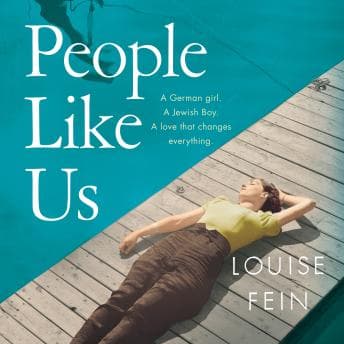

I was grading sophomore essays on The Great Gatsby at eleven-thirty on a Tuesday night when Holli Dempsey's voice cut through my exhaustion like a cold wind. Hetty Heinrich was describing the first time she saw Walter after years apart, and I set down my red pen. The essays could wait. Fitzgerald would understand.
This is why we still read—and listen to—stories about the darkest chapters of human history. Not because they're comfortable. Because they're necessary.
The Propaganda Child Learns to Think
Louise Fein does something genuinely difficult here. She asks us to inhabit the mind of a true believer—a girl raised in the Hitler Youth, daughter of an SS officer, sister to a Luftwaffe pilot. Hetty Heinrich isn't a secret rebel from page one. She believes. She's proud. And that's what makes her gradual awakening so devastating.
The comparison that kept surfacing for me was The Book Thief, which the marketing materials invoke. That same tension between complicity and resistance shows up in Tale of Two Cities, though Dickens sets his moral reckonings during the French Revolution instead. But where Zusak gives us Liesel, already positioned as an outsider, Fein forces us inside the machinery. Hetty's not stealing books—she's burning them. At least at first. The shift happens slowly, almost imperceptibly, the way real ideological unraveling works. Not a dramatic conversion but a thousand small doubts accumulating like snow.
Walter saved her life when they were children. Blond hair, blue eyes, everything the Reich claims to value. Except he's Jewish, which means none of it matters. The irony isn't subtle, but it doesn't need to be. Sometimes the obvious truth is the one we most need to hear.
Dempsey Carries the Weight
Holli Dempsey narrates with the kind of emotional conviction that makes nearly sixteen hours feel necessary rather than indulgent. This isn't a book you rush through. She reads Hetty's words with genuine feeling—the confusion, the shame, the desperate hope that maybe love can survive what's coming. There's a particular quality to how she handles Hetty's internal contradictions, the moments when the character believes two impossible things simultaneously. Dempsey doesn't smooth those edges. She lets them cut.
I listened at 1.0x—the author chose those words, and Dempsey chose those pauses—and I'm glad I did. The pacing is deliberate. Some listeners might find it slow in the first few hours, before the romance fully ignites and the danger becomes visceral. But that setup matters. You need to understand how deeply Hetty has internalized the poison before you can appreciate what it costs her to spit it out.
What Fein Inherited
Here's what elevates this above standard WWII romance: Louise Fein's father's family escaped Nazi Germany. This isn't academic research dressed up as fiction. There's a specificity to the Leipzig setting, to the social dynamics of Nazi-era Germany, that feels lived rather than studied. The BDM meetings, the casual cruelties, the way neighbors become informants—it has the texture of inherited memory.
My students would probably hate this. They want their heroes clean, their villains obvious, their moral lessons delivered with a bow. But literature doesn't work that way. The best historical fiction makes you uncomfortable because it reminds you that ordinary people—people like us, as the title insists—are capable of monstrous complicity. And also, sometimes, of choosing differently.
Who Should Walk This Path (And Who Should Turn Back)
If you loved The Tattooist of Auschwitz or Kate Furnivall's work, you'll find familiar emotional territory here. Defiant Queen works similar ground—love under impossible circumstances, characters forced to choose between loyalty and survival. But I'd also recommend this to anyone who thinks they've read enough WWII fiction. Fein's perspective—from inside the perpetrator class, watching someone claw their way toward humanity—offers something different.
Skip this if you need a light listen. There's violence, abuse, and the particular horror of watching a society convince itself that cruelty is virtue. The content warnings are earned. I had to pause more than once, not because of the narration but because of what it was asking me to witness.
This is a book that demands focused listening. Don't try to multitask through it. Denise caught me standing frozen in the kitchen one evening, coffee going cold, because I couldn't move during a particular scene. (She knows that look by now. She just refilled my cup and left me to it.)
Worth Pausing the Faculty Meeting For
Nearly sixteen hours is a commitment. But some stories require that space to breathe, to let you understand how a person becomes complicit and how they might—might—find their way back. Holli Dempsey makes those hours count. Louise Fein writes with the authority of someone who knows this history isn't abstract.
The question the book keeps asking isn't whether love can triumph over darkness. That's too easy. The real question is whether we'd recognize the darkness if we were born into it. Whether we'd have the courage Hetty eventually finds.
I don't know the answer. But I'm grateful for books that make me ask.