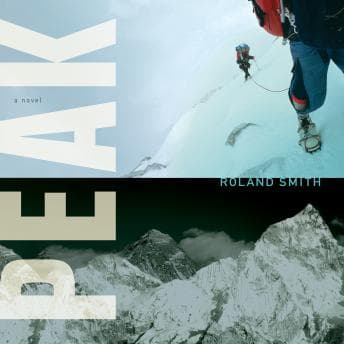

"The summit is not the goal. Getting down alive is."
That line hit me somewhere around hour three, driving back from a client site in San Marcos with Ranger snoring in the back seat. And I thought - yeah. That's something they don't teach you in the recruitment brochure either.
Let me cut to the chase: Peak is a YA novel about a fourteen-year-old kid trying to summit Everest, and I'm a fifty-something retired colonel who's spent more time at altitude in helicopters than on foot. This book was not written for me. But here's the thing - Roland Smith clearly did his homework on high-altitude climbing, and the tactical reality of what happens to the human body above 26,000 feet is handled with enough respect that I didn't once throw my phone across the cab.
A Kid Who Climbs Skyscrapers and a Father Who Climbs People
The setup is sharp. Peak Marcello gets busted scaling a New York high-rise - not for thrills, but because climbing is the only thing that makes sense to him. The judge gives him two options: juvie or living with his estranged father in Thailand. Sounds like a no-brainer, except his dad runs Peak Expeditions (yeah, he named his company after his kid, or his kid after the company - the book lets you chew on that) and has zero interest in being a parent. He wants a marketing gimmick. Youngest person to summit Everest. That's it. That's the whole father-son reunion.
Smith doesn't sugarcoat the selfishness. Peak's dad, Josh, is written with the kind of casual manipulation I've seen in certain commanding officers who confuse mission success with personal glory. Peak knows he's being used. He goes anyway. Because the mountain is the mountain, and addicts don't say no to their fix. That psychological honesty is what elevates this above a standard adventure yarn. I found that same kind of unflinching emotional honesty in Their Eyes Were Watching God — a completely different world from Everest, but that same quality of a character who sees clearly what they're walking into and walks in anyway.
The supporting cast is lean but effective. Sun-jo, a young Sherpa with his own reasons for wanting the summit, becomes Peak's quiet counterweight. There's a rivalry between expedition companies that feels authentic - the business of Everest is ugly, and Smith doesn't pretend otherwise. The Sherpas aren't treated as background furniture, which I appreciated. They're the ones who actually know what they're doing up there.
Pat Young Behind the Mic - The Elephant in the Base Camp
Okay, here's where it gets complicated. Pat Young narrates this version, and there's apparently a previous recording by Ramon de Ocampo that has a devoted following. I haven't heard de Ocampo's version, so I can only judge what I got.
Young's delivery is direct and punchy - he leans into Peak's teenage cynicism hard. Sometimes too hard. There were moments, especially early on, where Peak comes across less like a smart kid in a bad situation and more like a kid you'd want to put on latrine duty for a week. The sarcasm doesn't always land as self-aware; it just sounds bratty. And for a first-person narration where you're stuck inside this kid's head for seven hours, likability matters.
That said, Young handles the climbing sequences well. When the oxygen gets thin and the stakes ratchet up, the narration tightens. The pacing in the final third is genuinely tense. You can hear the air getting thinner in his delivery, if that makes sense. But the early chapters - the New York stuff, the courtroom, the travel - feel a little one-note. Like Young found one gear for Peak's voice and rode it.
At seven hours, this is a quick listen. I ran it at 1.25x and it felt right. No production issues, clean audio throughout.
Who Should Gear Up for This
If you've got a kid (or grandkid) between ten and fifteen who thinks reading is punishment, hand them this audiobook. It moves fast, the climbing details are vivid without being textbook-dry, and the emotional core - a kid figuring out that his hero-dad is just a guy with a business plan - hits real.
Adults? It's a solid afternoon listen if you're into mountaineering or survival stories. Don't expect the depth of Into Thin Air. Do expect a clean, propulsive story that respects both the mountain and the kid trying to climb it.
If you're particular about narration and you've heard the de Ocampo version, you might want to track that one down instead. Young isn't bad, but he makes Peak a harder kid to root for in the first half.
Mission Debrief
Worth your time? Here's the debrief: Peak is a smart, fast YA adventure that doesn't insult your intelligence. The father-son dynamic carries real weight, the climbing feels authentic, and the ending earns its emotional payoff without getting sappy. The narration is the weak link - functional, sometimes effective, occasionally grating. For a credit? Probably not unless you're buying it for a young listener. But streaming it on a long drive with your German Shepherd? Ranger approved this one. Mostly.









