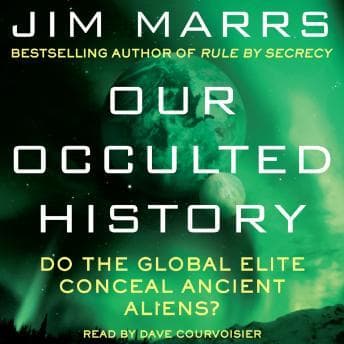

I was prepping a deck for a fintech startup at 2 AM—the kind of night where you've had too much cold brew and your brain needs something to chew on besides cap tables. So I pulled up Jim Marrs' Our Occulted History thinking, hey, conspiracy theories are basically alternative business models for reality, right? Nearly 12 hours later, I have thoughts. Many thoughts.
Bottom line: This is a 12-hour buffet of ancient astronaut theory, secret society speculation, and government cover-up claims. If you're already a Marrs fan or deep into this genre, you know what you're getting. If you're looking for rigorous analysis that would survive a McKinsey partner review? Skip to literally any other book.
The Pitch Deck for Hidden History
Marrs structures this like a consultant would structure a strategy presentation—which I respect, even if the content makes me want to ask for citations every thirty seconds. He starts with the "what if" premise (ancient non-human intervention in human origins), builds through archaeological anomalies and Sumerian texts, then connects it all to modern power structures. The framework is solid. The evidence is... let's say "creatively sourced."
Here's the thing my parents would've said: "Sounds interesting, but does it make money?" The ROI on this book depends entirely on what you're looking for. Entertainment value? High. Intellectual rigor? My 2.0x speed couldn't save this one from the logical leaps. Marrs throws everything at the wall—Annunaki, Nephilim, Illuminati, suppressed technologies—and some of it sticks if you're already inclined to believe.
The Narrator Problem Nobody Warned Me About
Dave Courvoisier has a perfectly serviceable voice for nonfiction. Clear delivery, decent pacing. And then he does the accents.
Every time Marrs quotes someone—a historical figure, a researcher, anyone—Courvoisier breaks into what I can only describe as community theater character work. We're talking attempted British accents for European scholars, vaguely Middle Eastern inflections for ancient sources. It's... a choice. Jenny would say I'm being harsh. Jenny is right. But also, it's genuinely distracting when you're trying to follow an already convoluted argument about Babylonian bloodlines and suddenly the narrator sounds like he's auditioning for a BBC period drama.
The mispronunciations compound this. Names of ancient figures, archaeological sites, researchers—consistently mangled, repeatedly. If you're familiar with the subject matter, it's like nails on a chalkboard. If you're not, you might not notice, but you're also absorbing incorrect pronunciations you'll have to unlearn later.
What My Parents Did Instinctively (Question Everything)
I'll give Marrs this: he's asking questions that mainstream academia doesn't want to touch. Why are there similarities in ancient structures across continents? What's with the consistent flood mythology? How did certain civilizations advance so quickly? These are legitimate anthropological puzzles.
The problem is the answer is always "aliens" or "secret elite knowledge." It's like a consultant who only has one framework—eventually you start forcing every problem into that box. The Chimp Paradox actually gives you a better framework for understanding why our brains latch onto single explanations—it's about managing the emotional chimp that wants simple answers. I've seen this fail at three different companies. You need multiple hypotheses, not just the spicy one.
Marrs is a journalist, not a scientist, and he writes like one. The narrative moves. He connects dots—whether those connections are real or imagined is another matter. For someone who's never encountered ancient astronaut theory, this is actually a pretty comprehensive overview of the genre's greatest hits.
Who Gets Value Here (And Who Doesn't)
This is for people who watch Ancient Aliens unironically, who've already read Sitchin and von Däniken, who want their conspiracy theories with a side of government cover-up. If you're in that camp, you'll probably enjoy this despite the narrator issues.
If you're a skeptic looking for something to argue with during your commute? Also works. I spent half my listening time mentally preparing counterarguments, which kept me engaged in a weird way. That argumentative engagement reminded me of Braving the Wilderness—Brown talks about standing alone in your convictions even when the crowd goes another direction, which is basically what you're doing when you're the one person fact-checking ancient astronaut claims.
If you want actual history or science? Hard pass. The key takeaway is worth the listen if you're already bought into the premise. The other 11 hours? Padding for the converted.
Park's Final Assessment
Would I recommend this to a client? Only if that client was producing a documentary on conspiracy culture and needed primary source material. As intellectual entertainment, it's fine—like watching a heist movie where you know the plan has holes but you enjoy the ride anyway.
The narrator situation genuinely impacts the experience. At 1.25x, the accent work becomes slightly less jarring. At 2.0x, you're moving fast enough that the mispronunciations blur together. Neither is ideal.
Marrs died in 2017, so this is part of a closed catalog. If you're a completist for his work, you're going to listen regardless of what I say. If you're curious about the genre, there are better entry points. If you're looking for something to make you question reality at 2 AM while you should be working on a pitch deck? Well. It does that job.