
What happens when an author trusts his own novel enough to read it aloud—and brings three other narrators along for the journey?
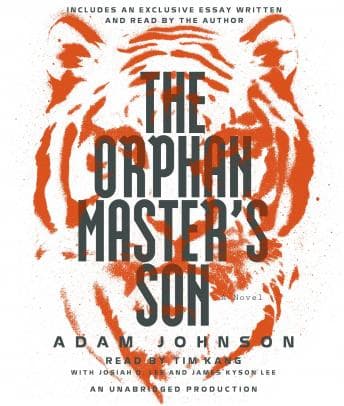
I finished grading a stack of sophomore essays on The Great Gatsby around midnight, poured myself something stronger than coffee, and started what I thought would be a chapter or two of The Orphan Master's Son. Four hours later, I was still sitting in my kitchen, papers forgotten, completely lost in Pyongyang.
Dickens in the Hermit Kingdom
The Washington Post comparison to Dickens visiting Pyongyang isn't hyperbole. I had a similar reaction reading Tale of Two Cities—that sense of watching an author master both intimate character work and sweeping social critique. Adam Johnson has written something I rarely encounter anymore after twenty years of teaching literature: a genuinely original novel that feels both impossibly foreign and achingly familiar. Pak Jun Do's journey from orphan to kidnapper to something far more dangerous operates on the same moral complexity that makes Victorian fiction endure. The difference? Johnson's setting—North Korea's impossible contradictions of loyalty, survival, and state-manufactured reality—makes Dickens' London look positively transparent.
This reminds me of what Hemingway said about writing true sentences. Johnson writes true sentences about a country built entirely on lies. The cognitive dissonance is the point.
Four Voices, One Nightmare
Here's where the audiobook becomes something special. Johnson himself narrates portions, which initially made me skeptical. Authors reading their own work can be—well, let's just say I've sat through some painful faculty readings. But Johnson understands his prose rhythms in a way that transforms the listening experience. There's a dreamlike quality to certain passages, almost lyrical, that I'm not sure a professional narrator would have found.
The multi-narrator structure isn't gimmick. Tim Kang handles Jun Do's story with the kind of restraint the character demands. Josiah D. Lee takes the interrogator sections, and James Kyson Lee delivers the propaganda loudspeaker broadcasts with exactly the right mix of absurdity and menace. When those loudspeaker sections hit—and they hit often—you understand viscerally how constant state messaging warps reality. My students complain about too many ads on social media. I want to assign them this audiobook and ask them to reconsider what propaganda actually sounds like.
The Texas ranch scenes with the American delegation are—and I'm not exaggerating—ridiculously funny. In a novel about torture and kidnapping and state oppression. Johnson earns those laughs by never winking at the audience. The humor emerges from genuine cultural collision, not authorial cleverness.
The Prose Deserves 1.0x Speed
I listened at 1.0x, obviously. (My students think I'm ancient for this. They're not wrong.) But this is exactly the kind of novel where pacing matters. The interrogation scenes build tension through accumulation, not speed. The abduction sequences—based on actual historical kidnappings, which makes them more horrifying—require you to sit with the moral weight of what's happening.
There were moments, I'll admit, when the audio quality seemed to falter slightly. Nothing dramatic. Just enough to notice. Given that this production uses four narrators including the author, some minor inconsistencies are forgivable.
Who This Is For (And Who Should Run)
If you loved 1984 or Brave New World, this is their spiritual successor—but warmer, stranger, and set in a real place that still exists. If you want comfort reading, keep walking. This novel contains violence, torture, and the casual cruelty of totalitarian systems. It also contains moments of genuine beauty and a love story that earns its emotional payoff.
My students would hate this. Too long, too complicated, too demanding. I love it.
This is not background listening. This is not commute listening unless you want to miss your exit. This is dedicated, focused, probably-should-have-a-drink-nearby listening. Nineteen hours is a commitment. It's worth every minute.
Worth Pausing the Faculty Meeting For
I've taught literature for two decades. I've listened to hundreds of audiobooks. I've become cynical about prize-winners and skeptical of hype. The Orphan Master's Son is the rare novel that justifies its Pulitzer. The audiobook production—multiple narrators handling distinct narrative registers, the author's own voice grounding the whole thing—elevates already exceptional prose into something approaching performance art.
Principal Martinez, if you're reading this, I was definitely paying attention during last week's budget meeting. (I wasn't. I was finishing this novel. No regrets.)