
I started this one during a late-night grading session - the kind where you've read seventeen essays about symbolism in The Great Gatsby and you need something to keep you from losing your mind. By 2 AM, I'd completely forgotten about the stack of papers on my desk. The red pen was still in my hand, but I hadn't marked a single thing in hours.
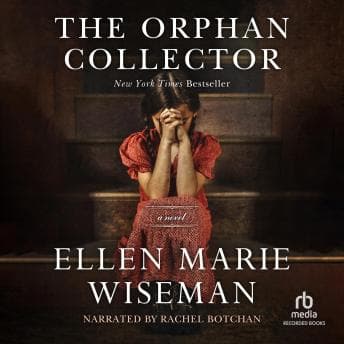
That's what Ellen Marie Wiseman does to you with The Orphan Collector. She pulls you into 1918 Philadelphia so completely that your own reality just... fades.
The Weight of History Done Right
Here's what separates good historical fiction from the stuff that reads like a Wikipedia article with dialogue: specificity. Wiseman doesn't just tell you the Spanish flu was bad. She shows you the bodies stacked on porches because the morgues are full. She puts you in the shoes of a thirteen-year-old German immigrant girl who has to step over corpses to find food for her baby brothers.
Pia Lange is the kind of protagonist I wish my students would encounter more often - young, terrified, making impossible choices with no good options. And then there's Bernice Groves, a woman so warped by grief and xenophobia that she convinces herself stealing immigrant children is somehow righteous. The dual perspective here is devastating. Wiseman doesn't let you look away from Bernice's twisted logic. You understand her, even as you're horrified by her.
This is the kind of moral complexity I try to teach when we read Steinbeck. The villain who believes she's the hero. The immigrant experience as both universal and painfully specific to its moment. Uncle Tom's Cabin does something similar with how it forces readers to sit with the moral certainty of people doing monstrous things. (My students would probably groan at me for saying this, but it's true - the best historical fiction teaches us about now by showing us then.)
Rachel Botchan Gets It
Look, I'm picky about narrators. Occupational hazard. When you've spent two decades teaching students to read aloud with intention, you notice everything - the misplaced emphases, the rushed passages, the voices that don't quite land.
Botchan nails it. Her Pia sounds exactly like a scared teenager trying to be brave. Her Bernice has this chilling calm that makes the character even more unsettling than she is on the page. The German immigrant characters don't sound like caricatures. The grief sounds like grief.
I listened at 1.0x, obviously. (Yes, I know. I'm ancient. My students have told me.) But honestly? This book deserves it. The pacing Wiseman builds into the prose - the way tension ratchets up through sentence structure - you'd lose that at 1.5x. Botchan understands that pause is punctuation. She lets the silences breathe.
The Gut-Punch Moments
I need to be honest about something: this book is not easy. There's child loss. There's abuse. There are scenes that made me pause the audiobook and just sit with my coffee for a minute.
But here's the thing - Wiseman earns every difficult moment. Nothing feels exploitative or gratuitous. The suffering serves the story, illuminates character, drives Pia's desperate search for her brothers. If you've read What She Left Behind or The Life She Was Given, you know Wiseman doesn't shy away from darkness. She walks you through it and shows you how people survive.
The parallels to our own recent pandemic experience are impossible to ignore. I kept thinking about my students during COVID, the ones who lost grandparents, the ones whose families were blamed for the virus because of their ethnicity. History rhymes, as they say. (Okay, Twain probably never actually said that, but my students don't need to know that.)
Who's This For (And Who Should Skip It)
If you need content warnings for child endangerment and loss, take them seriously here. Probably not one for my sophomores - too heavy. But if you love historical fiction that doesn't flinch, if you want to understand how ordinary people become monsters and heroes in the same crisis, this is your book.
I've already recommended it to three colleagues and my wife Denise, who finished it before I did because she doesn't have papers to grade at 11 PM.
The Teacher's Final Word
This is why we still read historical fiction. Not for the costumes and the period details, though Wiseman delivers those beautifully. We read it because the past holds up a mirror. Because Bernice Groves's particular brand of nativist cruelty didn't die in 1918. Because Pia's courage reminds us what ordinary people are capable of when everything falls apart.
At almost sixteen hours, it's a commitment. But Botchan's narration makes those hours fly. I finished it during a Saturday walk on the lakefront with Denise, and we spent the rest of the afternoon talking about it. That's the mark of a book that matters.