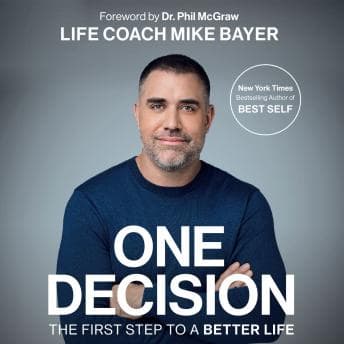

"The decision to be authentic is the most important decision you'll ever make." Mike Bayer says something like this early on, and I almost skipped to the next chapter. I've heard that sentence - or its functional equivalent - in approximately forty-seven other self-help audiobooks. I kept going anyway. Partly because it was a Sunday morning, Jenny was doing her yoga thing, and I had nowhere to be. Partly because at 6 hours, this was a manageable commitment. Mostly because I've watched enough founders implode not from bad strategy but from genuinely not knowing who they were - making decisions from fear, from ego, from what their investors expected. So fine. Authenticity. Let's go.
The Part Where I Admit This Isn't Entirely Nonsense
Here's the thing about Mike Bayer's core framework: it's basically what my parents did every single day without ever reading a business book. They knew who they were. Korean immigrants running a dry cleaning shop in Koreatown, working 14-hour days, no illusions about what they were building or why. Every decision came from that clarity. Bayer has now packaged that instinct into a repeatable process with worksheets. This is what my parents did instinctively. Now it has a TED talk.
The "CAST" framework he walks through - where you identify your authentic self versus the character you perform under stress - is actually useful. Not revolutionary, but useful. I've sat in McKinsey conference rooms watching C-suite executives make catastrophically bad calls because they were operating from their fear-character, not their actual judgment. Bayer gives you a vocabulary for that distinction. The worksheet in the PDF companion (yes, I downloaded it, yes, Jenny made a comment) forces you to get specific about the gap between who you are and who you perform as. That specificity is where the value lives. Untroubled Mind works a similar angle on that self-versus-performance gap, though it never quite commits to the worksheet-level specificity that makes Bayer's version actually actionable.
Bayer narrates this himself, and it matters. The conversational delivery - loose, direct, occasionally funny - is what keeps this from feeling like a corporate wellness seminar. He's not performing authority. He sounds like someone who has actually sat across from people in crisis and helped them think through it. That's not nothing.
Where the ROI Gets Shaky
The Dr. Phil foreword is exactly what you'd expect a Dr. Phil foreword to be. Skip it. I'm not being harsh - there's just nothing in those opening minutes that changes your relationship to the material.
The bigger issue is that Bayer is working in well-established territory and doesn't always acknowledge it. The "facts over fears, clarity over confusion" framework is solid cognitive-behavioral territory. It works. But if you've already read anything adjacent - and if you're the kind of person buying this book, you probably have - you'll spend a fair amount of time waiting for the next new thing that doesn't quite arrive. The key takeaway is worth the listen. The other 5 hours? Partially.
I also kept bumping against the gap between Bayer's client base (celebrities, executives, people with resources and support structures) and the reality of most people making hard decisions. My parents couldn't afford to "pause and reconnect with their authentic self" when the dry cleaning machine broke down on a Saturday morning. Authenticity is easier when you have options. The book doesn't fully reckon with that.
The Honest Business Case
Bottom line: this is a competent, well-narrated, genuinely useful self-help audiobook that probably won't break new ground for experienced readers of the genre but delivers its framework clearly and without padding. Six hours is the right length. Bayer doesn't overstay his welcome, which puts him ahead of 70% of the field on that criterion alone.
Who should listen: founders in their first identity crisis (and they all have one), anyone who keeps making the same type of bad decision and suspects the pattern is them, people new to this genre who want an accessible entry point. The audiobook-as-first-audiobook quote from a listener I saw somewhere tracks - Bayer's narration is approachable enough to make the format work for newcomers.
Who should skip: if you've already done the therapy, read the CBT workbooks, and built a solid self-awareness practice, this will feel like a review session you didn't need to pay for. Jenny would say I'm being harsh. Jenny is right. But also - you know who you are.