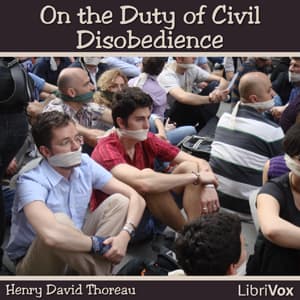

Look, I need to complain about something first: this essay is categorized as "Fiction & Literature" on some platforms. Sir. HENRY DAVID THOREAU went to jail for refusing to pay his taxes in protest of slavery and an unjust war, and then wrote about it. That is not fiction. That is a man with receipts. The miscategorization bothers me the way it bothers me when TV shows have flatline patients getting defibrillated. It's just wrong and someone should fix it.
Okay. Now that I've gotten that out of my system.
The Night Shift Version of "I'm Not Doing That"
I listened to this during one of those 4 AM stretches where the unit was eerily quiet (I knocked on wood, don't worry) and I was caught up on charting with nothing to do but sit with my own thoughts. Which turned out to be the perfect headspace for Thoreau basically writing a 19th-century manifesto about when it's your moral obligation to say no. His argument is simple and relentless: if the government is doing something unjust, your compliance makes you complicit. Paying your taxes during the Mexican-American War? You're funding the war. Staying silent during slavery? You're enabling it.
And honestly? Working in healthcare, where I've watched policies grind against patient welfare more times than I can count, where I've had to advocate for patients against systems that would rather I just chart quietly and move on - Thoreau's core argument hit different at 4 AM. He's not talking about anarchy. He's talking about the weight of doing nothing when you know better.
The writing itself is dense. This is 1849 prose, and Thoreau doesn't hold your hand. He drops references to Confucius and Paley and expects you to keep up. At 82 minutes, it's a short listen, but it's concentrated. Like espresso. You can't just let it wash over you the way you might with a thriller.
Gord MacKenzie and the LibriVox Question
So here's the thing - this is a LibriVox recording, which means it's a volunteer production. And you need to calibrate your expectations accordingly. Gord MacKenzie reads clearly and at a steady pace, and he doesn't get in the way of Thoreau's words, which is honestly the most important thing for an essay like this. There's no dramatic performance here, no vocal fireworks. It's a man reading an essay into a microphone with decent enunciation.
The audio quality is... LibriVox. Clean enough. No distracting background noise that I caught, but it doesn't have the polish of a professionally produced audiobook. You're not getting studio-quality sound design. You're getting a free recording of a public domain text, and for what it is, it works fine.
But I'll be real - at 82 minutes with fairly even delivery, your attention can drift if you're not actively engaged. This isn't a "put it on while you do dishes" listen. I found myself rewinding a couple of times when my brain tried to multitask.
Who Thoreau Is Actually Yelling At (Spoiler: Probably You)
The part that stuck with me - and honestly the part I think about now on my drive home - is when Thoreau goes after the people who oppose injustice in theory but do nothing in practice. He's not just angry at the government. He's angry at the "good people" who tsk-tsk about slavery over dinner and then go pay their taxes the next morning. He calls voting a kind of gambling, saying you're just expressing a feeble wish that the right thing might happen, but you're not actually doing anything.
That's a gut punch that still lands 175 years later.
My mom would love this (she still thinks I should've been a doctor). She's the one who taught me that being the eldest means you don't get to just go along. You push back. You speak up. Thoreau would've liked my mom. My mom actually showed up in my head again when I read I'm Glad My Mom Died - a completely different book about a completely different kind of mother, but that same thread of "the women who shaped how we resist" runs through both in ways I wasn't prepared for.
The Post-Shift Prescription
This is free, it's short, and it contains ideas that are genuinely worth sitting with. But let me be honest about what this audiobook isn't: it isn't an easy listen, it isn't a polished production, and it isn't going to make your commute fly by the way a good thriller does.
If you want Thoreau's actual words delivered competently and for zero dollars? This does the job. If you're looking for a narrator who's going to make 19th-century philosophical prose feel electric and alive? You might want to shop around for a more produced version.
For me, alone in a quiet trauma center at 4 AM, questioning systems the way nurses do when nobody's watching? It was exactly the right thing at the right time. Carlos asked why I was being so quiet when I got home. I told him I was thinking about civil disobedience. He said, "Please don't stop paying our mortgage." Fair enough.