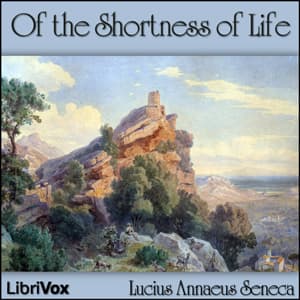

I finished this during a faculty meeting about standardized testing protocols. Seneca would have approved - he literally wrote an entire essay about not wasting time on meaningless bureaucracy two thousand years ago. The irony was not lost on me as Principal Martinez droned on about assessment metrics.
Here's the thing about Stoic philosophy in audiobook form: it either lands like a conversation with a wise friend, or it sounds like someone reading a fortune cookie collection at you for an hour. Jonathan Hockey lands firmly in the first camp. His delivery has this calm authority that feels right for Seneca - not preachy, not overly dramatic, just... steady. Like someone who actually believes what they're saying.
Why This Translation of Ancient Wisdom Still Hits
I've taught excerpts from Seneca to my juniors for years. Most of them roll their eyes at the "old dead guy telling me how to live" angle. But listening to this - actually hearing the words spoken aloud - reminded me why these texts survive. Seneca isn't lecturing from some ivory tower. He's writing to his friend Paulinus, genuinely worried about him burning out in a government job. Sound familiar?
The core argument is deceptively simple: life isn't short, we just waste most of it. We chase promotions, accumulate stuff, scroll through our phones (okay, Seneca didn't say that last one, but he would have), and then complain we don't have enough time. Meanwhile, we're terrible at spending time on what actually matters.
At just over an hour, this is philosophy you can actually finish. My students would appreciate that, even if they pretend not to care. I appreciated it while pretending to take notes on curriculum alignment.
The Voice That Carries Two Millennia
Hockey's narration works because he doesn't try too hard. There's no theatrical gravitas, no "I am reading IMPORTANT PHILOSOPHY" energy. He reads Seneca like Seneca probably intended - as practical advice from someone who's seen a lot of people mess up their lives in predictable ways.
The pacing is deliberate without being slow. I listened at 1.0x (yes, I'm that person) and it felt right. These aren't words meant to be rushed through. When Seneca describes how we guard our property but freely give away our time to anyone who asks, the pause Hockey leaves afterward lets that sink in. He understands that pause is punctuation.
I couldn't find much about Hockey's other work online, but based on this performance, he gets classical texts. There's a warmth underneath the philosophical seriousness that keeps it from feeling like a lecture.
Who This Is For (And Who Should Skip It)
If you've never read Stoic philosophy, this is a perfect entry point. Short, accessible, and genuinely useful. If you loved Meditations by Marcus Aurelius, this is its spiritual successor - or predecessor, technically, since Seneca came first. Skip it if you need narrative drive or concrete action steps; this is reflection, not a self-help checklist. Though honestly, if you're looking for philosophy that punches you in the gut with modern relationship dynamics, It Ends With Us does that in a completely different way—less Stoicism, more raw honesty about the choices we make when we're running out of time to fix things.
My wife Denise listened to part of it during our lakefront walk last Sunday. She's a nurse, works insane hours, and she actually stopped walking to say "wait, go back" when Seneca talked about how we're stingy with money but generous with time - the one thing we can never get back. That's the sign of philosophy that works.
This reminds me of what Hemingway said about good writing - that it should be true. Seneca's essay is true in a way that transcends its age. The specific examples are Roman, but the human tendencies he describes? I see them in my students. I see them in my colleagues. I see them in myself, sitting in meetings about meetings, wondering where the year went.
Class Dismissed - Go Listen
The production is clean and simple - no music, no sound effects, just Hockey and Seneca's words. That's exactly right for this kind of text. You don't need atmospheric background noise when the content itself is doing the heavy lifting.
My one small gripe: the audiobook format makes it harder to flip back and reread passages. Seneca writes in these dense, quotable chunks that reward rereading. I found myself wanting to highlight things, which obviously doesn't work when you're walking around a high school pretending to supervise lunch.
But that's a minor complaint. For a quick, powerful reminder that you're probably spending your life wrong, this delivers. My students would hate that I said that. I stand by it anyway.
At an hour, you have no excuse not to savor it.