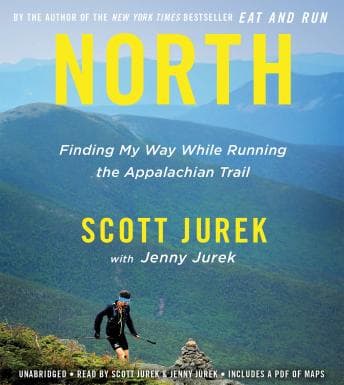

Everyone told me this was an inspiring story about perseverance. And it is. But what kept me listening past mile 500 — and what I suspect most reviews miss — is that North is really a case study in what happens when a person's entire identity is built on performance, and then the body starts saying no.
I was chopping onions for a chana masala at 10 PM on a Tuesday when Scott Jurek described the moment his quads essentially stopped functioning on the trail, and he had to reckon with the possibility that his body might actually quit before his mind did. I put the knife down. Because psychologically, that's the moment the book gets interesting. This isn't just a man running 2,189 miles. This is a man who doesn't know who he is if he's not running 2,189 miles.
The Identity Crisis Disguised as an Adventure Memoir
The protagonist exhibits classic enmeshment between self-worth and achievement — and Jurek is honest enough to let you see it, even if he doesn't always name it directly. After two decades of ultrarunning, his decision to attempt the Appalachian Trail speed record reads less like a new challenge and more like a man terrified of irrelevance. He's aging. The younger runners are gaining. And so he picks the hardest thing he can think of, which is a pattern my therapist would have thoughts about.
What makes the book compelling is that the trail strips away every coping mechanism. By the time he's dealing with shin splints, tendonitis, and caloric deficits that would alarm a medical professional, there's nowhere to hide. The daily grind — nearly 50 miles a day for 46 days — becomes this relentless mirror. I found myself asking: why does Scott really need this record? He says it's about growth. The text suggests it's about something much more complicated.
And here's where I wish Jurek had gone deeper. There are moments where he approaches genuine emotional excavation — the toll on his marriage, the physical breakdown, the quiet terror of failing publicly — and then pulls back into motivational-speak territory. The research actually shows that athletes who tie identity entirely to performance experience profound psychological distress during decline. Jurek is living that research, and the book almost explores it. Almost. The gap between what we know we need and what we're actually willing to face is something You Were Not Born to Suffer tries to address head-on — though I'd argue Jurek's trail does more of that excavation work than any self-help framework could.
Two Narrators, Two Versions of the Same Marriage
The dual narration is where this audiobook gets genuinely interesting as a psychological document. Scott narrates his chapters. Jenny narrates hers. And you get two very different accounts of the same experience.
Scott's voice is what you'd expect — measured, determined, occasionally wry. He sounds like a man who's spent years on stages giving talks about mental toughness. Jenny's sections are rawer, less polished, and honestly? More psychologically revealing. She's the one managing logistics, dealing with her own health struggles (including a miscarriage they discuss with real candor), and watching her husband destroy himself in real time. Her chapters are the ones where the emotional cost of this project actually lands.
Now — some listeners found Jenny's narration distracting. I get why. She's not a professional narrator, and the tonal shift between their chapters is noticeable. But I'd argue that unevenness IS the point. Their perspectives don't align neatly because their experiences of this journey were fundamentally different. That friction is the most honest thing about the book. A slick, uniform narration would've been a lie.
At nine hours, it's a manageable listen. Not bloated, not rushed. The pacing mirrors the trail itself — long stretches of repetitive physical detail punctuated by moments that hit you sideways.
When Motivation Meets Limitation
Here's my issue, and it's a structural one. The book wants to be two things: an inspiring athletic memoir and an honest reckoning with what extreme endurance does to a human being and the people around them. It mostly succeeds at the first and partially succeeds at the second. The daily trail details — terrain, weather, food (he's vegan, which adds a whole logistical layer) — are vivid and specific enough to put you on the AT. But when the narrative reaches for deeper meaning, it sometimes settles for "I learned to accept help" when the actual psychological material is so much richer than that.
Psychologically, the most interesting thread is the tension between control and surrender. Jurek is a man who controls everything — diet, training, pace, mindset. The trail takes all of that away, slowly, over 46 days. That's a fascinating case study in what happens when a control-oriented personality meets chaos. I just wanted more of that and less "I kept going because I believed."
Who This Is Actually For (And Who Should Skip)
Runners and endurance athletes will love this. Obviously. But if you're interested in the psychology of extreme achievement — the cost of it, the identity questions underneath it — there's real material here, even if you have to do some of the interpretive work yourself. Skip it if you want a tightly structured self-help framework. This is memoir, not manual.
If you read Eat and Run, this adds genuine depth. The dual narration with Jenny transforms what could've been a solo victory lap into something more complicated and more human.
The Case File Stays Open
I finished this while scrubbing the masala pot, standing in my kitchen at midnight, thinking about what it means to need something so badly you'll break yourself to get it. Jurek broke the record. But the book is most alive in the moments where he's not sure he will — and not sure what it means if he doesn't. That uncertainty is worth your nine hours. The answers he arrives at are a little too neat for my taste, but the questions? The questions are exactly right.