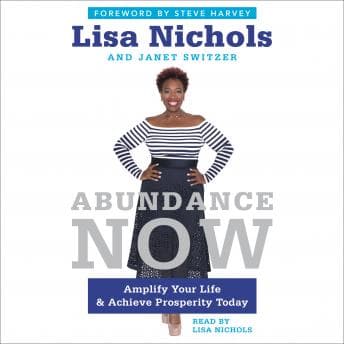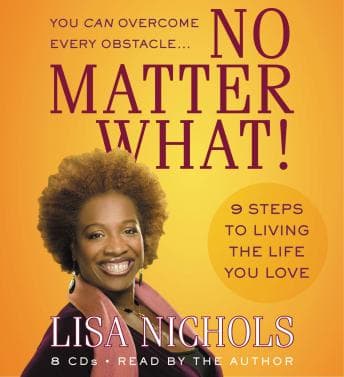

I was standing in my kitchen at 10 PM on a Tuesday, attempting my mother's rajma recipe from memory (she'd be horrified I didn't call to ask), when Lisa Nichols told me about wrapping her baby in a towel because she couldn't afford diapers. I stopped stirring. Just stood there with the wooden spoon suspended over the pot, staring at nothing.
That's the thing about this book. It catches you off guard.
The Psychology of Bounce-Back (And Why Most Self-Help Gets It Wrong)
Here's my issue with a lot of the self-help genre: it treats human motivation like a light switch. Think positive, flip it on, done. The research actually shows that resilience isn't binary—it's a set of skills that can be strengthened through deliberate practice, much like physical muscles. And Lisa Nichols, whether she's read the literature or not, gets this intuitively.
Her framework of nine "bounce-back muscles"—Confidence, Faith-in-Myself, Honesty Out Loud, Forgiveness, and others—maps surprisingly well onto what psychologists call protective factors in resilience research. She's not just telling you to be positive. She's saying: here's the specific capacity you're weak in, here's how to identify it, and here are concrete exercises to build it up. The protagonist of her own story exhibits classic post-traumatic growth patterns, moving from financial rock bottom and emotional devastation to building a multimillion-dollar company, and she doesn't sanitize the ugly middle parts.
What makes this different from, say, The Secret (which she was featured in) is that Nichols essentially calls out the Law of Attraction's biggest blind spot. You can visualize all you want, but if you haven't developed the psychological infrastructure to handle the inevitable setbacks—if you haven't built those bounce-back muscles—visualization is just daydreaming with good PR. I found myself asking: why does this particular framing work where others fail? And I think it's because she treats struggle as data, not failure. That's psychologically sound.
Lisa Narrating Lisa: When Author-Read Actually Means Something
So here's where the audiobook format earns its keep. Lisa Nichols narrates her own book, and it's—okay, I need to be precise here. This isn't polished voice acting. This is a motivational speaker doing what she does best: talking directly to you like she's sitting across your kitchen table, holding your hands, and refusing to let you lie to yourself.
Her voice cracks when she talks about her lowest moments. There's a warmth to her delivery that feels genuinely maternal—not performative, not rehearsed. When she shifts into the exercise portions of each chapter, her tone changes from storytelling to coaching, and it's a natural gear shift. You can hear her lean into it. One listener described it as "getting advice from a true loving friend," and honestly, that's pretty much exactly right.
Is it perfect narration? No. If you're someone who wants crisp, measured audiobook delivery, this might feel too... evangelical? Too much energy? But psychologically, this tracks. She's modeling the exact emotional authenticity she's asking you to practice. The medium IS the message here. My therapist would have thoughts about this character—specifically, she'd probably point out that Nichols demonstrates secure attachment communication style, the kind where someone can be vulnerable and strong simultaneously without it feeling contradictory.
Who This Is Really For (And Who Should Probably Skip It)
Let me be honest. If you're a skeptic of the self-help genre—and look, I hold a pretty high bar for psychological accuracy—this book will surprise you in some places and make you roll your eyes in others. The "muscle" metaphor gets stretched thin across nine full chapters and nine hours. Some of the steps feel redundant, and by hour six, I was cooking another dish (palak paneer this time, less ambitious) and wishing she'd edited more tightly.
But here's what I keep coming back to: the autobiographical specifics. The towel-as-diaper story. The moment she describes deciding she was going to stop being the person things happened TO and become the person who happened to things. These aren't generic anecdotes. They're case studies in identity reconstruction, and they're powerful because they're real and they're hers.
This is a fascinating case study in how personal narrative shapes resilience. Susan Elliott does something similar in Getting Past Your Breakup, anchoring abstract recovery concepts in the kind of specific, lived detail that makes you feel seen rather than lectured at. If you're in a season where you need someone to look you in the ear (audiobook humor, sorry) and say "I see you, and you can do this"—with actual practical steps attached—this delivers. If you want academic rigor or tight structure, this will frustrate you.
Best consumed during morning jogs, long drives, or any activity where you need energy injected directly into your psyche. I'd recommend 1.0x speed—her pacing is part of the experience, and speeding it up loses the emotional texture.
The Case File Closes
Lisa Nichols built her own resilience framework from lived experience, and it holds up better than most pop psychology I've encountered. Not perfectly. Not without some repetition that a good editor should've caught. But the bones are solid, the delivery is authentic, and the autobiographical grounding gives it weight that pure theory never could. Sometimes the best psychology isn't in journals. Sometimes it's a woman who couldn't afford diapers telling you—with absolute conviction—that your current chapter isn't your whole story.
My mother would like Lisa Nichols. That's probably the highest compliment I can give.