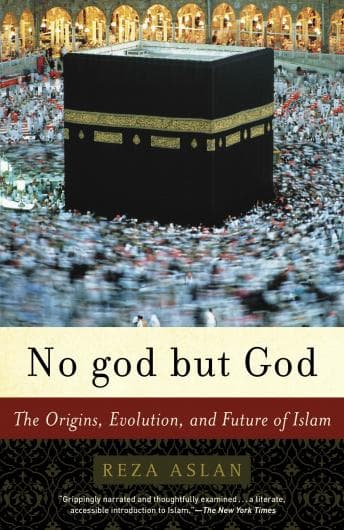

I was grading sophomore essays on The Great Gatsby - the ones where they all insist Nick is a reliable narrator - when I started this audiobook. Twelve hours later, I'd finished exactly zero essays and had completely rethought how I teach religious context in literature.
Here's the thing. I've been teaching for twenty years, and I can't tell you how many times a student has asked me about Islamic references in world literature and I've had to dance around my own ignorance. Reza Aslan just handed me the cheat sheet I didn't know I needed.
The Professor You Wish You'd Had
Aslan writes the way the best teachers teach - he assumes you're smart but uninformed, which is exactly the right assumption. He doesn't talk down. He doesn't oversimplify. But he also doesn't bury you in academic jargon that makes you feel like you wandered into the wrong graduate seminar.
This reminds me of what Hemingway said about writing - that the dignity of movement of an iceberg is due to only one-eighth of it being above water. Aslan clearly knows ten times more than he's putting on the page, but he's disciplined enough to give you what you need without showing off. My students would hate this. I love it.
The historical context alone is worth the price of admission. Muhammad's Mecca, the tribal dynamics, the way monotheism emerged from a polytheistic society - Aslan makes you feel like you're walking those streets. And the way he traces the development of Sunni and Shia Islam? Finally, I understand why this isn't just ancient history but something that shapes headlines I read every morning.
Shishir Kurup Gets It
I couldn't find much about Kurup online, but based on this performance, the man understands that scholarly material requires a specific kind of restraint. He's not performing. He's illuminating. There's a difference.
Kurup knows when to let a sentence breathe, when to let an idea land before moving to the next one. I listen at 1.0x because the author chose those words, and Kurup respects that choice. His pronunciation of Arabic terms feels confident without being showy - you trust him, which matters when you're learning.
The pacing works for a commute, for a long walk (Denise and I did the entire lakefront twice during chapter four), or for those late nights when you're pretending to grade papers. Clean production, no weird audio jumps, nothing that pulled me out of the material.
What Aslan Is Really Arguing
This isn't just history. Aslan's argument - that Islam is currently going through its own Reformation, similar to what Christianity experienced centuries ago - is the kind of framework that changes how you read the news. It's not apologetics. It's context. And context, as I tell my students approximately four thousand times per semester, is everything.
If you loved reading about the historical Jesus in Zealot, this is its spiritual successor. That same clarity of purpose shows up in Friday Night Lights, where Bissinger takes complex social dynamics and makes them feel immediate and personal. Same scholarly rigor, same accessible prose, same willingness to challenge assumptions without being preachy about it.
The prose deserves to be savored. Aslan writes with the kind of clarity that takes real effort to achieve. Every chapter builds on the last. By the time you reach his analysis of Islamic democracy and human rights, you have the foundation to actually understand the argument he's making.
Worth Pausing the Faculty Meeting For
I'll be honest - there are sections that require attention. This isn't background listening for when you're doing something else. The theological distinctions between Sunni, Shia, and Sufi traditions demand focus. But that's not a criticism. That's the nature of the material.
Who should skip this? If you want entertainment, pure escapism, something light for the gym - this isn't it. If complex religious and political discussions make you uncomfortable, maybe start elsewhere. But if you're a reader who believes understanding matters, who thinks the classics teach us how to live and that religious history shapes the world we inhabit? This is essential. Worth pausing the faculty meeting for. (Sorry, Principal Martinez.)
I'm adding this to my recommended listening list for AP Lit students. Not required - I'm not that cruel - but recommended. Because you can't fully understand the literature of the world without understanding the faiths that shaped it. And Aslan just made that understanding accessible to anyone willing to listen.