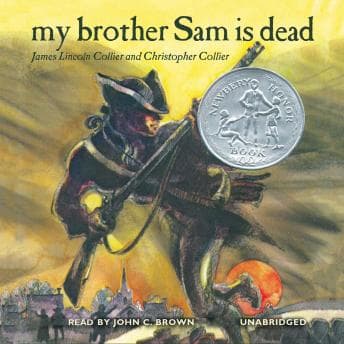

People kept telling me this is a kids' book. A Newbery Honor winner for middle schoolers. I downloaded it because my wife's niece had it on her summer reading list and Jenny asked me to "preview it" so we could talk to her about it. Four and a half hours later, I'm sitting in my home office at 10 PM thinking about my dad's dry cleaning shop and the impossible choices immigrants make for their families, and I'm pretty sure this book just wrecked me harder than most McKinsey case studies.
Bottom line: This is a 4.5-hour gut punch disguised as a YA historical novel. It's also - accidentally - one of the better books about family business loyalty I've encountered this year.
The Business of Choosing Sides
Here's the setup: Tim Meeker's family runs a tavern in Redding, Connecticut during the Revolutionary War. His brother Sam comes home from Yale all fired up about liberty and joins the Continental Army. His father, a Loyalist, thinks Sam is throwing his life away for ideology. Tim's stuck in the middle, trying to keep the family business running while the world burns around him.
Sound familiar? Because this is basically every family business succession conflict I've consulted on, except with muskets. The kid who goes to college and comes back with Big Ideas about how things should change. The parent who built everything with their hands and doesn't want some theory-driven revolution dismantling what works. I've seen this dynamic at three different companies - the language is different, but the fracture lines are identical.
The Collier brothers (one a historian, one a novelist) do something really smart here. They refuse to make either side the hero. The Patriots steal cattle. The Redcoats terrorize civilians. Tim watches his father get arrested and - this is where it stopped being a "kids' book" for me - there's a beheading scene and execution sequences that hit with zero sentimentality. No glory. Just waste. This is what my parents did instinctively when they talked about the Korean War: strip away the propaganda and show the cost.
John C. Brown Does the Quiet Parts Right
Brown's narration is workmanlike in the best sense. He's not doing theatrical voices or dramatic pauses every thirty seconds. His Sam has this urgent, almost reckless energy that makes you understand why Tim idolizes him - and also why their father wants to slap some sense into him. The narrative voice is Tim's, and Brown plays it with the right amount of confusion and growing exhaustion.
Where Brown really earns it is in the darker passages. The execution scenes - and yeah, there are multiple - are delivered with a restraint that makes them land harder. He doesn't lean into the horror. He lets the words do the work. At 2.0x speed, those moments still hit. That's the mark of solid narration.
Fair warning: there's swearing throughout that apparently bothers some listeners. Having grown up around a dry cleaning shop where my dad's Korean expletives could peel wallpaper, I didn't blink. But if you're handing this to a fifth grader, maybe know that going in.
4 Hours and 33 Minutes That Actually Earn Their Runtime
Finally, a business book - okay, it's not a business book. But finally, an audiobook that respects your time. At under five hours, there's zero padding. No meandering subplots, no filler chapters about the political philosophy of the Continental Congress. Every scene either advances the war's impact on this family or forces Tim closer to an impossible decision. That clarity of purpose reminded me of Mother and Son: The Respect Effect, which tackles a completely different arena — parenting — but shares that same unflinching look at how loyalty and respect fracture under pressure.
The key takeaway is worth the listen: wars aren't won by the righteous side. They're survived by the people who make the least terrible choices. That's not the message you expect from a book assigned to eighth graders, and honestly it's a message most adults still haven't internalized. Every startup founder who thinks disruption is cost-free should spend 4.5 hours with this book.
Who Gets the Assignment
If you've got kids between 10 and 14 who think the American Revolution was a clean good-vs-evil story, hand them this. If you're an adult who wants a tight, unsentimental war story that doubles as a family drama, this works for you too. Skip it if you need your historical fiction to have heroes. There are none here. Just people trying not to lose everything.
Jenny would say I'm being harsh calling a children's book essential adult listening. Jenny is right. I'm recommending it anyway.
My dad never read the Collier brothers. But he would've recognized every impossible choice in this book. Sometimes the best business education isn't about business at all.









