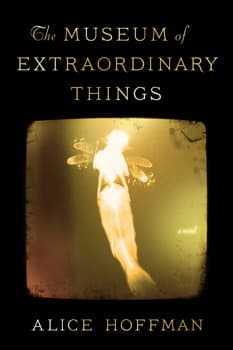

Alice Hoffman wrote a love letter to early 1900s New York, and it's the kind of letter that takes its sweet time getting to the point - but the handwriting is gorgeous.
I finished this one last Sunday morning, Denise still asleep, me on the couch with coffee going cold because I'd been up since five listening to the final three hours. Not because it was racing toward some breathless climax. Because Hoffman's prose has this quality - this deliberate, almost incantatory rhythm - where you don't want to break the spell by doing something as vulgar as standing up.
Coney Island As a State of Mind
Here's what Hoffman is really doing with this book. She's not just setting a story in 1911 New York. She's building two parallel cages and watching two people try to claw their way out. Coralie is literally displayed as a curiosity - the Mermaid in her father's freak show, swimming in a tank for paying gawkers on Coney Island. Eddie Cohen, Russian immigrant, escaped from the Lower East Side garment district only to find himself haunted by what he left behind. When he photographs the Triangle Shirtwaist Factory fire - and yes, the real one, the one that killed 146 workers - that historical anchor gives the whole novel its moral weight. This isn't just a love story with pretty scenery. It's about who gets to be seen as human in America, and who gets put behind glass. That same question — about who counts, who gets dignity, who gets erased — is at the center of Redeeming Love, though Hoffman earns it through history where that one earns it through allegory.
My students would hate this. I love it. The pacing is unhurried in a way that modern audiobook listeners might struggle with. Hoffman lingers on descriptions of the natural world - trees along the Hudson, the gray winter ocean off Brooklyn - the way a painter keeps returning to the same corner of a canvas. If you need plot beats every ten minutes, you'll be checking your phone. But if you loved The Dovekeepers or if you've ever read Edith Wharton and thought "I wish someone would write this from the immigrants' perspective," this is its spiritual successor.
Three Voices, Two That Matter
The multi-narrator setup is ambitious. Grace Gummer voices young Coralie, Judith Light voices mature Coralie looking back, and Zach Appelman takes Eddie's chapters. Here's the honest breakdown: Judith Light is the star. When she's on, she's magnetic - there's a passage-like quality to her reading, this almost theatrical gravitas that matches the novel's fairy-tale register. One listener called it "mesmerizing," and I'll cosign that. Her mature Coralie carries the weight of someone who survived something she's still trying to understand.
But - and this is the thing nobody wants to say about a respected actress - Light occasionally tips into a flatness that reads as robotic. Like she's performing the rhythm of the sentences without fully inhabiting the emotion underneath. It comes and goes. You'll be completely absorbed and then a passage will land oddly mechanical, and you notice the narrator instead of the story. The narrator understands that pause is punctuation, but sometimes the pauses feel calculated rather than felt.
Grace Gummer's young Coralie is where opinions will split hardest. She plays it shy, wondering, almost tentative - which is arguably the right choice for a sheltered girl who's literally never been allowed to leave her father's property. But "right choice" and "engaging to listen to for hours" aren't always the same thing. I found her sections slower going. Appelman's Eddie, by contrast, has this restless energy that pulls you forward. He sounds like a young man running from something, which is exactly what Eddie is.
Did they need three narrators? Probably not. Two would've been tighter. But I've listened to worse multi-narrator productions that felt like a committee designed them. This one at least has a clear logic: past Coralie, present Coralie, Eddie.
Who This Is For (And Who Should Walk Away)
If you're the kind of listener who treats audiobooks like background noise while doing dishes - skip this. Hoffman's sentences are built for 1.0x, full attention. The prose deserves to be savored. This is a lakefront walk book, a quiet evening book, a "turn off the TV and actually listen" book.
Historical fiction readers who care about period detail will be rewarded. Hoffman did her homework on Coney Island sideshows, early photography, the immigrant experience on the Lower East Side. If you come to audiobooks for literary fiction with real weight - not just plot machinery dressed up in period costumes - this delivers.
But if slow pacing makes you anxious, or if inconsistent narration breaks your immersion, you might want to try the print version instead. The writing itself is strong enough to carry it either way.
Worth Pausing the Faculty Meeting For
This reminds me of what Hemingway said about prose being architecture, not interior decoration. Hoffman builds something here. It's not perfect - the pacing sags in the middle hours, and the three-narrator structure occasionally feels like a solution to a problem that didn't exist. But when it works, when Judith Light hits her stride and Hoffman's sentences are doing that thing where history and fairy tale blur together, it's the kind of listening that makes you forget your coffee's gone cold. This is why we still read the classics - and why we still read the writers who understand what the classics were trying to do.