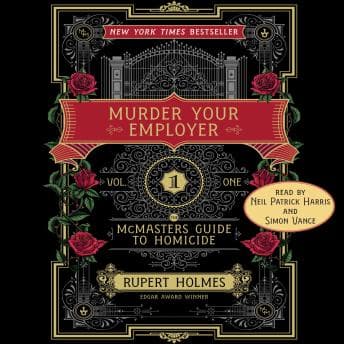

Look, I need to lodge a formal complaint with whoever decided this book should be fourteen hours long. I started this during a particularly tedious faculty meeting about standardized testing metrics—Principal Martinez was three slides into a PowerPoint about "data-driven outcomes"—and by the time I finished, we'd had two more meetings, I'd graded forty-seven essays on The Great Gatsby, and I still couldn't stop thinking about the McMasters Conservatory.
That's the problem with Rupert Holmes. The man writes like he's getting paid by the pun, and honestly? He should be.
A Poison Ivy League Education in Patience
Here's what nobody tells you about this book: the first half moves like my freshman students reading aloud. Slow. Deliberate. Occasionally painful. You're sitting there thinking "when does someone actually murder their employer?" while Holmes is busy constructing this elaborate fantasy academy with more rules than my department's bathroom pass policy.
But then—and this is the Hemingway iceberg principle in action—you realize all that setup was load-bearing. Every seemingly throwaway detail about the Conservatory's architecture, every quirky professor, every absurd rule about "thesis projects" clicks into place like a well-constructed syllabus. (My students would hate this comparison. I love it.)
The premise itself is delicious: a school where the curriculum is murder, but only ethical murder. Only targets who "deserve" deletion. It's satire wearing a thriller's clothing, and Holmes knows exactly what he's doing. Hemingway said the dignity of an iceberg comes from only one-eighth being above water. Holmes shows you the witty surface while the moral complexity lurks beneath.
Two Narrators, Two Completely Different Energies
Simon Vance handles the bulk of narration with that British reserve that makes even murder sound like afternoon tea. His voice carries the institutional weight of McMasters—all those rules and traditions and deadly serious absurdity. When he's describing the campus grounds or the faculty's peculiar habits, you can almost smell the old money and older secrets.
Neil Patrick Harris takes over for Cliff Iverson's journal entries, and here's where opinions split like my class on whether Gatsby was a romantic or a stalker. His emotional delivery for Cliff's struggles—the desperation, the moral gymnastics of justifying murder—genuinely moved me. There's this rawness when Cliff fails, again, to actually kill his boss that NPH nails completely.
But his comedic timing? Not his sharpest work. I've heard NPH do comedy. This isn't quite it. Some of the accent work wobbles too. It's like watching a gifted student phone in an assignment—still better than most, but you know they're capable of more.
The dual narrator approach works, though. Vance's British reserve versus Harris's American earnestness creates this constant tonal tension that mirrors the book's own identity crisis—is it satire? Thriller? Dark comedy? Yes. All of it.
The Prose Deserves to Be Savored (At 1.0x, Obviously)
Denise caught me laughing out loud during our lakefront walk last Tuesday. "What's so funny?" she asked. I tried to explain a particularly clever bit of wordplay about poison selection and she just... stared at me. "You're enjoying a book about murder school," she said. "While we walk past the children's playground."
She's not wrong. But Holmes writes the kind of sentences you want to rewind and hear again. The wit isn't just decoration—it's structural. The humor makes the darkness palatable, and the darkness gives the humor weight. Same reason we still read Swift's "A Modest Proposal"—satire needs teeth.
Interpreter of Maladies works the same way—Lahiri's prose looks quiet on the surface until you realize she's been slowly dismantling you from the inside.I will say: this is not a background listen. I tried grading papers while listening and missed two entire plot points. The story demands focus. The twists—and there are several that genuinely surprised me—require you to have been paying attention to those seemingly boring setup chapters.
Who Gets Admitted, Who Gets Expelled
If you loved the dark academic energy of "The Secret History" or appreciate Agatha Christie's puzzle-box plotting with a modern satirical edge, enroll immediately. Fans of clever wordplay who don't mind a slow build will find their people here.
Skip if: you need constant action, you hate puns (there are many), or you're looking for something to half-listen to while doom-scrolling. Also skip if you expect NPH at peak comedic form—he's good, just not his best.
My students would absolutely hate this. Too slow, too literary, too many words when a TikTok could summarize the plot in thirty seconds. Which is precisely why I loved it.
Class Dismissed
Fourteen hours is a commitment. The pacing wobbles. NPH's performance has soft spots. And yet—I'm already planning to listen to the sequel. Holmes has created something genuinely original: a world where murder is curriculum, ethics are required coursework, and the real thesis is whether anyone can truly deserve death.
The answer, like all good literature, is complicated. And worth the time.