
Quick Verdict: Worth your commute if you're a finance newbie. Skip if you've read literally any personal finance book in the last decade.
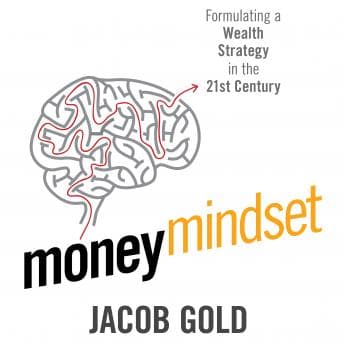
Okay, so here's the thing. Everyone keeps telling me I need to read more finance books because apparently making six figures at a FAANG company doesn't mean I actually understand money. (Fair point, Kevin.) So I grabbed this one because 2.5 hours seemed like the perfect length for a roundtrip commute experiment.
And look, I finished it in one day. That's... not necessarily a compliment.
The "Could've Been a Blog Post" Problem
I'm gonna be honest here. If you've ever read The Simple Path to Wealth, or listened to any financial podcast, or even just... googled "asset allocation" once, you're not getting much new information. If you want something that goes deeper into the mindset piece, Top 1%: Habits, Attitudes & Strategies For Exceptional Success actually delivers more actionable frameworks—though fair warning, it's got its own share of obvious advice. Rule of 72? Dollar cost averaging? The erosive effects of inflation? Yeah, I learned this stuff from a Reddit thread in 2018.
But—and this is important—that's not who this book is for. Jacob Gold is a third-generation financial planner and a professor at ASU, and he writes like it. Clear, methodical, no-nonsense. If you're a 22-year-old who just got their first real job and has no idea what a 401k actually does, this is genuinely useful. The way he frames money as an "energy source" is a little woo-woo for my taste, but I get what he's going for.
The ROI on this audiobook basically depends on your starting knowledge. For me? Pretty low. For my cousin who just graduated and thinks investing is "too complicated"? Actually solid.
Chris Smart's Steady Hand (For Better or Worse)
Here's where I have to be real about the narrator situation. Chris Smart does exactly what you'd expect from a finance audiobook—clear, professional, easy to follow. I listened at 1.5x and had zero comprehension issues, which is more than I can say for some business books that sound like they were recorded in a bathroom.
But man, it's monotone. Like, I get it, we're talking about estate planning, not the Battle of Helm's Deep. Still, there were moments on the train where I'd zone out and realize I'd missed an entire section on portfolio diversification. The steady pacing that makes it accessible also makes it... kind of forgettable?
Based on this performance, he's competent. Just don't expect Ray Porter levels of engagement. (Seriously, why can't Ray Porter narrate everything? Someone make this happen.)
Who This Is Actually For
Perfect for: Your younger sibling who just asked you what an IRA is. New grads. Anyone who's been too intimidated to start learning about personal finance. The morning commute when you're too tired for fiction but want to feel productive.
Skip if: You've already done the basics. You want entertainment value. You're trying to do deep work—it's too easy to tune out.
The content itself is solid for what it is. Gold covers the psychology of money, practical investment strategies, and estate planning in a way that doesn't assume you have an MBA. He's clearly passionate about financial literacy, and as someone who teaches this stuff, he knows how to explain concepts to beginners.
But here's my issue—at 2.5 hours, it feels like it's trying to cover too much ground too quickly. Each topic gets surface-level treatment. It's like a syllabus for a finance course rather than the course itself. Great for getting the lay of the land, less great for actually implementing anything.
The Bottom Line (Get It?)
If you're genuinely new to personal finance and want a quick audio primer that won't overwhelm you, yeah, go for it. The production is clean, the information is accurate, and you'll come away with at least a basic framework for thinking about money.
But if you've already read one or two finance books, this is probably redundant. I'd recommend it to my younger self circa 2015, back when I thought "investing" meant buying individual stocks because they sounded cool. (I bought GoPro at its peak. We don't talk about it.)
Speed recommendation: 1.5x minimum. 1.75x if you have any finance background at all. The pacing is deliberate enough that speeding it up actually helps maintain focus.
It's not bad. It's just... fine. And sometimes fine is exactly what you need at 6AM on a packed Caltrain, surrounded by other half-awake tech workers trying to adult properly.