
The "Boring" Classic That Actually Made Me Laugh Out Loud
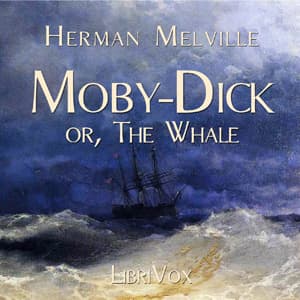
Okay, look. I've been teaching high school English for two decades. I have assigned Moby Dick excerpts to teenagers who looked at me with the kind of despair usually reserved for calculus finals. I've given the lectures on Symbolism and Obsession. I thought I knew this book.
But honestly? I didn't get it. Not really.
It wasn't until last Tuesday—grading a stack of disastrous Gatsby essays at 11 PM while my wife, Denise, was already asleep—that I finally heard it. I put on Stewart Wills' narration, expecting a dry, academic slog to help me drift off. Wills also narrated another edition I'd heard, but this performance felt completely different—more alive somehow.
Instead, I stayed up until 2 AM. (Sorry, first period class. That's why I was cranky.)
Wait, This Is A Comedy?
Here's the thing nobody tells you in grad school: Moby Dick is funny. Like, legitimately weird and hilarious. And Stewart Wills? He nails it. He understands that Ishmael isn't just a narrator; he's a slightly neurotic, over-caffeinated observer of the human condition.
Most narrators treat Melville's prose like it's a sermon—very serious, very heavy. Wills treats it like a guy telling you a crazy story at a bar. When Ishmael talks about waking up with Queequeg's arm thrown over him, Wills captures this perfect mix of terror and awkward polite confusion.
The pacing is just... chef's kiss. (My students say that, right?)
Wills has this warm, clear delivery that somehow makes the archaic language feel modern. He doesn't rush. He lets the jokes land. Yes, jokes. In Moby Dick. Who knew?
Those Whale Encyclopedia Chapters
Let's be real for a second. We have to talk about the "cetology" chapters.
You know the ones. The encyclopedic interruptions where Melville stops the plot dead to talk about whale biology for thirty pages. My students skip them. I usually skim them.
Does Wills make them thrilling? No. Nobody can make a chapter on the classification of whale heads thrilling. But—and this is huge—he makes them interesting. He reads them with this wry curiosity, like, "Can you believe we're talking about this right now?"
I listened to the chapter on "The Whiteness of the Whale" while walking along Lake Michigan in February. The wind was cutting through my coat, the lake was grey and angry, and hearing Wills describe the terrifying blankness of the color white... it hit different. Less like a biology textbook, more like a descent into madness.
The Verdict
If you're like me and you've spent years pretending to appreciate this book because it's a "Classic" with a capital C—stop reading and start listening.
Stewart Wills pulls off something rare: he humanizes Ahab, makes Ishmael your friend, and turns a 24-hour doorstop into a genuine performance.
Who should listen: Anyone who bounced off the novel in school, literature teachers ready to actually enjoy what they've been assigning, or fans of long-form storytelling who want a narrator with personality. Skip it if: You need fast-paced plots—this is still Melville, and those whale chapters aren't going anywhere.
(Just maybe skip the chapter on whale blubber rendering if you're eating lunch. Trust me on that one.)
It's messy, it's long, and it's brilliant. Worth pausing the faculty meeting for. But don't tell Principal Martinez I said that.