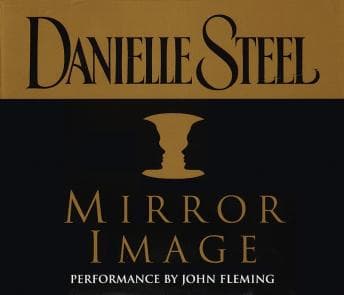

I have enough trouble telling my kids apart when they're screaming from separate rooms. I really, really don't need an audiobook narrator making it harder.
I picked this up because sometimes you just need a Danielle Steel novel. You know? It's the literary equivalent of a warm casserole—predictable, hearty, and exactly what you want when your brain is fried from negotiating with a toddler who thinks "nap" is a dirty word. I wanted the twin switch. I wanted the WWI melodrama. I wanted the high-stakes romance where people make terrible decisions for "love."
Women of Chateau Lafayette scratched that same WWI-era itch for me and actually delivered on the emotional payoff—filing that one away as the gold standard now.But John Fleming made this an endurance test.
The "Who's Talking Now?" Game
Here's the fundamental problem: This is a book about identical twins, Olivia and Victoria. The entire plot hinges on them looking exactly alike but having vastly different personalities—one is the dutiful homemaker, the other is a suffragette firecracker. A great narrator would use pitch or cadence to help us hear that difference.
Fleming does not do this.
I was folding a mountain of laundry—mostly Lucas's soccer gear which smells like wet dog and ambition—and I found myself constantly rewinding. "Wait, is this the shy one or the wild one?" Fleming's voice is pleasant enough, I guess, but it's flatter than a day-old soda. He reads the dialogue for two twenty-one-year-old women with the same inflection he uses for their father.
It turns the title Mirror Image into an accidental pun. They sound like mirror images because the narrator refuses to give them separate souls. When the big "switch" happens—the moment the whole 15-hour book builds toward—the tension should've been suffocating. Instead, it felt like someone reading a grocery list.
Classic Steel, Rusty Delivery
If you can get past the monotone delivery (I cranked it to 1.5x just to inject some artificial energy), the story is classic Steel. We have the Titanic tragedy backstory—because of course we do—and we have the trenches of France. It's sweeping and tragic and ridiculous in all the right ways.
But the pacing feels off here, and I blame the audio production. The beginning drags. I'm talking drags. I almost DNF'd it during school pickup because I just didn't care about the New York society setup anymore. It does pick up once the war starts and the sisters' lives diverge, but you have to wade through about six hours of beige narration to get there.
Usually, with a romance or family saga, I want to feel the "yearning." I want the emotional gut-punch. But when the narrator reads a declaration of love with the same enthusiasm as a weather report, it kills the vibe. I found myself mentally recasting the narrator the entire time. Julia Whelan would've crushed this.
Worth the Headache?
Listen if: You're a Danielle Steel completionist (you're going to anyway), or you need background noise for something loud like vacuuming where missing a sentence won't matter. The story does eventually pay off with that satisfying, tear-jerking resolution we crave. I definitely cried a little while hiding in the pantry eating the last of the cooking chocolate.
Skip if: You're looking for a relaxing listen or you need distinct character voices to stay engaged. This one requires too much mental effort for what should be comfort reading.
Back to the Laundry Pile
The production feels dated, like an old cassette tape transfer where the sparkle got lost in the mix. I'm going to need something with a full cast—or at least a narrator with a pulse—for my next listen. This one felt like work, and I already have enough of that folding tiny socks.