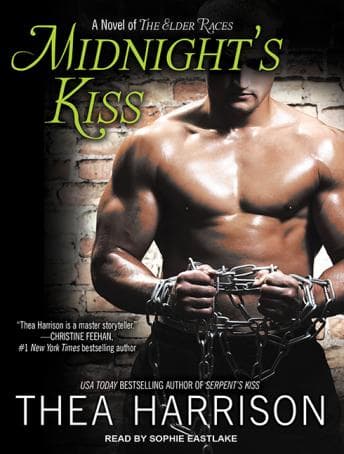
Look, I need to be upfront about something: this isn't my usual territory. I came to Midnight's Kiss because of the Nightkind King premise - a vampire political war, kidnapping, captivity, forced proximity with an ex-lover? That's horror-adjacent enough to get me interested. And honestly? I expected to be the wrong audience for this. Paranormal romance readers and horror podcast hosts don't always see eye to eye on what vampires should be doing with their time.
But here's the thing. Thea Harrison gets something right that a lot of paranormal romance misses: the power dynamics in this world actually feel dangerous. Julian isn't just a broody love interest with fangs - he's a king in a political war with Justine, a Vampyre council member who's smart enough to use Melly as a weapon against him. When Julian surrenders himself to save her, it doesn't play as swoony sacrifice. It plays as a tactical nightmare. Two people trapped together by an enemy who knows exactly how to exploit their history. That's dread. That's my language. Bulgakov understood the same thing in Master and Margarita — that the most unsettling stories are the ones where the villain is genuinely smarter than everyone else in the room and knows exactly which levers to pull.
When Your Ex Shows Up and It's Worse Than You Remember
The Julian-Melly dynamic is where this book lives or dies, and it mostly lives. Their "scorching affair" ended badly enough that they've apparently spent years in active avoidance mode, which - as someone who's navigated small-town library events where you might run into literally anyone from your past - I respect deeply. What works is that their anger feels earned. This isn't bickering-as-foreplay (well, not only that). There's real damage between them, and the captivity situation strips away every polite buffer they've built.
I will say this is book eight in the Elder Races series, and you can feel it. The worldbuilding assumes you know what the Nightkind are, what the Light Fae power structure looks like, how the Elder Races political landscape works. I went in cold and spent the first hour or so piecing together context clues. It's not impenetrable, but if you're a completionist, you might want to start earlier in the series. If you're like me and enjoy the disorientation of dropping into a world mid-stream - honestly, it kind of added to the tension.
Sophie Eastlake Knows These People
Here's where I get genuinely impressed. Sophie Eastlake has narrated this series from the start, and you can hear it. She doesn't approach Julian and Melly like new characters she's meeting - she approaches them like people she already has opinions about. Her Julian has this controlled, tight delivery that cracks when Melly pushes him. Her Melly sounds like someone who's been rehearsing "I'm over you" speeches for years and is furious to discover they don't hold up under pressure.
The narrator commits. That's rare. Especially in paranormal romance, where I've heard narrators phone in the supernatural elements like they're slightly embarrassed to be saying "Vampyre" out loud. Eastlake doesn't flinch. She gives Justine a cold authority that made me genuinely uneasy during the captivity sequences - and look, I listen to horror narration for a living. Making me uneasy with a romance villain is no small thing.
One thing I noticed: the pacing in audio actually benefits from Eastlake's control. Multiple listeners have said the book reads better than it, well, reads, and I believe it. There are stretches in the middle where the escape planning could drag on the page, but Eastlake's emotional calibration keeps you locked in. She knows when to let tension simmer and when to let it snap.
The Horror Fan's Honest Take on Paranormal Romance
I listened to this during a late shift at the library, after hours, reshelving in the stacks. (The vibes were immaculate for captivity-escape content, I won't lie.) And I found myself genuinely worried about these two. Not because I doubted the happy ending - it's romance, I know the contract - but because Eastlake's performance made the danger feel immediate enough that the how mattered more than the if.
Content note: there's violence and an attempted sexual assault in this book. It's handled, not exploited, but if that's a hard line for you, be aware.
Is this horror? No. But it borrows horror's best trick: making you care about people in a confined space with someone who wants to destroy them. Shirley Jackson walked so... okay, Thea Harrison is running a very different race. But the captivity tension here is real.
Who needs this: Elder Races fans (obviously), paranormal romance listeners who want stakes that feel genuinely threatening, and anyone who appreciates a narrator who's grown into a series so completely that the characters sound like real people with real grudges. Who should skip: if you need horror to be horror and romance to stay in its lane, this won't convert you. If you haven't read earlier books and hate feeling lost, start at book one.
Lights On, Heart Rate Up, Cat Unimpressed
Solid paranormal romance with actual teeth - pun absolutely intended. Eastlake's narration elevates material that could've been formulaic into something that kept me listening past my shift. My podcast listeners are going to raise eyebrows at this recommendation, but I stand by it. Good genre work is good genre work, regardless of which shelf it lives on.