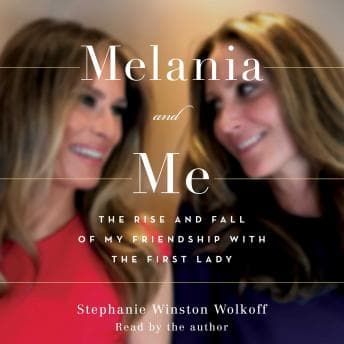

Look, I started this one during Sophie's nap knowing full well I was stepping into messy territory. Political memoirs aren't usually my thing - I get enough drama managing three kids under eight. Though if you want actual political history without the personal drama, Killing Kennedy delivers that straightforward approach. But something about a friendship falling apart at the highest levels of power? That's universal, whether it's the White House or the PTA.
Here's what I didn't expect: to feel genuinely bad for Stephanie Winston Wolkoff.
When Your Best Friend Leaves You Holding the Bag
This is basically an 11-hour breakup story, and Wolkoff narrates it herself with all the raw emotion you'd expect from someone still processing betrayal. She's not a professional narrator - some listeners found her voice too harsh, too New York tough. And honestly? They're not wrong. Her delivery is unpolished, sometimes grating, with this edge that feels like she's still angry while reading.
But here's the thing. That rawness is also what makes this feel authentic. You can hear the pain when she describes being thrown under the bus for the inauguration funding scandal. The frustration when Melania - her friend of fifteen years - chose silence over defense. It's not pretty listening, but it's real listening.
The Met Gala to the White House Pipeline
Wolkoff's background is fascinating. This woman produced nine Met Galas. NINE. She was Vogue's special events director. So when she talks about the chaos of planning the 58th Presidential Inauguration, she's not some random socialite complaining - she's a professional event producer watching everything go sideways.
The details about Melania herself are what kept me pressing play during car time. The transformation from "rough-cut gem" girlfriend to polished First Lady. The dynamics with Ivanka (spoiler: complicated). How Melania handled the Access Hollywood tape and the Stormy Daniels situation. That infamous "I really don't care, do u?" jacket - Wolkoff has thoughts.
What comes through is a portrait of a woman who is simultaneously more calculating and more isolated than the public persona suggests. Whether you believe Wolkoff's interpretation depends entirely on how much you trust a scorned friend's perspective.
The Problem With Telling Your Own Story
Some reviewers called Wolkoff's narration "awful" and honestly, I paused at least a dozen times - not because of kid interruptions but because I needed a break from the intensity. Her voice has this relentless quality, like she's still trying to convince you (and maybe herself) that she was the victim here.
There's an obsessive undercurrent to how she circles back to Melania's choices, Melania's silence, Melania's betrayal. After about hour six, you start wondering: is this a memoir or a therapy session?
But I kept listening. Partly because the behind-the-scenes White House stuff is genuinely interesting. Partly because I've been the friend who got dropped when things got hard, and that sting doesn't go away just because you're not in a political scandal.
Who Should Press Play (And Who Should Skip)
If you're looking for a balanced, journalistic take on the Trump White House - this isn't it. Wolkoff has an axe to grind and she's grinding it for eleven hours straight.
If you're deeply opposed to the Trumps, you'll probably find validation here. If you're a supporter, you'll probably rage-quit by hour two. If you're like me - mostly exhausted by all of it but curious about the human dynamics - you'll find it interesting but emotionally draining. Skip this if you need something light for multitasking; I tried listening while making dinner once and completely lost the thread. It requires actual attention, which is a big ask for those of us operating on four hours of sleep and cold coffee.
Garage Sit Verdict: Worth It, But Messy
I finished this over about two weeks, mostly during my sacred 45-minute garage sits. It's not a comfort read. It didn't give me the satisfying ending I usually crave. But it did give me something to think about - about female friendships, about loyalty, about what happens when your ride-or-die friend suddenly has Secret Service protection and different priorities.
Wolkoff isn't a skilled narrator, but she's telling her own story the only way she knows how: with her whole chest, messy emotions and all. Whether that works for you depends on how much imperfection you can tolerate in exchange for authenticity.
I'm glad I listened. I probably won't listen again. And I definitely ugly-cried once, but not at school pickup, so that's a win.