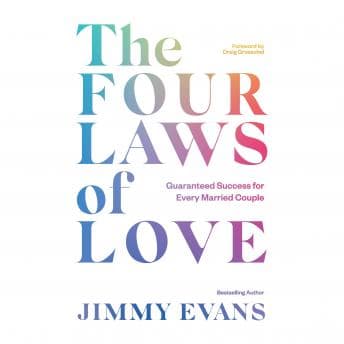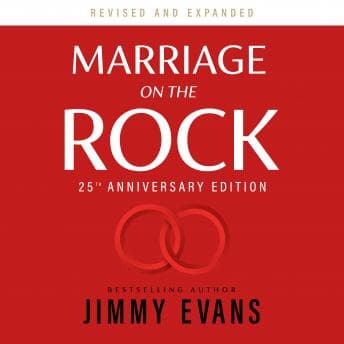

Here's what I'll say upfront: I'm a researcher who studies why people do what they do in relationships, and I came to this audiobook with my skepticism dial turned way up. Faith-based marriage advice often makes me twitchy because it can lean on prescription without psychology. But Jimmy Evans surprised me.
I was making dal makhani on a Sunday afternoon—the kind of elaborate cooking project I do alone because honestly, I like it that way—when I started this. Eight and a half hours later, I'd made enough food for a week and filled three pages of notes. That's not nothing.
The Pastor Who Actually Understands Behavioral Patterns
Evans has been doing marriage counseling for thirty years, and it shows. What struck me immediately is that he's not just quoting scripture and hoping for the best. He's describing actual behavioral dynamics I recognize from attachment theory and conflict resolution research. The man understands that people don't change because you tell them to—they change when they understand why they're doing what they're doing.
His framework around what he calls "the four laws of marriage" is basically applied psychology dressed in Christian language. And I mean that as a compliment. He talks about prioritizing your spouse, pursuing them actively, partnering rather than competing, and protecting the relationship from outside threats. Psychologically? This tracks. These map pretty cleanly onto secure attachment behaviors and Gottman's research on relationship maintenance.
The protagonist exhibits classic—wait, wrong genre. But seriously, Evans treats marriage like a case study, which is exactly how my brain works. He identifies patterns, explains their origins, and offers concrete interventions. That's not fluff. That's methodology.
Where the Research Actually Shows Up
What I found myself asking: why does this book, now 25 years old, still feel relevant? Because Evans grounds his advice in observable human behavior rather than abstract ideals. When he discusses conflict, he's not saying "just pray about it." He's describing escalation patterns, defensive reactions, the way contempt corrodes trust over time. The same kind of behavioral pattern recognition shows up in Motivation Myth: How High Achievers Really Set Themselves Up to Win, which similarly cuts through aspirational fluff to examine what actually drives sustainable change. My therapist would have thoughts about some of his framing, sure, but the underlying observations are sound.
The audiobook being author-narrated is both strength and limitation. Evans speaks like he's having a conversation with you in his office—clear, direct, no pretense. One listener quote I came across nailed it: he explains things so anyone can understand. That accessibility matters in self-help. You're not fighting through academic jargon or performative complexity.
But here's the thing—he's not a professional narrator. There's no vocal variety to speak of, no dramatic emphasis, no performance. It's a man reading his own book in a steady, pastoral tone. For eight hours. If you need entertainment value from your audiobooks, this isn't it. If you want to feel like you're getting counsel from someone who's seen a thousand marriages up close? That's exactly what this delivers.
The Limitations I Can't Ignore
I'd be lying if I said this book works for everyone. It's explicitly Christian, explicitly traditional in its gender framework, and explicitly aimed at people who share those assumptions. Evans is speaking to his congregation, essentially. If you're outside that worldview, some sections will feel alienating or irrelevant.
Also—and this is the researcher in me talking—anecdotal evidence isn't data. Evans tells lots of stories from his counseling practice, and they're illustrative, but I wanted more acknowledgment of complexity. Not every marriage can be saved. Not every conflict stems from the patterns he identifies. The book has a confidence that occasionally tips into oversimplification.
That said? For listeners who share his faith framework, this is genuinely useful material. He's not selling easy answers. He's describing hard work and explaining why it's worth doing.
Your Mileage Will Vary (Literally)
This is for couples in faith communities who want practical, psychology-adjacent guidance wrapped in Christian theology. It's for people who learn well from a calm, conversational teaching style rather than high-energy performance. It's for anyone who's been married long enough to know that love is a verb, not a feeling, and wants someone to explain what that actually looks like day to day.
Skip it if you need secular frameworks, if traditional gender roles make you uncomfortable, or if you require your audiobooks to have production polish. This is a pastor talking to his people. If you're not his people, you'll feel it.
Closing the Case File
I went in expecting to be annoyed. I wasn't. Evans understands human nature—specifically, he understands why people hurt each other in marriage and how they can stop. His solutions are practical, his observations are grounded, and his delivery is genuinely accessible. Structured, principle-based interventions like these actually work when both partners commit to them.
Is it a universal text? No. Is it valuable for its intended audience? Absolutely. Sometimes the best self-help meets people where they are. Evans does that.