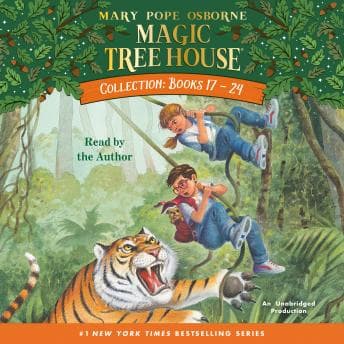

What happens when you hand a psychology researcher a children's audiobook and say "just review it"?
I'll tell you what happens. She starts analyzing the attachment patterns of two fictional siblings who keep climbing into a magical tree house instead of, you know, telling an adult about it. But I'm getting ahead of myself.
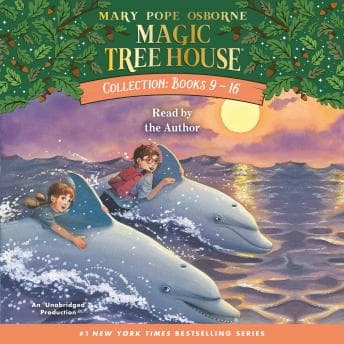
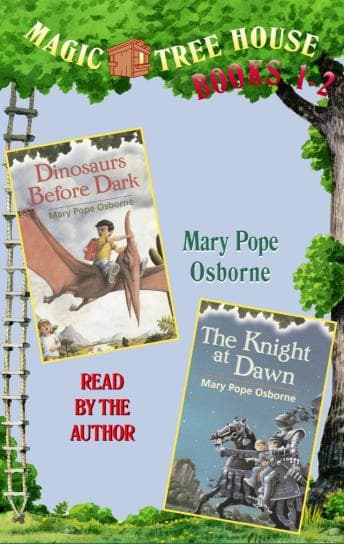
I was making dal makhani — my mother's recipe, the one that takes three hours because you have to let the lentils break down properly — when I queued up the Magic Tree House Collection, Books 17-24. Why? Because my colleague's seven-year-old declared these books "the best things ever created by humans," and I wanted to understand the psychology of why this series has sold 134 million copies. That's not a typo. One hundred thirty-four million. Something is happening here that deserves attention.
Jack Is Every Anxious Kid Who Ever Lived (And Annie Is His Exposure Therapist)
Here's what struck me while stirring dal and half-listening to Mary Pope Osborne narrate her own work: Jack and Annie aren't just adventure protagonists. They're a remarkably consistent psychological pairing. Jack is the anxious researcher — he wants to read about the Titanic sinking, not actually be on it. Annie is the impulsive one, already climbing the rigging before Jack finishes his sentence about iceberg trajectories. Across all eight books in this collection, this dynamic holds. Tonight on the Titanic puts them on the doomed ship. Tigers at Twilight drops them in an Indian forest with, predictably, tigers. Civil War on Sunday sends them into actual wartime.
The protagonist exhibits classic approach-avoidance conflict — Jack wants knowledge but fears danger, while Annie drags him straight into the feared stimulus. The research actually shows this kind of sibling dynamic models healthy risk-taking for young listeners. Jack validates the fear. Annie models the courage. Together, they teach kids that being scared and doing the thing anyway is... fine. It's fine. I kept thinking about the adult characters in After the Storm, who manage their fears with considerably less grace than these two fictional children.
Psychologically, this tracks better than most adult fiction I review.
Osborne Reading Osborne: When the Author Is the Narrator
Mary Pope Osborne narrating her own books is an interesting case study in authorial intent made audible. Her voice is warm, measured, clear — the kind of voice that belongs in a library corner at story time. She gives Jack a slightly worried, bookish quality. Annie gets a brighter, bouncier energy, though the distinction is subtle. It's not dramatic voice acting. It's closer to a really good parent reading bedtime stories.
And that's both the strength and the limitation.
For the target audience — kids roughly 5 to 9 — this pacing is perfect. She doesn't rush through the earthquake in Earthquake in the Early Morning or the tornado in Twister on Tuesday. She lets the tension build at a child-appropriate level. But if you're an adult listening without a kid in the car? I'll be honest: my attention drifted during the middle books. Buffalo Before Breakfast and Dingoes at Dinnertime blurred together for me. The narration stays at one emotional register — competent, soothing, slightly flat. Some listeners describe it as "too passive," and I understand that critique. There's a version of these books with a more dynamic narrator that would absolutely electrify. But Osborne isn't going for electrifying. She's going for safe and steady, and for her audience, that's the right call.
I found myself asking: why does Osborne keep her energy so deliberately contained? And I think the answer is she's writing — and reading — for the kid who gets overwhelmed easily. The anxious kid. The Jack.
The Sneaky Brilliance of the Formula
Eight books, five hours, one formula: tree house appears, kids travel through time, kids face historically accurate danger, kids solve a problem, kids come home. Rinse, repeat. The first four books (17-20) are structured around freeing an enchanted dog named Teddy from a spell. The second four (21-24) pivot to saving Camelot by finding special writings during American historical events.
Is this repetitive? Yes. Does that matter? Not for the intended audience. The research actually shows that repetitive narrative structures create a sense of safety and mastery for developing readers. Kids aren't bored by the formula — they're comforted by it. They know the beats. They can predict what happens next. And that prediction gives them confidence.
What makes this collection compelling is that it pairs supernatural fantasy with real historical trauma — the Titanic disaster, the Civil War, the 1906 San Francisco earthquake — and asks kids to engage with genuine human suffering at a level they can handle. It's exposure therapy disguised as adventure fiction. My therapist would have thoughts about that, and they'd probably be approving.
Who Should Actually Press Play
This is for parents, teachers, and caregivers looking for a road trip audiobook or bedtime listen that won't give anyone nightmares but also won't bore kids into mutiny. If your child is between 5 and 9 and you want them interested in history? This is your move. The production is clean, the chapters are short, and at roughly 38 minutes per book, the commitment level is low.
Skip this if you're an adult without kids looking for a mystery-thriller fix. The genre tags are misleading — there's mystery here in the loosest sense, and the "thriller" element is calibrated for someone who still finds the dark scary. Which is valid! But probably not what you're browsing for on a Friday night.
Also skip if you need high-energy narration. Osborne's voice is a warm bath, not a cold plunge.
My Clinical Assessment (Said With Affection)
I came for the psychology and stayed for the dal makhani, but somewhere around Twister on Tuesday I realized why 134 million copies exist. Mary Pope Osborne understands exactly one thing extraordinarily well: what a child needs from a story. Safety. Agency. The feeling that even a kid with a notebook and a brave sister can survive the Titanic. Psychologically? That's not nothing. That's everything, actually, if you're seven.