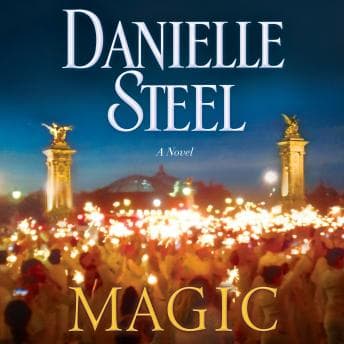

Danielle Steel writes the literary equivalent of comfort food. I know this. My students know this. And yet here I am, grading sophomore essays on The Great Gatsby at 11 PM, listening to a novel about wealthy Europeans attending secret dinner parties. The irony isn't lost on me.
Magic is built around the Dîner en Blanc—that real Parisian tradition where thousands of people dressed in white descend on a secret landmark location for an elegant outdoor dinner. It's a gorgeous premise. Steel uses it as a framing device, opening and closing with this ethereal gathering while following four couples through a year of marital upheaval, career decisions, and romantic entanglements. If you loved The House of Mirth for its social observation, this is... not that. For actual social observation with moral weight, To Kill a Mockingbird remains the standard I measure everything against. But Steel's trying for something like a contemporary, glossy-magazine version of that world.
The Prose Deserves What, Exactly?
Look, I teach Faulkner. I've spent decades explaining why Hemingway's sentences matter. Steel's prose is functional. Workmanlike. She tells you what happens, then tells you again, then reminds you three chapters later. The repetition became almost hypnotic during faculty meetings—I'd zone out during budget discussions and tune back in to find Valerie still weighing her Vogue career against her marriage. Same conflict, slightly different phrasing.
But here's what Steel understands that some literary snobs miss: not every reader wants to work. Sometimes you want the narrative equivalent of a warm bath. The story moves through Jean-Philippe's China opportunity, Gregorio's spectacular betrayal of Benedetta, and Chantal's late-life romance with Dharam in clean, predictable arcs. No ambiguity. No unreliable narrators. Just wealthy, beautiful people making dramatic decisions in Milan, Paris, and Beijing.
My students would hate this. They'd probably prefer the adventure and moral clarity of Adventures of Tom Sawyer, which at least has the decency to be honest about what it is. I kind of loved it.
Cendese Has a Breathing Problem
I need to talk about the narration, because it's genuinely strange. Cendese has moments where he sounds winded—like he's been climbing stairs between paragraphs. It's distracting once you notice it. And you will notice it.
The bigger issue is his female voices. Benedetta runs an Italian fashion empire. Valerie edits French Vogue. Chantal is an award-winning screenwriter. These are sophisticated women, and Cendese voices them all with the same slightly-too-deep register that made me picture something entirely different than Steel intended. It's not terrible—he handles the emotional beats well, and his pacing keeps the eight hours moving. But the character differentiation is weak. Everyone sounds vaguely European and vaguely male.
There's also a slight lisp that some listeners find distracting. I barely noticed it, but if you're sensitive to that, fair warning. I listened at 1.0x because the author chose those words and I choose to hear them properly—but honestly, this one could handle 1.25x without losing anything.
Who's Going to Love This (And Who Should Run)
If you want literary ambition, complex moral questions, or prose that rewards close attention—skip this entirely. Steel isn't interested in making you think. She's interested in making you feel, and specifically in making you feel like you're watching wealthy people navigate problems you'll never have while wearing clothes you can't afford.
But if you need something undemanding for your commute, something that won't require you to rewind because you missed a crucial plot point while merging onto the expressway—this works. It's eight hours of European glamour, relationship drama, and the kind of wish-fulfillment fantasy where everyone learns their lessons and the White Dinner brings them all back together.
Denise and I listened to chunks of this during our lakefront walks. She liked the fashion details. I liked that it required zero intellectual energy after a day of explaining symbolism to teenagers who'd rather be on TikTok.
Worth Pausing the Faculty Meeting For?
Not really. But worth having in your rotation when you need something gentle? Absolutely. Steel has sold nearly a billion books for a reason. She knows exactly what she's doing, and she does it with professional efficiency. The audiobook production is clean—no music or effects, just Cendese working through the material with reasonable competence despite his vocal quirks.
This reminds me of what Hemingway said about writing—that the dignity of movement of an iceberg is due to only one-eighth of it being above water. Steel's iceberg is entirely above water. Everything is on the surface. And sometimes that's exactly what you need.